…As NASS pledges fairness, commitment
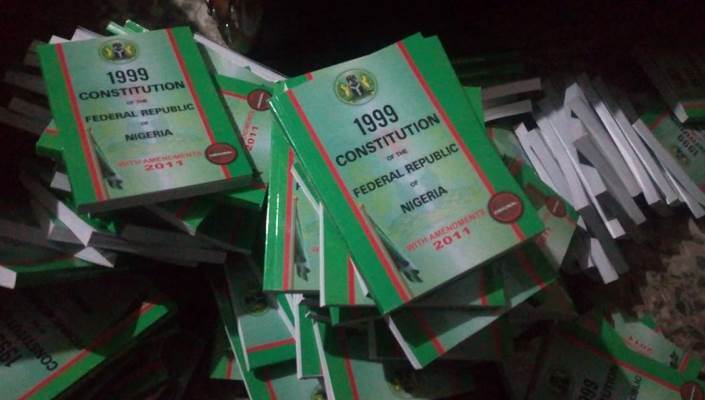
The 10th National Assembly in July 2024 revived the constitutional amendment exercise, which is a process as old as the 1999 Constitution itself, through its Constitution Review Committee, chaired by the Deputy President of the Senate, Senator Barau Jibrin.
Since 1999, successive amendment efforts by the National Assembly on the1999 constitution have suffered setback.
Between 2011 and this period, over ₦12.85 billion has been spent on constitutional amendments—with little or no tangible results.

Several futile efforts in the last two decades have affected public perception to constitutional review in the country. Many Nigerians are not optimistic about the process. There is skepticism.
But the prayer among many Nigerians is that this renewed process in this dispensation should not be like the past.
However, this time, the ambition appears larger, and the stakes higher. The Committee is reviewing 87 priority bills that cut across critical national concerns: local government autonomy, state policing, judicial and electoral reform, fiscal federalism, gender inclusion, and procedural governance.
Analysts say there are signs that the 10th Senate has learned from past missteps. For the first time, the constitutional amendment process is guided by a clear timeline and governance structure.
Zonal public hearings took place from 4 to 5 July, with plenary debates slated for October, 2025.

The hearings took place simultaneously across six geopolitical zones, with one city in each zone selected as the host.
Enugu State hosted the hearing in the South-east zone, Ikot Ekpene in Akwa Ibom State for the South-south, Lagos for the South West; Jos for the North-central; Maiduguri for the North-east, and Kano State for the North-west.
Each geopolitical zone was supervised by designated Senate leaders. The Senate President, Godswill Akpabio oversaw the hearing in the South-south zone; Opeyemi Bamidele handled the South-west, while Deputy Chief Whip, Peter Nwebonyi coordinated proceedings in the South-east.
Others are Deputy Senate Leader Oyelola Ashiru (North-central), Chief Whip Tahir Monguno (North-east), and Senator Barau Jibrin (North-west).
Voting is scheduled for mid-October, with transmission to state Houses of assemblies before the end of the current year.
This level of structure is a welcome departure from previous attempts where ₦1billion annual budgets often evaporated into process-heavy, yet progress-light meetings.
Documents from the Senate Committee on Constitution Review (CRC), show that 31 proposals for the creation of new states and 18 requests for the establishment of additional local government areas were received from various interest groups in the country.
During the hearing, the committee considered the creation of new states, state police, gender equality, local government autonomy, electoral reforms, judicial reforms, inclusive governance and other national issues.
Breakdown of state and LGA creation proposals
Document from the Senate Committee on Constitution Review (CRC), on the proposals for creation of new states, shows that there are six requests from the North-west, eight from North-central, five from South-east, six from North-east, six from South-south and four from South-west.
There are also reports that some prominent stakeholders in Abuja submitted a request seeking recognition of the Federal Capital Territory as a state.
Similarly, speaking to the media on the constitutional review process, just before the public hearing, Opeyemi Bamidele, senate leader, said while there are 18 requests for the creation of local government areas nationwide, the committee had received 31 proposals for the creation of additional states.
“While there are 18 requests for the creation of local government areas nationwide, the committee had received 31 proposals for the creation of additional states with six from North-west, eight from North-central, five from South-east, six from North-east, six from South-south and four from South-west.
For local government areas, Bamidele said seven requests were received from the North-west, five from North-central, one from North-east, three from South-south, one from South-east and one from South-west.
The proposals will be reviewed by lawmakers along with the participating interest groups.
Nigeria is made up of 36 states and the Federal Capital Territory Abuja. The FCT is not classified as a state but operates as a federal territory and administered by an appointed minister.
Each Nigerian state is divided into local government areas, with the country currently having a total of 774 LGAs.
Some of the proposed state creation request Nigeria are; Katagum State out of Bauchi State, Ogoja State out of Cross River State, Igbomina State out of Osun, Kwara & Ekiti States, Ibadan State out of Oyo State and Ijebu State out of Ogun State.
Similarly, there are request for the creation of Toru-Ebe State out of Delta, Edo & Ondo States, Creation of Kwararafa State out of Taraba State, Atlantic City State out of Rivers State, Warri State out of Delta State.
The request in the North East includes the request for the creation of Highland State out of Gombe State, creation of Amana State from the former Sardauna Province.
There are request for the creation of Anioma State; and or related matters, request for the creation of New Oyo State out of Oyo State, South Sardauna State out Taraba State, creation of Obolo State out of Akwa Ibom and Rivers States.
There are request for the creation of Adada State from today’s Enugu, and creation of Orashi State out of Anambra, Imo and Rivers States.
Additionally, there is the request for the creation of Apa State; and for related matters, Gobir State out of Sokoto State, Okun State out of Kogi State, South Plateau State out of Plateau State and Edu State out of Niger State.
Others are, Tiga State out of Kano State, Gurara State out of Kaduna State, New Plateau State out of Plateau State, Ifesowapo State out of Kwara State, Hadeija State out of Jigawa State, Kainji State out of Kebbi & Niger States and Lowland State out of Plateau State.
Finally, there is request for the creation of Ghari State out of Kano State.
Read also: Beyond NASS’ constitution amendment drive and the coalition’s babel of voices
Security reforms
Beyond creation of states and LGAs, the committee also received proposals for the establishment of state police or other state government security agencies.
Among the proposals is the bill seeking to alter the 1999 Constitution to provide for the establishment of state police or other state government security agencies.
The committee stated that there is another proposal seeking to establish the State Security Council to advise governors on matters relating to public security and safety.
Over the years, there have been calls from some state governments and civil society organisations for localised policing as incidents of armed robbery, communal clashes and other security challenges increased.
A National Conference was convened in 2014 during the administration of former President Goodluck Jonathan where the participants recommended the creation of state police as a strategy to reduce insecurity.
The resurgence of banditry, kidnapping, and other terrorist activities has increased pressure from governors and political leaders for the creation of state police.
In the absence of a formal state policing structure, some regions have established informal security outfits such as Amotekun in the South-west, Ebube Agu in the South-east, and Hisbah in the North-west.
Despite the security challenges, the call for state police is still a contentious issue among political figures. Some argued that without proper arrangements, state police could be exploited by governors to harass political opponents, suppress dissent, and stifle press freedom.
Others, however, argued that the best way to reduce insecurity is through state policing.
Devolution of powers
The constitution review panel will also deliberate on a constitutional amendment to transfer some items from the Exclusive Legislative List to the Concurrent Legislative List.
Specifically, a bill has been proposed to allow both federal and state governments to legislate on interstate waterways, labour, and shipping.
“There is a proposed bill to transfer control of interstate waterways from the Exclusive Legislative List to the Concurrent Legislative List, thereby granting both the federal and state governments the power to legislate on matters relating to shipping and navigation on interstate waterways,” he said.
The Senate Leader added that there is also a proposal to ensure that every local government in each state has at least one member representing the local government in the House of Assembly to ensure equity, fairness and attract democratic dividends to inhabitants of each local government of the state.
Electoral reforms
The committee will consider independent candidacy, allowing individuals to contest elections without political party affiliation and diaspora voting to enfranchise millions of Nigerians living abroad.
These reforms proposed to expand political participation and strengthen democratic legitimacy.
Budgeting system
On governance, said amendments are being proposed to fix specific deadlines for presidents and governors to submit annual appropriation bills and reduce the window for authorising withdrawals from the Consolidated Revenue Fund without an approved budget from six to three months.
The amendment also seeks to revise the derivation formula to include revenues generated internally by states, thereby expanding their financial autonomy.
“The proposals further canvass the period within which the President or Governor may authorise the withdrawal of monies from the Consolidated Revenue Fund in the absence of an Appropriation Act from six months to three months.
“The proposals seek to provide for revision of the derivation formula by including other revenues generated within each state of the Federation,” Bamidele said.
All these proposals were debated during the zonal public hearings, where civil society groups, community representatives, traditional institutions, and other stakeholders presented their views.
After the hearings, the committee has collated the findings, draft recommendations, and has initiated the process for amendments.
Stakeholders make demands during public hearing
At a public hearing held in the South West region for the review of the 1999 constitution, the clamour for the creation of more states, local governments, special seats for women, state police, and other demands topped the agenda.
The event held in Ikeja, was well-attended by various stakeholders in the region.
The stakeholders called for the creation of more states, local governments, state police, and the inclusion of constitutional roles for traditional rulers.
Declaring the public hearing open in Lagos, the state Governor, Babajide Sanwo-Olu, urged the Senate committee reviewing the constitution and participants to be guided by the principles of inclusiveness, equity, and justice in making inputs into the constitution amendment.
Sanwo-Olu, who was represented by his deputy, Obafemi Hamzat, listed some of the nation’s challenges as: the pursuit of genuine federalism and the devolution of powers; empowering and enhancing our local governments; establishing new states to bring governance closer to the people; reforming our electoral and judicial systems; boosting the involvement of women and youth in our political landscape; ensuring the security and welfare of our citizens, including the crucial discussion around state policing, and inclusion of constitutional roles for traditional rulers.
According to him, the issues go beyond just constitutional concerns.
“They strike at the heart of what it means to be Nigerian. It reflects our shared aspiration for a fairer, more equitable, and thriving nation,” he said.
Dwelling on the need to create more local governments in Lagos State, the governor said, “For us in Lagos State, it must be stated that we are requesting unequivocally for the listing of our 37 local government council development areas.
“They were created in 2003, about 22 years ago, with the intent of delivering dividends of democracy to the grassroots. These are children that have been given birth to, they have been nurtured, and they have grown. It will be unfair not to give them birth certificates.”
Speaking further, Sanwo-Olu stated, “We are requesting unequivocally for the listing of our 37 local government council development areas.
“They were created in 2003, about 22 years ago, with the intent of delivering dividends of democracy to the grassroots.
“These are children that have been given birth to, they have been nurtured, and they have grown. It will be unfair not to give them birth certificates.”
Earlier, Deputy Senate President Barau Jubrin, who was represented by the Senate Majority Leader, Opeyemi Bamidele, said the Senate had received hundreds of memoranda addressing key issues that had not yet been resolved by previous amendments, mainly due to lack of national consensus and the evolving dynamics of modern governance.
The public hearing was held simultaneously across the six geopolitical zones: Enugu, Kano, Jos, Lagos, Akwa Ibom and Kwara.
Traditional rulers insist on roles
Similarly, many traditional leaders called for a constitution amendment process that would allow them more input in formal governance.
The Ooni of Ife, His Royal Majesty, Adeyeye Ogunwusi, called for traditional rulers to be given a role in the new constitution even as he pledged that they would continue to do their best for Nigerians.
The Alaafin of Oyo, Oba Akeem Abimbola Owoade, in his submission, commended the government for seeking the input of traditional rulers in the exercise.
He also advocated for the role of traditional rulers in the constitution and expressed the readiness of traditional institutions to assist the government in meeting the people’s needs.
For his part, the Ayangburen of Ikorodu, Kabiru Shotobi, recalled that two years ago, traditional rulers had appealed to President Bola Tinubu to ensure traditional institutions are given a role in the constitution.
He urged the Senate committee on the review of the constitution to take the role of traditional rulers personally.
“You can lobby on our behalf. The role of traditional rulers is national and we must be taken care of because we do a lot on behalf of our people. We are ready to serve the people of Nigeria,” Shotobi said.
Ijebu state needed, constitution will reflect people’s wishes – Daniel
Speaking at the event, Gbenga Daniel, senator representing (Ogun East) said the constitution, when amended, would reflect the people’s wishes, adding that the president is committed to having a formidable constitution.
While making a case for the creation of Ijebu State, Daniel said the Ijebu axis of Ogun State was the only province of the old provinces that had not been made a state.
Special Seat for women – CSOs
Abiola Afolabi, who represented civil society groups in the South West, called for affirmative action, more women’s representation in government to be included in the constitution.
She said there was the need for special reserved seats for women in the parliament, lamenting that despite the crucial role women are playing in the nation’s electoral system and the number of women in the country, they are relegated to the background.
She lamented that the country had failed to keep the 36 percent affirmative action since it was signed at the United Nations.
Analysts, Nigerians react to constitutional amendment process
Many analysts have called for caution on various demands for state creation by ethnic nationalities and groups.
They said that it would be problem for the country, if more states that are not economically viable and lopsided are created just for the purpose of allowing few people to have access to power.
Ajibola Oduwole, a lawyer said even though the demand for state police is genuine and should be considered considering the spate of insecurity in the country, he does not believe state creation would check the problem of bad governance in the country.
“I don’t believe in state creation, even though I think some regions have more states than others which is fuelling the demand. But I think state police is the most important thing we need now, considering the spate of insecurity in the country.”
Also speaking, a women leader, Iyabo Ogundiran called for the overhaul of the nation’s electoral process to guarantee good governance in Nigeria, noting that the conduct of free and fair elections was the beginning of a process towards resetting the country.
She attributed the myriads of challenges facing the country to decades of poor leadership as a result of controversial and manipulated polls, stressing that it was unfair and bad for the judiciary to determine election winners in the country.
According to her, “We demand for free and fair elections, an electoral system that is free and independent; that is the root and way towards solving our problems.
Why does the judiciary determine who wins elections in Nigeria? We want results to be sent to IReV from the polling units.”
Similarly, Lola Usen, a lawyer, said that the problem of Nigeria was about the conduct of credible polls for the election of credible leaders, while calling for restructuring of the country.
NASS tells stakeholders to lobby state assemblies
The National Assembly has challenged all stakeholders with special requests to engage and lobby their state assemblies, noting that the parliament cannot successfully review the 1999 Constitution of Nigeria, (as amended) without their approval.
The parliament disclosed that it would transmit the report of the ongoing constitution review to 36 state Assemblies before December 2025, saying that the time was consistent with its design and timetable.
The parliament, however, challenged all stakeholders with special requests to engage and lobby their state assemblies, noting that the National Assembly cannot successfully review the 1999 Constitution of Nigeria, (as amended) without their approval.
Leader of the Senate/Zonal Chairman, Senate Committee on the Review of 1999 Constitution, Bamidele made this disclosure at the public hearing in Lagos for the South West region.
According to him, “We have completed the public hearing. We are now returning to Abuja to prepare our report. Part of our time table is to have final notifications before the end of the year and transmit our report to all state assemblies. This will round the process of the constitution review.”
He, therefore, noted that the constitution review is not a jamboree contrary to some dissenting views across the federation. Rather, it is designed to make consequential reforms that can guarantee our collective prosperity, more efficient governance structure and sustainable development.
Bamidele also observed that the National Assembly would be handicapped to successfully complete the constitution review process if all the amendments proposed by the stakeholders were not approved by the two-third of state assemblies.
The zonal chairman of the constitution review committee, thus, challenged all stakeholders across the federation to lobby all state assemblies and their lawmakers to secure basic requirements for the successful amendment of the 1999 Constitution.
While he promised the National Assembly would process all the proposals it received so far and transmit them to the state assemblies, Bamidele challenged the stakeholders to decisively engage and lobby all the state legislatures if all the amendments would become part of the Constitution.
Bamidele said: “There is nothing the National Assembly can do without a two-thirds approval of all proposals by the state legislatures. All stakeholders must work with their lawmakers at the state level.
“We must appreciate the role of state assemblies to ensure the passage of the proposals into laws.
“State assemblies are part of the process. We have been in Lagos State in the last 48 hours, listening to people’s aspirations, concerns and will.”
“All six states in the geo-political zone were represented by their elected representatives. We are in this process together to receive their presentations.
“The state assemblies are already anticipating the report of the constitution review from the National Assembly. They are not waiting for the report alone. They are also part of the constitution review process.”