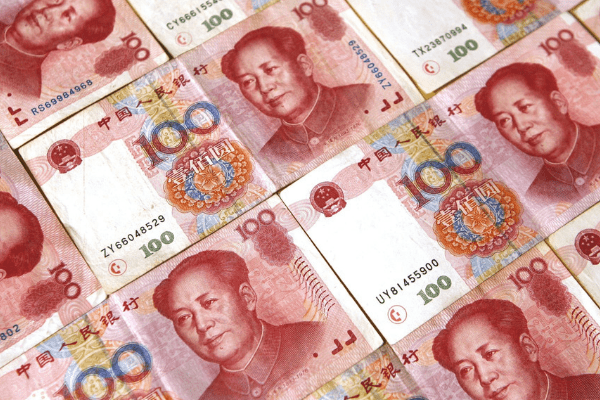
Bloomberg has begun including Chinese government bonds and policy bank securities in its Bloomberg Barclays Global Aggregate index, a move expected to attract trillions in foreign inflows and reshape global capital markets.
The phased inclusion of 363 Chinese securities over the next 20 months could ultimately spur some $2tn of fund inflows into China’s onshore debt market, according to Moody’s. Foreign holdings of onshore domestic bonds stood at $250bn at the end of January, or about 2 per cent of the total outstanding.
“Purely from the weight of money and the shift in global capital markets, this is the biggest change in global capital markets that we have seen for some time, and we believe it is something that all investors should be paying attention to,” said Hayden Briscoe, Asia-Pacific head of fixed income at UBS Asset Management.
China’s debt market is the third largest globally, at $12.42tn as of end-September, just shy of Japan’s $12.62tn although still well below the US’s $40.72tn, according to figures from the Bank of International Settlements.

Bryan Collins, head of Asia fixed income and portfolio manager at Fidelity International, said: “The developments in the China onshore bond market will also create a positive spillover effect to boost the wider Asian fixed income market.”
Bloomberg says Chinese securities ultimately will account for 6 per cent of its $54tn index, and that on completion of the inclusion China’s renminbi will become the fourth-largest currency component.
That will provide a boost to use internationally of the Chinese currency, which in February accounted for less than 2 per cent of international payments, compared with a peak of almost 3 per cent in mid-2015.
China is tipped to become a net debtor this year for the first time since 1993, and to finance its expected current account deficit Beijing will need greater net foreign capital inflows — Morgan Stanley predicts $210bn every year for a decade, or six times the average annual foreign purchases of government bonds in recent years.
International investors now largely hold central government and policy bank bonds, which are relatively liquid and low-risk compared with local government and corporate debt.
“But as investors participate increasingly in and understand better the Chinese onshore bond market, they will feel more comfortable increasing their renminbi asset allocations, and expanding their investments to other credit bonds like municipal bonds, corporate bonds and asset-backed securities,” said Ivan Chung, associate managing director at Moody’s.

Neeraj Seth, head of Asia fixed income at BlackRock, said the Chinese inclusion was “the beginning of a much bigger change in the market structure that we’re going to experience in the coming years and probably decades”.
Yet increased participation in China’s debt markets by investors abroad will depend on how comfortable they can become with expanding purchases beyond the relatively safe bonds set for inclusion in the Bloomberg index.
S&P Global won approval from Beijing to start assessing domestic bonds in late January, but the New York-based credit rating agency faces an uphill battle competing with China’s domestic agencies, which routinely offer corporate issuers high ratings.