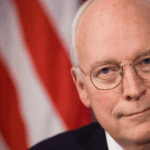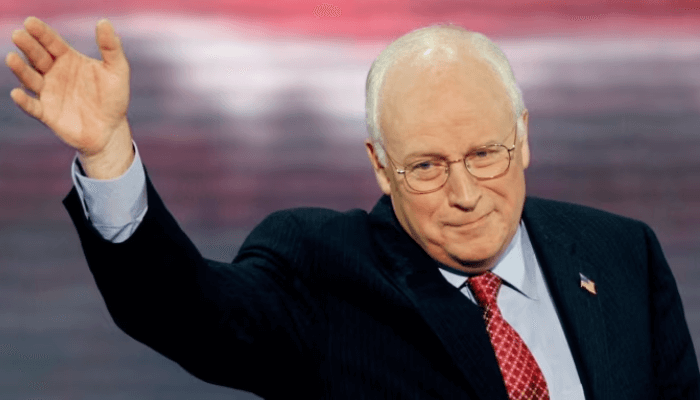
Dick Cheney, the former United States vice president who helped shape America’s “war on terror” and became one of the most powerful and divisive figures in modern Washington, has died aged 84.
His family announced that he died from complications of pneumonia and heart disease, surrounded by his wife Lynne and daughters Liz and Mary. “Dick Cheney was a great and good man who taught his children and grandchildren to love our country and to live lives of courage, honour, love, kindness and fly fishing,” the family said in a statement.
Read also: Dick Cheney, former US Vice President dies, aged 84
For decades, Cheney’s name was synonymous with hawkish foreign policy, unflinching conservatism, and behind-the-scenes influence. As vice president to George W Bush from 2001 to 2009, he was a driving force behind the US invasion of Iraq in 2003 and the sweeping expansion of executive power in the name of national security.

But in his later years, the man once seen as the iron hand of the Republican establishment became a fierce critic of Donald Trump, calling him “the greatest threat to our republic in history.”
From Wyoming to Washington’s inner circle
Born in Lincoln, Nebraska in 1941, Richard Bruce Cheney grew up in the oil town of Casper, Wyoming. He dropped out of Yale, describing his younger self as “a kid who thought beer was one of life’s essentials.” After earning a master’s degree in political science from the University of Wyoming, he found his way to Washington during the Nixon years, working under Donald Rumsfeld.
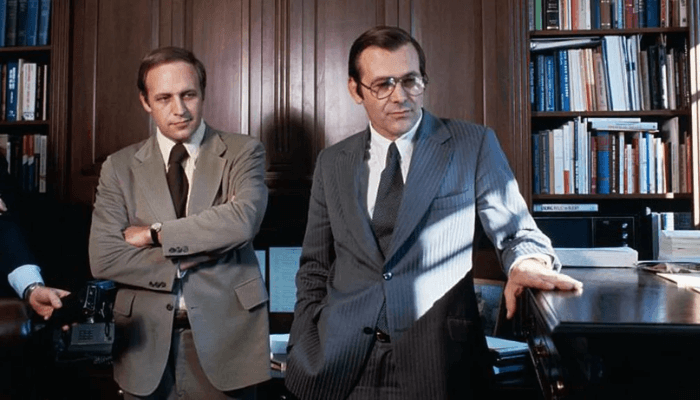
By 34, he was White House chief of staff for president Gerald Ford, a calm operator known for driving a beat-up Volkswagen Beetle instead of a limousine. “He made the system run,” Brent Scowcroft, Ford’s national security adviser, once said.
Read also: Trumps threat could unsettle investors, weaken naira, CPPE warns
In 1978, Cheney won Wyoming’s lone seat in the House of Representatives, where he built a reputation as a rock-solid conservative. He voted against the release of Nelson Mandela and opposed the ban on armour-piercing “cop killer” bullets.

The war strategist
When George H. W. Bush tapped him as defence secretary in 1989, Cheney oversaw the US-led coalition that ousted Saddam Hussein from Kuwait in the 1991 Gulf War. The victory cemented his reputation as a capable, no-nonsense strategist.
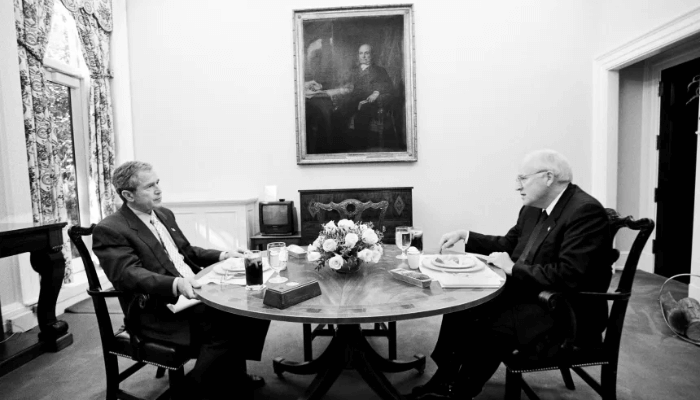
A decade later, as George W. Bush’s vice president, he would again steer America into war, this time in Iraq. After the September 11 attacks, Cheney championed what he called “the dark side” of counterterrorism, endorsing waterboarding and secret detention. He insisted Iraq possessed weapons of mass destruction and had links to al-Qaeda, claims later proven false.
He saw the conflict as a test of American power. “The fact is, we know Saddam Hussein and Iraq were heavily involved with terror,” Cheney said in 2006.
To critics, he embodied the arrogance of unchecked power. To supporters, he was a patriot unafraid to act decisively in dangerous times.
A second act of dissent
After leaving office in 2009, Cheney remained defiant. “I was a strong proponent of our enhanced interrogation techniques,” he said in a 2010 interview, brushing off accusations of torture.
Read also: Peter Obi reacts to Trump’s threat, says Tinubu lacks commitment to end killings
Yet as the Republican Party shifted under Donald Trump, Cheney’s tone changed. In 2022, he warned that Trump’s attempt to overturn the 2020 election marked “a line no American president should ever cross.” He later endorsed Democrat Kamala Harris in the 2024 presidential election, saying: “We have a duty to put country above partisanship.”
Trump, in turn, mocked him as an “irrelevant RINO.”
His daughter Liz Cheney, a former congresswoman and one of Trump’s fiercest Republican critics, said her father “never bent the knee to anyone who disrespected the Constitution.”
A complex legacy
Cheney’s political life was defined by contradictions. A hardline conservative who supported gay marriage because of his daughter Mary, a lifelong Republican who backed a Democrat, and a Washington insider who mistrusted the capital’s moral pretensions.
He survived multiple heart attacks and received a heart transplant in 2012 — a gift he described as “the gift of life itself.”
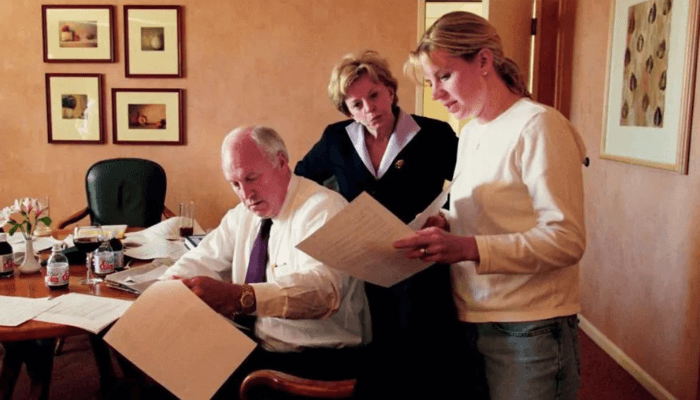
To his admirers, he was the ultimate public servant: disciplined, decisive, and deeply committed to American strength. To his detractors, he was the architect of disastrous wars and an era of overreach.
Yet, as Washington reflects on his death, few dispute his impact. Cheney’s shadow loomed large over two generations of American politics — a man who wielded quiet power and never apologised for the consequences