…As OMO sales rise by 79.2%
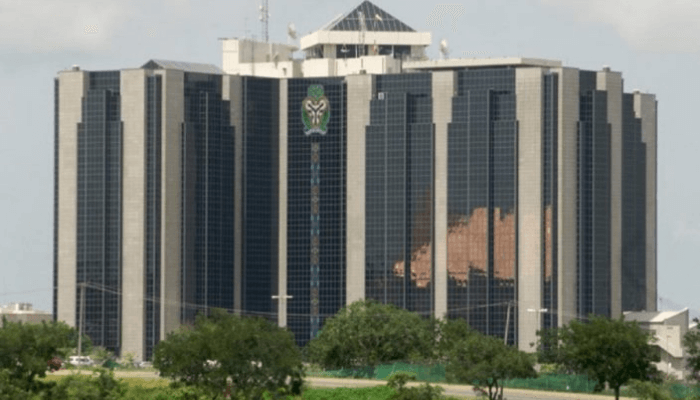
The Central Bank of Nigeria’s (CBN)’s liquidity mop-up through Open Market Operation (OMO) sales increased by 79.19 percent in one year, helping to ease inflationary pressure while supporting naira stability.
Fresh data from the CBN revealed that it withdrew N13.35 trillion from the financial system year-to-date as of August 22, 2025, up from N7.45 trillion in eight months, as of August 27, 2024.
This sharp increase marks a more aggressive tightening stance, especially when compared to 2022 – before the appointment of Olayemi Cardoso as the CBN governor – when OMO sales totalled just N710 billion in the first eight months.

OMO sales are a monetary policy tool used by central banks to manage liquidity (money supply) in the financial system. By selling securities such as treasury bills to banks and investors, the CBN reduces excess cash in circulation, thereby curbing inflation and stabilising the economy.
Nigeria’s headline inflation declined for the fourth consecutive month, easing from 22.22 percent in June 2025 to 21.88 percent in July. Though 0.34 percent may appear modest, it reflects traction in the apex bank’s disinflation strategy.
Read also: How CBN likely rate cuts will impact inflows, naira
How OMO bills help
Ayodeji Ebo, managing director/CBO at Optimus by Afrinvest, explained that OMO bills have been one of the strongest channels for attracting foreign portfolio inflows into Nigeria, thereby boosting FX liquidity for the CBN.

“This comes at a high financial cost to the CBN. The alternative—lowering rates—would risk renewed pressure on the foreign exchange market,” he said.
On inflation, Ebo added that the moderation is more visible on a year-on-year basis, while month-on-month figures remain elevated, showing that short-term inflationary pressures persist and continue to guide CBN’s policy moves.
Echoing this view, Ayodele Akinwunmi, chief economist at United Capital Plc, said the CBN has deployed OMO as a central instrument for managing liquidity and ensuring price stability. He noted that in recent years, OMO has also been strategically used to attract foreign portfolio investments (FPIs), a move that has strengthened naira stability, reduced excess money supply, and supported a steady decline in inflation.
“Collectively, these outcomes have bolstered investor confidence and reinforced Nigeria’s appeal as an investment destination,” Akinwunmi said.
The apex bank’s sustained reliance on OMO has been one of the most aggressive liquidity-tightening measures in recent years. According to FBNQuest, total OMO sales jumped to N13.5 trillion in 2024, up from N723 billion in 2023. Remarkably, during a single auction on November 11, 2024, the CBN sold more than N1.4 trillion in 365-day OMO bills, almost double the total for the entire preceding year.
Why ramping up OMO?
One of the key motivations for ramping up OMO issuance was to attract foreign portfolio inflows and strengthen FX liquidity. Elevated OMO yields, which peaked at 24.4 percent in September 2024, created highly favorable conditions for carry trades, particularly when benchmarked against U.S. treasury yields. Analysts at Coronation Merchant Bank noted: “We expect upward pressure on yields in the near term as liquidity conditions tighten on the back of OMO issuances.”
Similarly, a research note by FSDH Merchant Bank highlighted that in the secondary OMO market on Tuesday, the overall average yield across the curve eased by two basis points, closing at 25.27 percent from 25.29 percent the previous day. Yields across short, medium, and long-term maturities all recorded slight declines.
Despite the aggressive tightening in 2024, average system liquidity still remained in surplus, averaging about N248.5 billion in the first half (H1) of the year, according to data from Norrenberger, a Nigerian integrated financial services group.
By 2025, the CBN had shifted to a more measured monetary policy stance, holding rates steady throughout the H1 of the year. This marks a transition towards a more orthodox and predictable approach after a cumulative 875 basis points hike in the Monetary Policy Rate (MPR) in 2024, which was aimed at taming inflation, stabilising the naira, and improving investor confidence.