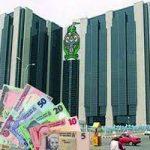
The Central Bank of Nigeria (CBN) has postponed plans for strategically important banks (SIBs) to increase their capital adequacy ratios, pending the unveiling of new foreign exchange trading rules which ensure greater flexibility of the naira.
“Key reasons I think for the suspension are that the business environment is quite difficult and capital raising in these conditions will be equally difficult. In addition, the impending devaluation/ liberalisation of the naira will further erode banks’ capital adequacy ratios (though some banks such as GTBank short term get revaluation gains which provide some capital support),” said Adesoji Solanke, Sub-Saharan Africa banking analyst at Renaissance Capital, in response to BusinessDay questions.
The decision by Nigeria mimics the move of another major oil producer, Kazakhstan, whose central bank in October postponed the introduction of tougher capital adequacy requirements for local banks, following depreciation in the local currency.
The CBN in 2014 ordered the country’s lenders it considered too big to fail, to boost minimum capital adequacy ratios to 16 percent, from 15 percent, to increase their resilience to shocks.

The new rules were scheduled to start on July 1 but have now been postponed, according to Tokunbo Martins, director of banking supervision at the CBN.
“The CBN wants to postpone the rules because the sensible thing to do is reflate the economy and encourage lending,” Martins said.
“An announcement on the new date of implementation will be made by the end of the week,” she said.
Nigeria’s economy contracted in the first quarter for the first time since 2004 and a recession, or two consecutive quarters of contraction, is imminent, the CBN said last month.
The country, which until recently was Africa’s largest oil producer is dealing with crude oil prices that have halved in two years.

Foreign-exchange restrictions aimed at protecting the naira have also caused a dollar shortage, impeding businesses and restricting currency dealing by banks.
The capital adequacy ratio of Nigeria’s largest lenders declined to 16.6 percent at the end of April, from 17 percent a year earlier.
The average ratio of non-performing loans (NPLs) for the banks rose to 10.1 percent in April from below 5 percent at the end of 2014, data from the CBN show.
The regulator is working to bring the ratio within the 5 percent target by encouraging banks “to improve their risk management and also grow capital organically,’’ Martins said.
Nigerian May inflation which increased to 15.6 percent, its highest level since 2010, may also have given the CBN a reason to push back the implementation of new Basel rules for SIBs.
Analysts say the high inflation rate would see the CBN continuing its tightening bias, which combined with higher capital requirements for banks, would choke an already stuttering economy.
“Given where inflation already is…any moves towards meaningful FX flexibility will need to be supported by tightening, in order to restore some degree of credibility to policy,” Razia Khan, Africa chief economist for Standard Chartered said.
Electricity and fuel prices were “key drivers” of inflation, which was also pushed by higher food costs, the National Bureau of Statistics (NBS) said.
Food inflation accelerated to 14.9 percent from 13.2 percent in April. The average price for a liter (0.26 gallon) of gasoline was N150.28 ($0.76) in May, compared with N162.82 the previous month, according to a separate report from the NBS.
The CBN is widely expected to introduce a dual exchange-rate system and weaken the currency when it unveils a new policy, anytime from today.
The move to delay increased capital ratios for Nigerian banks is logical and positive but investors’ shouldn’t get excited too quickly as ratios remain broadly under pressure, according to Renaissance Capital’s Solanke.
“The risks are still mounting and what we would like to see from the CBN is a clear strategic plan on how it plans to address emerging sector risks when its back is against a wall, which is one of the key concerns fuelling depressed equity valuations. Will there be AMCON 2.0? If so, how could it be funded and modus operandi? What does the CBN do in a situation where a Nigerian bank faces risk of default on its FX obligations? These are important questions which we have no answers today,” Solanke said.
PATRICK ATUANYA