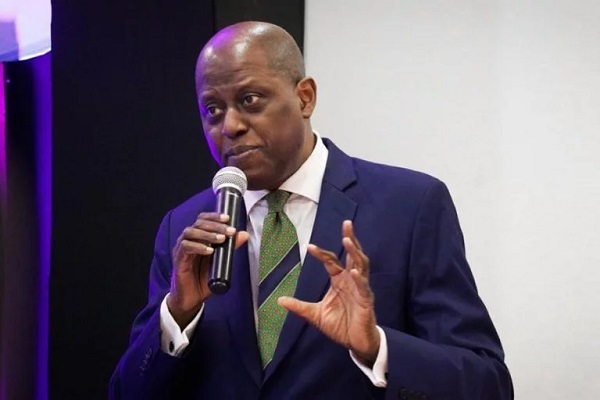
The Central Bank of Nigeria (CBN) kept Monetary Policy Rate (MPR) unchanged at 27.5% on Tuesday, signaling continued caution as inflation slows for a third consecutive month but underlying pressures persist.
The decision announced by Olayemi Cardoso, CBN governor at the conclusion of a two-day meeting of the Monetary Policy Committee (MPC) in Abuja, marks the third straight pause in the current tightening cycle.
All 12 MPC members, he said, voted to hold the MPR, maintain the asymmetric corridor at +500/-100 basis points, retain the Cash Reserve Ratio at 50% for deposit money banks and 16% for merchant banks, and keep the liquidity ratio at 30%.
Cardoso said the committee’s decision was “premised on the need to sustain the momentum of disinflation and sufficiently contain price pressures.”

Headline inflation eased to 22.22% in June from 22.97% in May, driven by declines in energy prices and improved foreign exchange stability.
However, month-on-month inflation rose slightly to 1.68%, from 1.53%, with food and core inflation also accelerating due to higher costs in services, housing, and communication.
“The moderation in energy prices, particularly cooking gas, wood, charcoal, and diesel, played a significant role in easing headline inflation,” Cardoso told a press conference while addressing the outcomes of the MPC meeting.
However, core inflation rose to 22.76% in June, up from 22.28% in May, reflecting continued cost pressures in non-agricultural sectors.
Cardoso reaffirmed the CBN’As long-term commitment to price stability, emphasising the goal of bringing inflation back to single digits.

“The Committee remains committed to the Bank’s price stability mandate and would take appropriate measures to foster stability and confidence in the economy,” he said.
Despite some encouraging signs, Cardoso highlighted significant risks ahead, including geopolitical tensions and ongoing global trade disruptions that could further inflate import costs.
“The continued global uncertainties associated with tariff wars and geopolitical tensions could further exacerbate supply chain disruptions,” the governor warned.
On the financial sector, he expressed confidence in the banking system’s stability, citing strong financial soundness indicators and momentum in the CBN’s recapitalisation program.
Eight banks, he announced, have fully met and surpassed the new capital requirements, with others progressing toward the compliance deadline.
He mentioned the committee’s call on the central bank to maintain strong regulatory oversight to “ensure continued resilience, safety, and soundness of the financial system.”
Cardoso also noted that the external reserves had risen to over $40.11 billion as of July 18, providing about 9.5 months of import cover, helped by improved oil production, rising non-oil exports, and declining import volumes.
He said this reflects the positive impact of ongoing CBN bullish reforms.
He also noted that the economy grew by 3.13% year-on-year in the first quarter of 2025, a modest acceleration from the 2.27% recorded a year earlier, supported by ongoing foreign exchange reforms and macroeconomic stabilization efforts, as highlighted in the new GDP rebasing report released on monday by the National Bureau of Statistics(NBS). The Purchasing Managers’ Index also continued to show expansion, underlining optimism in the private sector.
Looking ahead, the CBN expects further inflation easing in the coming months, buoyed by tight monetary conditions, harvest-season food supplies, and a stable naira, Cardoso stated.
However, he stressed the need to remain cautious, given “persistent uncertainty in the policy environment and underlying price pressures.”
He also acknowledged the role of government efforts to improve food security and urged continued support for farmers through timely provision of seedlings, fertilizers, and other inputs critical to the 2025 growing season.
“The MPC will continue to undertake rigorous assessment of economic conditions, price developments, and outlook to inform future policy decisions,” Cardoso assured.