…Accuses banks of denying SMEs access to FX
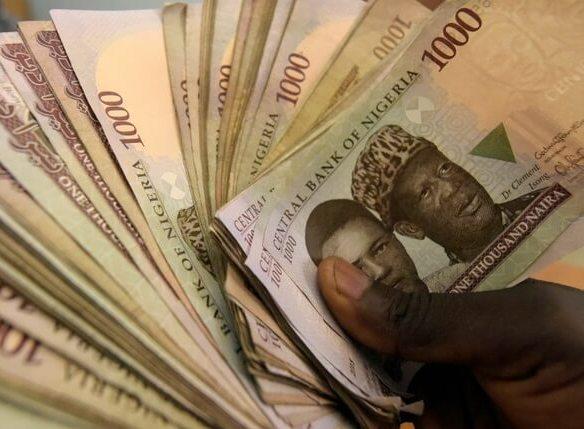
The Central Bank of Nigeria, again on Friday resisted persisting calls by the International Monetary Fund on Nigeria to float the naira.
CBN says Nigeria’s economy is peculiar and cannot function effectively
with recommendations from Washington, as it raises concerns that a a further flexibility would hurt the already struggling economy.
“The call here in Washington is that we should float the naira, liberalise the market; our market is extensively liberalisedand the call to float the naira is a bit laughable in our case.

“If we float the naira and we allow speculators and those with corruption money and all the people who create the bubbles to launch into the market, you can yourself imagine the kind of situation we will find ourselves,” Isaac Okorafor said, addressing journalist on the sidelines of the ongoing spring meetings of the World Bank and IMF.
IMF officials, including managing director, Christine Lagarde continue to urge the Nigerian government to devalue the Naira to absorb some of the shocks to the economy from a plunge in oil prices and revenues.
The officials recommend that authorities should remove the remaining restrictions and multiple-currency practices, thus unifying the foreign-exchange market and helping regain investor confidence.
But Speaking on the recent call at the spring meetings, okorafor said, “Yes, we would go all out to practise economic theory the way they say you should allow your currency to float. Of course, you should also know that no country floats its currency; just leaving it to the dictates of the market.
“Yesterday, when Madame Lagarde was discussing the economy of Egypt, she lamented herself, the devastating inflation that is in that country.

He explained that Egypt for instance has half of Nigeria’s population, receives about 12 billion in foreign earnings and several billions in tourism.
“We are 180 million people, our infrastructure is so poor and the productive capacity cannot be fast enough to rise to benefit from massive depreciation.
“If you float the naira today, and given the discoveries by security agencies, you’ll discover that our case will be terrible. If Egypt today has an inflation rate
of almost 31 percent, remember Angola also has about 36 percent inflation, ours is at 17.26 percent.”
Okorafor also said banks were denying Small and Medium Enterprises (SMEs) access to foreign exchange and warned that the CBN would go after those defaulting institutions.
CBN, earlier in the month opened a special Forex window for Small and Medium Enterprises (SMEs) to enable them import eligible finished and semi-finished items which must not exceed $20,000 for an enterprise per quarter.
The CBN said the special intervention was because a large number of SMEs were being crowded out of the forex space by large firms and insisted that all processing banks are to ensure that the importers submit relevant shipping documents not later than 60 days from the date of the transfer.
But Okorafor complained that banks were not complying despite huge FX available to them.
He said, “It has become necessary that we bring to your notice the complaints from customers, especially those who operate in the ASMEs segment of the market that banks are frustrating their efforts at getting forex.
“We have reviewed all these complaints and found out that they do not have evidence and so we want to use this opportunity to appeal to customers of banks and the SMEs to pleas give us concrete evidence against these banks so that we can hold them responsible by way of sanctions.
“Get a photocopy of your Form Q, Form X, Form A or Form M. Give us the name of the bank, branch and send to us and we will deal with them as example to others.
We also say to all Nigerians that the only way we can make things better for you is to call the CBN whenever you are in trouble or whenever you get frustrated.
“We have a number you can call or you send an email to our Consumer Protection Department. We want to urge everyone who is frustrated by banks to call and lay complaints. We assure you you will get redress,” Okorafor added.
Onyinye Nwachukwu