Ahead of the November 2022 target for completion of the ongoing construction of the 21 billion National Theatre project at Iganmu Lagos, by the Central Bank of Nigeria (CBN), the banking sector is said to be open to creative minds and is ready to explore untapped sectors of the economy.
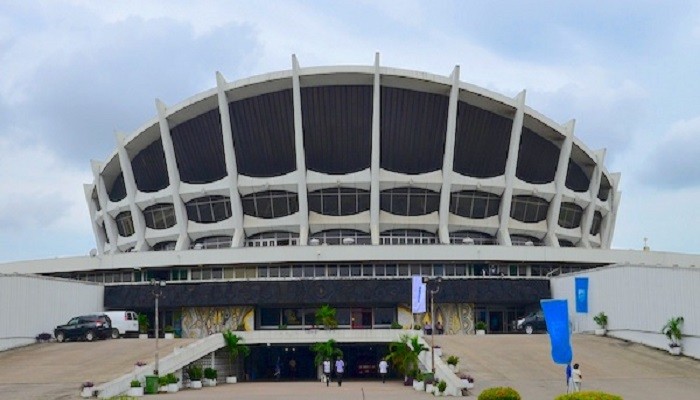
National Arts Theatre is one of the most iconic buildings in Nigeria built nearly 45 years ago.
On October 5, 2019, President Mohammadu Buhari gave his go ahead for the reconstruction of the National Theatre, Iganmu Lagos into a world class convention centre, for the development of the creative sector in diverse areas including entertainment, movie, music, fashion and Information and Communication Technology (ICT).
Also, February last year, the Federal Executive Council (FEC) approved a Memorandum of Understanding (MoU) between the Ministry of Information and Culture, the Central Bank of Nigeria (CBN) and the Bankers Committee for the renovation of the National Theatre.

Consequently, the national asset built in 1976 for the purpose of celebrating the Festival of Arts and Culture, FESTAC, was handed over to the Bankers Committee and the CBN for renovation.
Under the agreement,the CBN is expected to provide about N21. 89 billion for the project and is expected to manage it for a few years before handing it over to the government.
The project being the initial investment in the creative industry, the government is expected to create at least 1 million jobs in the next three years.
WITH about $100 million already injected into the project, Emefiele, in April this year, disclosed that the project will still require another $100 million from the body of bank chief executive officers and the CBN.
Considering the level of completion of the renovation work, amid new services routes, remodeled interior spaces, nearly 300 units of conveniences, 3,000 square-metre roof terrace, which had been a major source of leakages is now replaced, while the floors, walls, panels, and ceilings had been stripped back as part of a plan to ensure that all underlying structures are able to support new finishes.

The renovated theatre is also offering a 4,000-seater main bowl, the new stage infrastructure with future-fit performing arts spaces for dance, theatre, music and multimedia with adjustable acoustics and advanced technical systems adaptable to the requirements of audiences, artists and sponsors.
Also, the banquet halls and exhibition spaces as well as the two 500-seater cinemas now wear new walls, floor and ceiling finishes. Also, a station of the Lagos rail is expected to complement other world-class faculties expected at the theatre complex later including; a five-star hotel, ultramodern car park, Leisure Park, artists’ village among others.
Looking at the impact of the renovation, the Bankers’ Committee explained that the revamping of the theatre is necessary considering that Nigeria has the potential to earn over $20 billion annually from the creative industry.
Meanwhile, the CBN in collaboration with the Bankers’ Committee as part of efforts to boost job creation in Nigeria, particularly among the youth, has developed a Creative Industry Financing Initiative (CIFI).
The CIFI is a loan scheme developed in collaboration with the CBN to provide access to long-term and low-interest financing for entrepreneurs in the creative industry, including Fashion, Music, Movies, and Information Technology.
The initiative has four pillars, namely: Fashion, Information Technology, Movie and Music. “Interested applicants in the creative industry are hereby advised to submit applications to their banks for approval and disbursement,” the CBN said in a statement.
Using the Agribusiness/Small and Medium Enterprises Investment Scheme (AGSMEIS) fund, through which the banks set aside, on an annual basis, 5 percent of their profit after tax the goal of the CBN was to support start-ups and existing businesses in the creative industry space, as well as the development of a creative industry park across three major cities in Nigeria.
With the kind support of the Federal and Lagos State Governments, Emefiele said the National Theatre Iganmu in Lagos is expected to serve as the initial pilot for the Creative Industries Park.
While receiving the edifice on behalf of the Bankers Committee and development partners in 2019, Godwin Emefiele, governor of the Central Bank, marvelled at the size of the national theatre, noting that when fully developed, it will be 10 times the size of the convention centre in Peru.
Emefiele who commended President Buhari for his foresight in transforming the national theatre into a high revenue generating hub, stressed that under the CBN Creative Industry Financing Initiative, a hub would be built around the edifice to accommodate talented youths, so that they can develop their God given gifts.
In February 2021, when the CBN and the bankers committee signed Memorandum of Understanding (MoU) and awarded contract for the restoration and refurbishment of the National Arts Theatre, Emefiele noted that Committee was providing funding for a prototype cluster located to the north of the National Arts Theatre, a development which he labelled the “Signature Cluster”.
He said the facility will be a convenor – providing space, support network, business development and community engagement for the creative, cultural and technology sectors. The Signature Cluster will consist of a building each for Music, Film, Fashion and Information Technology verticals. In addition, a Welcome/Visitor’s Centre, Police and Fire Stations, and structured parking for up to 500 vehicles will be built.
Read also: What to expect as National Theatre gets N21bn makeover
Consequently, he said the 44 Hectare site adjourning the National Theatre will be developed and utilised for the development of purpose-built creative hubs for the Fashion Industry, Music and Film as well as Information Technology (IT).
The aim, he said, was to deliver a successful creative and entertainment city that will encourage additional investment into Nigeria’s creative industry.
In addition to the four signature buildings, Emefiele said other support facilities include multi-storey parking to accommodate 500 cars (the National Theatre currently has dedicated parking for 250 cars), a police station, a fire station and a visitors’ Welcome Centre.
“To ensure the National Arts Theatre and the adjoining entertainment hubs retain its decent and magnificent ambience, upon completion, the Ministry of information and the CBN/ Bankers committee will ensure that the edifice is managed by a world class Facility Manager to be appointed using competent/ reputable consultants,” Emefiele said.
The main contractor for the project is Cappa & D’Alberto Limited; the Electrical Sub Contractor is Nairda Limited, while the Mechanical Sub Contractor is VACC Limited.
Since the creation of CIFI by the CBN, banks have continued to key into the initiative to sensitise their customers on the benefits.
“Get up to N500 million to finance your creative business with the Creative Industry Financing Initiative, supported by GTBank and funded by the Central Bank of Nigeria. This facility is available to entrepreneurs in fashion, music, movie production, and information technology,” GTBank said in a statement.
Access Bank plc in July 2019 engaged the players in the creative industry in understanding the benefits, features, terms and conditions of the N21.9 billion fund set aside by the Central Bank and the Bankers Committee for Creative Industry Financing Initiative.
The creative industry players to benefit from the fund after meeting the requirements include those in fashion, music, Information Technology (IT), entertainment as well as student loans.
The CBN and the Bankers Committee had commissioned Access Bank and GTBank as the lead banks in the CIFI project, which runs into phases, being piloted in Lagos and would be replicated in other areas.
Consequently, Access bank was the first to have submitted applications to the CBN for the disbursement of the fund.
To be considered for the Creative Industry Financing Initiative, your business must satisfy the following requirements: be a part of the creative industry (fashion, music, movies, and information technology), registered with the Corporate Affairs Commission (CAC), submit a comprehensive business proposal, clean credit bureau report with no unpaid obligations, satisfactory Credit Risk Management System (CRMS) report of owners, sponsors and directors.