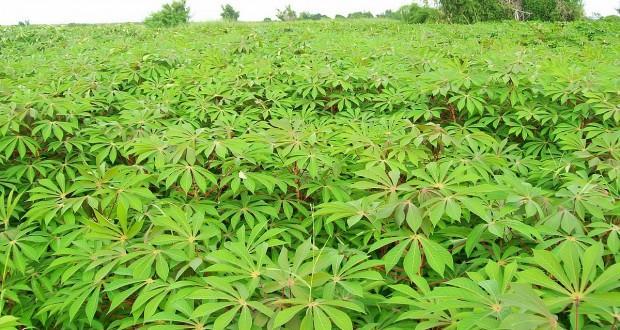
There is a sigh of relief for livestock farmers as scientists see cassava as a substitute to maize in feeding the livestock.
Leading the campaign is the Market Development Programme in the Niger Delta (MADE), which has elected to find a solution to the scarcity of maize across the country and reduce the pressure on the livestock industry.
To explore a research earlier done by the National Root Crops Research Institute (NRCRI), MADE held a workshop recently in Benin with the theme ‘Prospects and Opportunities in Substitution of Livestock Feed with Cassava Derivatives in the Face of Rising Cost of other Feed Ingredients’.
“Cassava can be used in the formulation of livestock feeds with cassava root meal, leave meal and composite meal as an alternative for maize in feed formulation,” said Chioma Ekwe, research scientist, National Root Crops Research Institute (NRCRI).
“The use of maize is better for the formulation of feed meal for livestock because of the cyanide content in cassava which is toxic. But the research has come up with ways that cassava can be fortified and it will be as good as maize in the production of poultry feeds,” Ekwe said.
According to her, about 10miligramme cyanide content is required per kilograms in the formulation of livestock feed mills.
The price of maize has increased in recent months owing to army worm infestation, which has ravaged maize crops in the South-West region and has now spread to the North-Central region. The infestation has reduced locally available maize; forcing livestock feed industry to resort to importation.
Despite Nigeria being the largest producer of cassava, processors are still unable to pull demand for their High Quality Cassava Flour (HQCF). To create a market for cassava processors, the Federal Government under Goodluck Jonathan came up with the 10 percent cassava flour inclusion policy but the policy was abandoned as flour millers claimed they could not get quality cassava locally.
Tunde Oderinde, team leader, MADE, said, “a lot of cassava processors are struggling to sell their cassava flour because the millers are not interested in buying flour despite 10 percent government policy on inclusion.”
“We are looking at finding solutions to the market constraints by creating demand of cassava which will pull the supply from the farmers,” Oderinde said.
He noted that since maize scarcity is now a major problem for the poultry industry which consumes about two million metric tons per annum, cassava processors now have a big opportunity, especially as the country has a comparative advantage in its production.
“If maize could be substituted by 50 percent, it means there is a potential demand of about a million metric tons for cassava yearly.
“Within the feed meal we are willing to explore and consult widely. We just heard that the millers doing fish feed are also using HQCF. For us, it is to estimate the demand and see how we can link some of the processors to such millers,” he added.
Also speaking during the workshop, Francis Tomadore, group head-policy and strategy-, Amo Byng Nigeria Limited said, “generally in Nigeria we have never relied sole of locally produced maize. We have always substituted with maize. But with the scarcity of dollars, it has been difficult to import maize.”
Official figures in the maize production show an estimated supply gap of about 500 million metric tonnes yearly, which the country is importing yearly to bridge the demand-supply gap.
“If cassava can be used to substitute maize, this will reduce the pressure in maize production and importation of maize into the country to a certain percentage. For us this is a welcome development,” Tomadore said.