



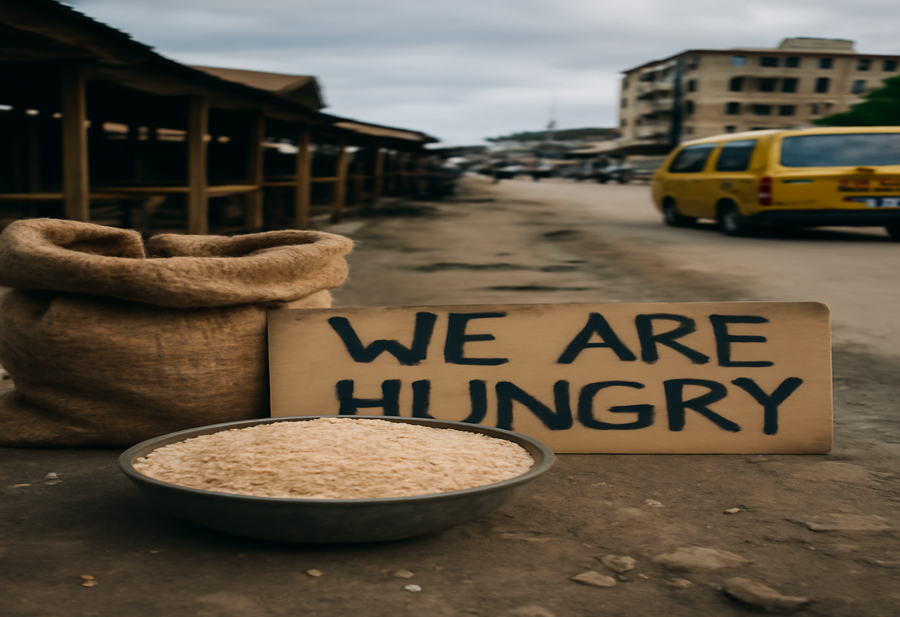
By 1989, three years into Nigeria’s 1986 reform program, many citizens felt betrayed. Living conditions worsened, prices rose, and reform promises faded. Trust between the government and its people collapsed as daily life grew harder.
By 2026, today’s reform effort will also be three years old, yet the benefits remain uncertain. Many still echo the phrase “ebi npa wa” — “we are hungry.” International institutions point to progress: inflation is easing, the currency has steadied. But for households, food and other essentials remain painfully expensive.
For most Nigerians, economic statistics mean little. Survival matters more. “Feeding and transport fare is my problem. I have three children, and raising them now is a challenge. Before, I could manage with my small income, but now, even though my employer increased my salary, it is still far from what we consume,” said Ogunniyi Olabode, a teacher.
The IMF acknowledges this disconnect. “Important steps to stabilise the economy and support growth… But those gains have yet to benefit all Nigerians, as poverty and food insecurity remain high,” said Axel Schimmelpfennig, IMF Mission Chief for Nigeria.

Unless the government shifts its focus, experts warn, reforms risk being seen once again as policies designed to please international lenders rather than improve daily life, a perception that fueled resentment in the late 1980s and one the current administration cannot afford to repeat.
The election cycle trap
2026 is more than just another year in the reform timeline; it is also the year before Nigeria’s 2027 elections. Historical patterns show that election years often distort economic management. Government spending balloons, money circulates more freely, yet tangible economic progress remains elusive.
Inflationary pressures mount, institutions bend to political considerations, and reform momentum is stifled. Should Nigeria fall into this trap once more, the credibility of its reforms could be compromised.
Kashim Shettima, Vice President insists reforms are working: “Our administration is pursuing one of the boldest economic reform agendas in Nigeria’s history … because resilience is not passive, it must be planned, built, and protected.”

For many Nigerians, however, such assurances mean little unless they translate into relief at the market and at the bus stop. Avoiding this pitfall requires a renewed social contract and swift corrective action. Other nations offer useful lessons on how to manage reform fatigue while navigating political realities. Three stand out:
Protect households first
Kenya faced public outcry when it eliminated fuel and food subsidies. The anger subsided only after it introduced targeted cash transfers and food programs for its most vulnerable households. Nigeria has begun moving in this direction, but challenges such as uneven coverage, inadequate data, and corruption hinder effectiveness.
Expanding the national social register, digitizing transfers via mobile money, and enlisting trusted community leaders to select beneficiaries would ensure that aid reaches those most in need, particularly in rural areas and among informal workers.
Lock in reform gains
Nigeria’s election years follow a predictable pattern: money flows, inflation spikes, and households bear the brunt. Ethiopia, facing similar pressures, responded by protecting key staples, such as wheat, fuel, and medicines, through strategic reserves.
This strategy aimed not to stop political spending but to shield citizens from its worst impacts.
A Nigerian adaptation could involve a National Essentials Buffer Fund, financed from subsidy savings or oil revenues, with oversight from partners like the African Development Bank or the World Food Programme.
This fund could stabilize the prices of rice, maize, fuel, and medicines during election years, preserving the credibility of reforms in the areas that matter most: household budgets.
Olayemi Cardoso, CBN Governor has stressed the gains so far: “This renewed stability has restored confidence and spurred autonomous inflows through formal channels. These inflows are diversifying our foreign exchange sources beyond oil.”
Such stability, however, must translate into affordable prices for households if reforms are to gain lasting legitimacy.
Build local buy-in
In the late 1990s, Indonesia’s IMF-backed reforms faltered because citizens saw little local benefit. The government regained trust by explaining trade-offs, consulting communities, and reinvesting savings into visible projects such as schools, clinics, and roads.
Nigeria could adopt a similar approach by transparently demonstrating how savings from subsidy removals or debt agreements are reinvested into local infrastructure. Citizens need to see tangible proof that reforms are more than just fiscal adjustments.
As Taiwo Oyedele, Chair of the Presidential Committee on Fiscal Policy and Tax Reforms, argued: “I hear people say 15 percent inflation is not possible, but I disagree. …The reforms in place will limit key inflationary factors, paving the way for even lower rates.”
Optimism like this can only hold if citizens feel direct improvements in their daily lives.
A narrow window
Nigeria has less than two years before electoral politics complicate reform management. Without tangible relief for households, fiscal safeguards against pre-election spending, and visible reinvestment of savings, reforms risk being dismissed as they were in 1986: economically sound but socially rejected.
Rebuilding trust requires more than macroeconomic stability. It is about convincing Nigerians that reforms serve them, not foreign creditors or political elites. The next two years will determine whether these reforms become a turning point or another broken promise.





