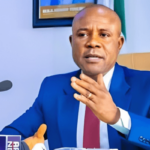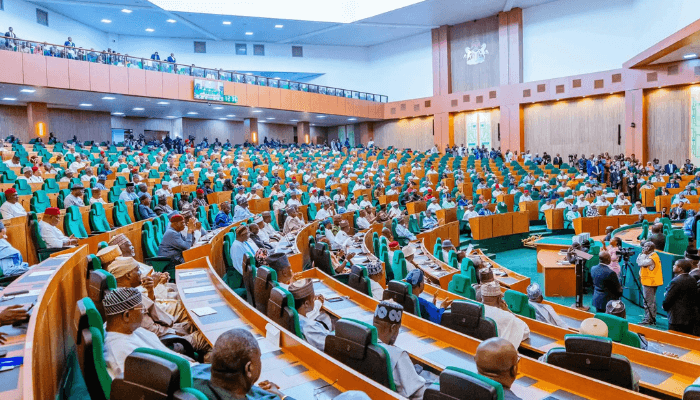
The Senate, through its Committee on FCT Area Councils and Ancillary Matters, on Thursday appealed to the National Association of Resident Doctors (NARD), Federal Capital Territory (FCT) chapter, to suspend their ongoing strike, promising to take up their grievances with Nyesom Wike, the FCT Minister.
Led by David Jimkuta (Taraba South), members of the committee held an emergency meeting with the striking doctors, assuring them that their demands would receive urgent attention.
He disclosed that initial contact had already been made with the minister.
Senator Jimkuta, while acknowledging the impact of the industrial action, pleaded with the doctors to return to work.

He said, “We are pleading with you. Continue to save lives. Call off this strike. Give us the opportunity.
“I will take up this matter personally with the Minister; at the latest tomorrow, I will see him.”
“I believe something concrete will happen because we cannot allow our people to keep dying while doctors are on strike,” he added.
He described the demands of the doctors as “selfless,” stressing that they were aimed at strengthening the health system rather than serving narrow interests.
According to him, while many doctors had left the country in search of better opportunities, those still in Nigeria were simply asking for fair pay, improved working conditions, and access to basic equipment.

The FCT doctors embarked on an indefinite strike last week over welfare concerns and poor infrastructure in public hospitals.
Read also: FCT resident doctors begin indefinite strike over unmet demands
Their demands include payment of outstanding salary arrears from 2023, reinstatement of inexplicably deducted allowances, and the proper upgrading of doctors who completed specialist training but are still being treated as medical officers.
They also lamented the lack of essential diagnostic tools such as x-ray machines and echocardiographs in several hospitals, which, they said, undermined effective patient care and placed undue pressure on medical staff.
The association accused the government of failing to honour previous promises, noting that earlier strikes had been suspended in good faith but with little follow-through on commitments.
This, they argued, has fuelled frustration and driven more medical professionals to leave the country in search of better opportunities abroad.
Experts estimate that almost 90 per cent of doctors trained in Nigeria now practice outside the country, leaving hospitals grossly understaffed.
During the meeting, members of the committee sympathised with the doctors, admitting that their concerns highlighted the dire state of Nigeria’s health sector.
One senator said: “What they are saying is not new. We see it every day. Their demands are not for themselves; they are for Nigeria. These resident doctors can go anywhere in the world to earn more, but they have chosen to stay and serve us.”
Another lawmaker decried the absence of basic facilities in hospitals, saying, “The X-ray machine is the simplest of medical equipment, yet many of our hospitals do not have it. Nobody wants to work under such conditions.”
While backing the doctors’ demands, the lawmakers urged them to provide comprehensive statistics on unpaid salaries, withheld allowances, and manpower shortages to help parliament press their case more effectively before the executive.
They also called for a joint session involving the FCT health administration and the doctors to enable both sides to table their positions and negotiate in good faith.
“We can spend the whole day talking English, but it will not solve anything unless we sit down with the Minister and his team. Our people are dying, and this must be resolved quickly,” Jimkuta warned.