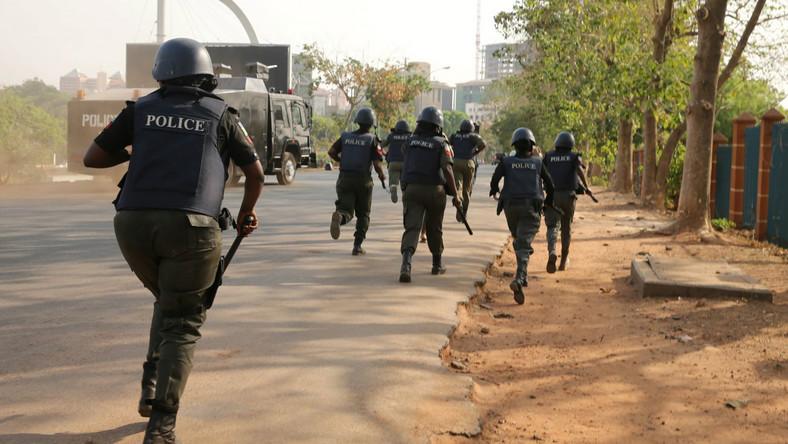
As Nigeria continues to battle worsening security challenges ranging from banditry and kidnapping to terrorism, insurgency, and communal violence, citizens across the country are increasingly seeking grassroots security measures, while calling for self-defence.
The spate of security challenges is not confined to Northern Nigeria. In the South, militancy, piracy, secessionist agitations, cultism, and cybercrimes further complicate the nation’s fragile security landscape.
Many citizens are worried, there is fear the country is drifting dangerously toward anarchy, especially with the federal government’s seeming unwillingness to act decisively in checking the trend.
The situation has made travelling by roads within the country increasingly frightening, especially with reports of daily kidnapping and the forests occupied by terrorists.

A recent report by The Nigeria Youth Forum (NYF), revealed that at least 3,610 Nigerians were killed by bandits and Boko Haram insurgents between January and March 2025.
Also, Nigeria recorded more than 600,000 deaths from insecurity between May 2023 and April 2024, according to data by the National Bureau of Statistics (NBS).
The report stated that no fewer than 614,937 people were killed nationwide as the banditry-ravaged Northwest saw the highest figure with 206,030.
Last Saturday, about 200 people were killed by gunmen suspected to be armed herders at Yelewata in Guma Local Government Area of Benue State.
The incident, according to a resident from the area, said that the attackers suspected to be armed herders invaded the community around 10pm on Friday and operated till early hours of Saturday.

Similar killings have also become regular in Plateau and adjoining states. The wave of killings and security crisis has sparked public outrage across Nigeria.
Many citizens are calling for a law legalising self-defence in which people can now bear arms to protect themselves.
“The ongoing killings in Benue State and others are unacceptable, and the governors’ inaction is questionable. While some governors are advocating for state police, others have already taken matters into their own hands by empowering local security groups,” Stanley Uwa, a public affairs commentator, said.
Speaking further, he pointed out that the governors of Benue and Plateau should explore available options to address the security challenge, including recruiting and empowering local youths to protect their communities.
“Nigeria must come to realise that the country is too big for the federal police alone, we need state police,” he demanded.
Although the call for state police is not new in Nigeria, as it has been there for decades, however, the agitations have become more pronounced, with many people, even politicians saying that it was long overdue in the country.
However, some Nigerians have argued that it would be turned into a tool in the hands of state governors to hound their perceived political enemies.
Some states, especially in the south have taken the bold state to set up security outfits, like the Amotekun in the South-west, Ebubeagu in the South-east, the Benue Guards and Operation Rainbow in Plateau in the North-central zone, Kano Hisbah, the Community Watch Corps in Katsina State, and vigilance groups.
Security experts say if similar frameworks are extended to the community level, it will yield better results in the fight against insecurity in the country.
Read also: Nigerians in diaspora, Police to bolster community policing with new crisis mitigation centre
State, community policing long overdue
Although the present administration headed by President Bola Tinubu has spoken in favour of community policing and state police, it has not taken decisive steps towards actualising it.
But security experts have warned that the government cannot continue to close its eyes to the problem at hand. They said that the continued spate of insecurity and killings have necessitated a compelling need for community engagement and ownership in the provision of sustainable security.
Former Chief of Defence Staff, TY Danjuma (rtd) said it was necessary. He renewed his longstanding call for Nigerians to rise in self-defence against non-state actors.
Reacting to fresh waves of violence in Plateau, Benue, and other states, Danjuma insisted that citizens can no longer afford to remain passive while bandits and terrorists wreak havoc.
Danjuma pointed out that the rising tide of violence from bandits and terrorists demanded a collective response.
He urged citizens to adopt self-defence measures as a vital strategy in safeguarding their communities, warning that if the people do not stand up and defend themselves, bandits and terrorists will take over the society.
The Director-General of the Department of State Services (DG DSS), Oluwatosin Adeola Ajayi, earlier this year, supported the call for community policing but warned on the need for arms control and some form of approval and guidance.
He said, “We have to allow some level of armament for the community policing so that they can serve as the first line of defence. When we leave here, those of us who have some influence, the elite, discuss with your communities. Come to us. Get some form of approval and guidance.”
Reacting to the current situation and the idea of community policing, an internal security analyst, Ahmed Isa, said calls for community-based security was in sync with global best practices.
He said that this would bring about a more inclusive, modern, and adaptive security paradigm and not a jungle-justice type of security architecture.
According to him, it is unrealistic to expect that Nigeria’s security forces, stretched across the 36 states and over 774 local government areas, can single-handedly protect every citizen, every village, and every road at all times.
The scale and flexibility of modern security threats, ranging from banditry to terrorism and cybercrime, require a broader, more grassroots approach. The DSS boss’s comment doesn’t signal despair but a genuine strategy that builds local resilience.
Isa said: “The idea that communities should be involved in their security is not a radical dereliction of duty; it is consistent with successful models worldwide. For instance, countries like the United States of America still have federal security agencies, but have community-based policing as a complement.
“So, why won’t Nigeria have neighbourhood watches, local vigilance groups, and community-police partnerships that would work in villages, given that they have better knowledge of their terrain?”
Experts call for caution
A security analyst, Jonah Moses, called for caution in practising community policing in Nigeria. He argued that such a situation could lead to anarchy if not properly managed.
“The call for self-defence, while understandable given the horrific killings we witness daily, is practically a call for anarchy. The country would descend into chaos faster if not properly managed.
“Also, how exactly are civilians supposed to confront hardened criminals armed with sophisticated weapons? Imagine farmers with Dane guns facing bandits wielding AK-47s, AK-49s, and RPGs. That’s not self-defence; that’s suicide,” Moses said.
Similarly, Wunmi Bewaji, a lawyer, said it was imperative that the country does not rush into creating state police without putting the necessary machinery in place to sustain it.
Bewaji argued that funding was crucial in sustaining such an arrangement and wondered how many states in the country could fund and buy arms for their state police.
“The president is not against state police; he just wants to be sure that states have the money to fund such an arrangement when it is set up. That is an area that must be solved first,” he told BusinessDay.
Constitutional reform needed to accommodate state police – Tinubu
President Tinubu has said that there was the need for urgent overhaul of Nigeria’s security framework through constitutional reform to accommodate state police to check the country’s deepening security challenges
Speaking last week in Abuja during a one-day legislative dialogue on constitutional review and national security architecture, organised by the House Committee on Constitution Review in collaboration with the Office of the National Security Adviser.
“The debate over State Police is no longer theoretical. It is grounded in the daily fears and anxieties of Nigerians: farmers afraid to tend their fields, traders unsure of safe passage, and communities abandoned to self-help,” Tinubu said.
The President described Nigeria’s 1999 Constitution as foundational to its democracy but outdated in dealing with modern security threats. He cited the rising complexity of terrorism, cybercrime, farmer-herder conflicts, piracy, and separatist agitations as clear indicators that the current legal framework is inadequate to secure Nigeria’s vast and diverse territory.
“The pace of change in technology, in the complexity of security threats, and in the dynamics of our federal structure has far outstripped the capacity of some constitutional provisions. Our Constitution must evolve or risk becoming a danger to the very unity it was meant to protect,” he said.
Tinubu called for bold constitutional amendments that would move policing from the Exclusive Legislative List to the Concurrent List, enabling states with capacity and political will to establish their own police forces.
Some countries, particularly in North America, Europe, and Asia, have embraced community policing and integrated it into their policing strategies. These include Canada, the United States, Japan, and Singapore. There are Africans that are also implementing community policing.