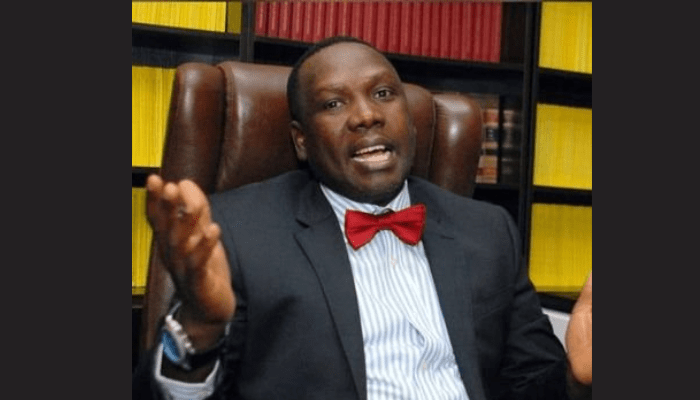
The presidency has defended heavy federal investment in Lagos State, saying the city is the heartbeat of Nigeria’s economy and deserves special attention. Daniel Bwala, special adviser to the president on policy communication, said Lagos is not just a state but a national asset that carries the country’s commercial weight.
Bwala’s comments followed arguments that federal projects were being distributed unfairly across Nigeria’s regions, with claims that Lagos was receiving more than its share. Government figures, however, show that the Northwest holds the largest chunk of federal approvals, not Lagos.
On Arise Television, Bwala said Lagos “belongs to all Nigerians” because of its cosmopolitan nature. He compared it to global cities like London, New York, and Paris, adding that nearly every wealthy Nigerian has investments in Lagos. “The richest man in Africa is from the North, but his business base is in Lagos,” he explained.
He also justified reports that Lagos has received about ₦3.9 trillion worth of federal projects in two years. According to him, this is reasonable because Lagos is the commercial hub of the country and a city that sustains Nigeria’s economy. “The idea that you put more in Lagos than in other states should be put into context. Lagos is the pride of the country,” he said.

However, his description of Lagos as “a no-man’s land” sparked outrage online. Many social media users accused him of dismissing the Yoruba heritage of the city.
Responding to the criticism, Bwala clarified his remarks in a statement on X (formerly Twitter). He stressed that Lagos is historically and culturally Yoruba land, and that this was not in dispute. His point, he said, was that Lagos has a unique role that serves all Nigerians and West Africa at large.
Read also: ‘Presidency may not be God’s will for you’ – Bwala advises Atiku
“Lagos provides every Nigerian, regardless of origin, a level playing field to thrive. That is why it must receive strong federal investment,” Bwala explained. “Any president who truly seeks to succeed must support Lagos, not because it is ‘no man’s land,’ but because it is the heartbeat of national development.”
Meanwhile, the federal government has also tried to correct what it calls misleading claims about lopsided projects. In a graphic shared earlier, Lagos was wrongly singled out as receiving more than the Southwest region. Mohammed Idris, minister of information and national orientation, explained that Lagos is recognized separately because it is considered Nigeria’s commercial hub.

Budget Office data later showed that the Northwest actually received the lion’s share of project approvals, about ₦5.97 trillion, more than any other region. Lagos’ so-called trillions include national roads and transport corridors that pass through the state but serve the entire country, not Lagos alone.
Analysts say the debate reveals a deeper struggle between regions over federal resources. While some argue that Lagos is already too privileged, others stress that its economic weight makes investment there a benefit to all Nigerians.
For now, Bwala insists that the controversy should not be about ownership but about sustaining a city that drives Nigeria’s economy. “Lagos is Yoruba land, but it is also the place where Nigeria breathes economically,” he said.