In 2010, I gathered my housemates one evening to watch the premiere of a new 3-part BBC documentary called “Welcome to Lagos.” This documentary, I hoped, would finally disabuse them of the notions they had about Nigeria being some sort of conflict-ridden hellhole filled with starving children and flies. They would finally understand the socio-economic context I came from and let go of the lingering misconception that I must either be the child of a high-ranking government official or a recipient of a sympathy aid scholarship.
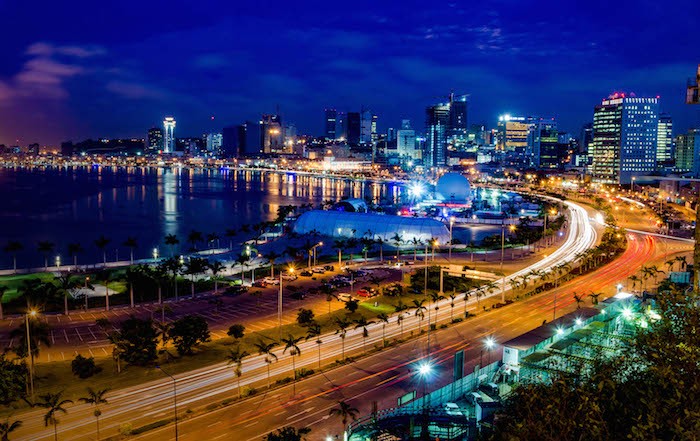
Instead, what happened over the next 45 minutes was nothing short of sheer mockery. The documentary titled “Welcome to Lagos” spent three 45-minute episodes telling the story of a wannabe musician living in the Olusosun landfill on the outskirts of Lagos. There was no Ikeja, no Victoria Island, no Ikoyi, no Lekki, no Surulere, no Ogudu, no Gbagada, no Ilupeju, no Marina – not even an Idumota or an Oyingbo. Just 135 minutes of the purest, most humiliating poverty porn you have ever seen.
Apart from the rage and humiliation I felt in that moment, I came to a very important realisation about how the world works and what my role within it would have to be. It is a realisation that has stuck with me through the intervening 11 years across two continents and three career paths. It was an epiphany that can be summed up in the next 6 words:
The word ‘Africa’ has no nuance

Something that is a constant recurring decimal in the discourse of upwardly mobile, globally exposed African people is the sense of irritation at how the entire African identity is perceived as one homogenous, negative monolith. Disease, war, starvation, overpopulation, lack of technology, terrible infrastructure, lack of skills and innovation, visibly horrifying urban aesthetics – these are the universally recognised elements that makes up the brand that is “Africa”.
Read Also: LIRS charges Lagos residents to file in returns for 2021 assessment
Wherever you go on this planet, as long as you are recognised as “African”, you are guilty of these things by association – even if you grew up very far removed from such experiences as many of us did.
Wherever you go on this planet, as long as you are recognised as “African”, you are guilty of these things by association – even if you grew up very far removed from such experiences as many of us did. The solution that some of us have touted is the ubiquitous “Avoid the single-story” narrative, which seeks to impress upon people something along the lines of “Hey look, don’t just talk about the bad stuff – Africa has a lot of good stuff too! It is a complex continent with good and bad like anywhere else and both sides should get equal coverage.”
This is certainly an admirable ideal and it is definitely true that Africa does in fact have a lot of neutral or positive material to take note of. It is also a historical fact that a global racial hierarchy with origins dating back to the Slave Trade and European colonialism have contributed in no small way to colouring the world’s reflexive view of Africa. It is thus a great thing to work to reverse this centuries-old brainwashing process by letting people know that Africa in fact, has a multiplicity of narratives like anywhere else on the planet.
The problem is – to put it lightly – prejudices die very hard. Every year, Nigerian can produce 30 Chimamandas, 50 Soyinkas, 85 Achebes, 125 Okochas, 300 Wizkids and the world’s entire medical labour force – none of this will significantly alter the image of “Nigeria” or “Africa” in the popular imagination as a magical place of desolation, ruin and dancing savages. For as long as even five percent of Nigeria confirms those stereotypes, the next time anyone wants to shoot a “Welcome to Lagos” follow-up, you can be sure that they will hunt down that poverty porn set to produce the prejudice-confirming content that their viewers know and love.

You have to change it – no one else will
What I slowly came to understand was that if you want your narrative in the world’s popular imagination to change, you have to do it the hard way. In other words, it is impossible to convince people who are not from Africa that Africa is not one contiguous re-enactment of ‘Black Hawk Down’ or ‘Blood Diamond.’ It is not just that they need alternative stories to expand their worldviews – it is that they like the story as it currently exists in their minds.
The idea of an “Africa” that does not confirm stereotypes invented in the 17th century to justify slavery, is not an especially appealing one to most non-Africans. It is not that they particularly hate Africa as such – just that the effort of rearranging their mental architecture to think of Africa in a different way is just too much work. Why should they go through that much effort? What is the payoff if they do? They get the approval of a few hundred thousand elite Africans whose opinion is completely irrelevant in the larger scheme of things? I’m sure you see my point.
What that meant to me, was that the only way to get people to see Africa and Nigeria differently was for them to have no other choice than to do so. If we don’t want Shamima and Kayleigh in Sheffield to patronisingly tell us that we speak English very well, they need to have been exposed to content about Africa that shows an economically developed, technologically proficient continent with average HDI scores above 8. This content will only exist if the content makers have no African poverty porn to fill 45 minutes of primetime TV with.
So in answer to the fellow on Twitter who asked last week why David Hundeyin acts like he cares so much about the collective despite having been born within the 0.5 percent, the answer is – because the world outside does not know or care that Nigeria or Africa has a 0.5 percent. In the eyes of the world, whether we live in Maitama or in Ilasamaja, we’re all just the scavenger in the African refuse dump from the BBC documentary.
I have no choice but to care.