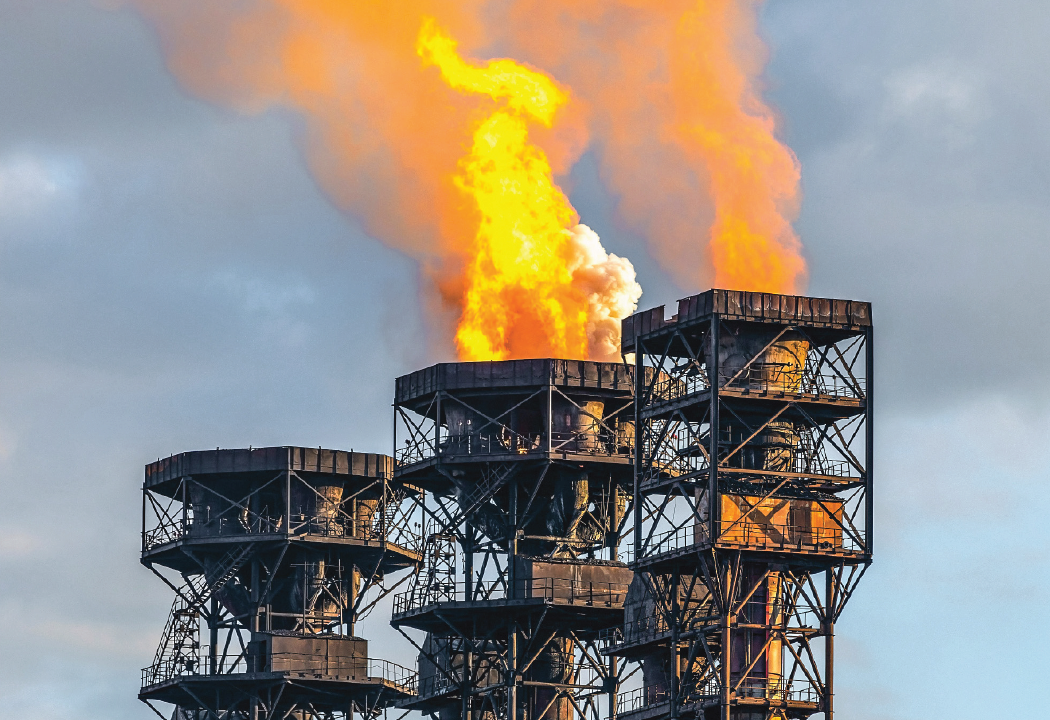
Picture this: Nigeria sits atop 210 trillion cubic feet of natural gas — enough energy to power entire continents — while millions of its citizens cook with firewood and endure darkness. Meanwhile, orange flames dance across the Niger Delta like funeral pyres, cremating billions of dollars in potential revenue every single day. This is not fiction; this is Nigeria’s gas story.
The irony of abundance
Nigeria commands Africa’s largest proven natural gas reserves and ranks among the world’s top ten. To put this in perspective: while Algeria operates efficiently with 4.5 trillion cubic feet, Egypt maximizes 77 trillion cubic feet, and Mozambique leverages 150 trillion cubic feet, Nigeria — with reserves that dwarf these nations combined — struggles to keep its own lights on.
The reckoning of this failure is staggering. South Africa, with modest reserves of 5-10 trillion cubic feet, maintains more reliable energy infrastructure than Nigeria. This is not about resource scarcity; this is about the systematic squandering of a continental treasure.
Decades of broken promises

For over three decades, Nigerian leaders have stood before microphones and podiums, painting grand visions of gas-powered prosperity. They have commissioned studies, launched initiatives, and signed memoranda of understanding that now gather dust in forgotten filing cabinets. Each administration inherits the same speeches from its predecessor, changes a few dates, and delivers them with fresh enthusiasm to increasingly sceptical audiences.
The pattern has become predictable: announce ambitious gas projects during campaign seasons, blame previous administrations for delays, then leave office having added little more than rhetoric to the national gas strategy. Meanwhile, the flares continue burning — literal beacons of governmental failure visible from space.
The infrastructure mirage
Nigeria’s gas infrastructure tells a story of neglect dressed as progress. Pipelines built in the 1980s creak under pressure they were never designed to handle. Processing facilities operate with equipment that should have been replaced before the current generation of engineers was born. The Nigeria LNG facility, held up as a flagship success, operates below capacity — a metaphor for the entire sector’s underperformance.
Consider this: Nigeria cannot consistently supply gas to its own thermal power plants, which account for approximately 80% of the country’s electricity generation capacity. Power plants shut down not because Nigeria lacks gas, but because decades of infrastructure neglect have created a supply chain riddled with bottlenecks, leaks, and inefficiencies.
The cost of complacency
Every flare that lights the Niger Delta sky represents money that could fund hospitals, schools, and roads. Conservative estimates suggest Nigeria loses $2.5 billion annually through gas flaring alone — enough to build world-class universities or modernise entire transportation networks. Over the past two decades, this waste has exceeded $50 billion — more than the GDP of many African nations.
This is not merely an economic tragedy; it is an environmental crime committed against future generations. The carbon footprint of Nigeria’s gas flaring equals that of entire countries, contributing to climate change while producing zero economic benefit.

Beyond empty promises: A path forward
The solution does not require revolutionary technology or unprecedented innovation. Countries with smaller reserves have demonstrated the blueprint: consistent policy implementation, strategic infrastructure investment, and genuine private sector partnership.
Professor Barth Nnaji, former Nigerian power minister, captured the essence of the required transformation during the recent Oriental News annual conference on gas potentials: “Enabling the private sector is what the government needs to do to make this sector blossom.” This means creating regulatory certainty, not regulatory confusion. It means establishing transparent processes, not bureaucratic labyrinths. It means treating investors as partners, not adversaries.
The government must abandon its role as the sector’s operator and embrace its function as an enabler. This requires uncomfortable admissions: acknowledging that state-led development has failed, accepting that private capital is essential, and recognising that short-term political considerations have undermined long-term national interests.
The multiplier effect
Gas development would catalyse transformation across multiple sectors. Reliable gas supply would stabilise electricity generation, making Nigeria attractive to manufacturers who currently flee to countries with dependable power. Petrochemical industries could flourish, creating thousands of jobs while adding value to raw materials instead of exporting them for processing elsewhere.
Regional export opportunities remain virtually untapped. West African neighbours import gas that Nigeria could supply through strategic pipeline development. The global LNG market offers premium prices for reliable suppliers — a position Nigeria could occupy with proper infrastructure investment.
The moment of truth
Nigeria stands at a crossroads that demands more than familiar promises and recycled strategies. The country possesses the resources to become Africa’s energy superpower, but resources without execution remain nothing more than unrealised potential.
The flames illuminating the Niger Delta should shame every Nigerian leader who has prioritised political survival over national development. This gas will not burn forever, and the window for transformation narrows with each passing year.
Nigeria cannot continue to be the wealthy beggar of the energy world — rich in resources, poor in execution. The time for excuses has expired; the era of transformation must begin.