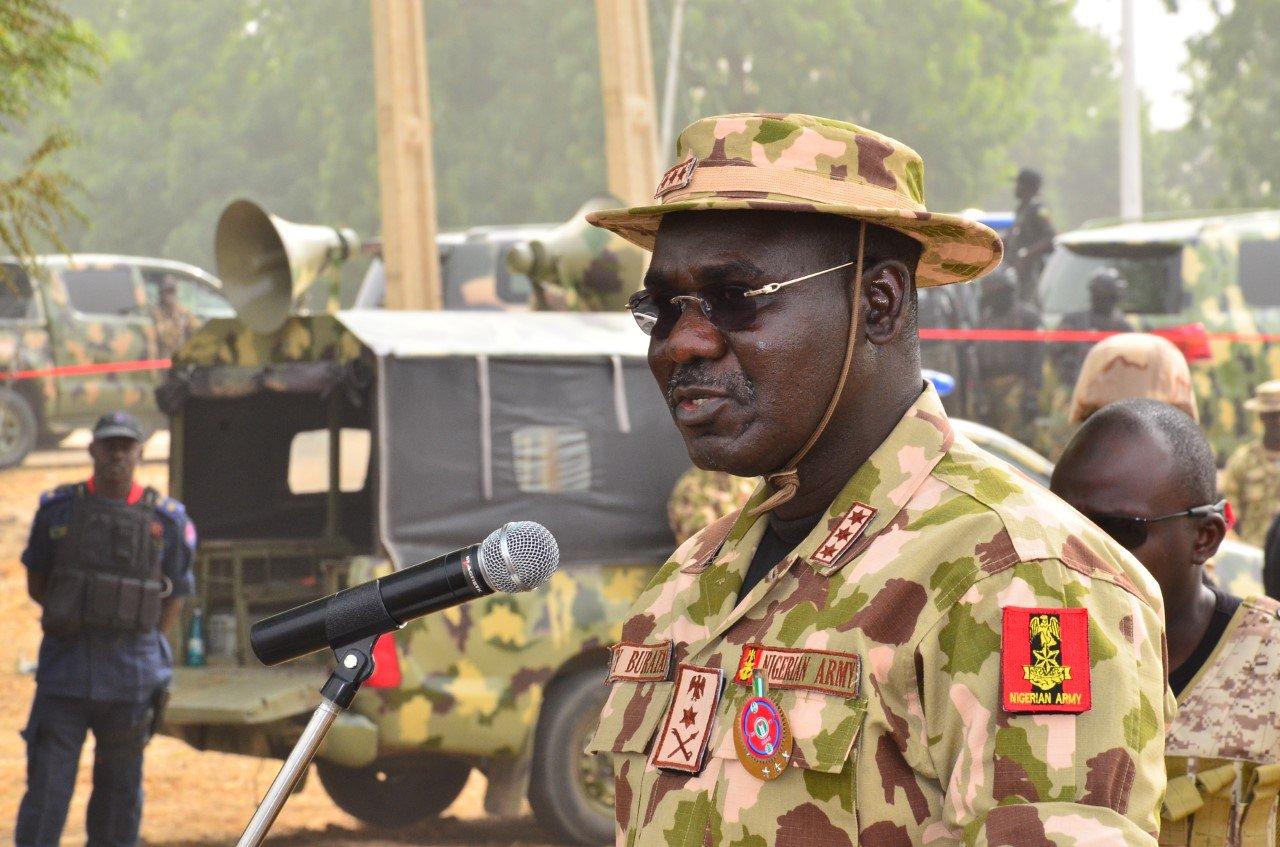
The Nigerian Army continues to add discordant tunes and confusing sub-plots to the narrative of its war on the many conflicts insulting the country, with Boko Haram insurgency at the apex. After repeatedly claiming victory over Boko Haram, the Chief of Army Staff General Tukur Buratai on Tuesday 18 June blamed soldiers under his command at the frontlines for the failure to contain Boko Haram.
His blame followed the loss of at least four military bases in Borno State, two lieutenant colonels and no fewer than 50 soldiers to the enemy over the last fortnight. The stations were in Mobbar, Damasak, Monguno and Gajiram. Boko Haram forces also carried away ammunition from those bases and set fire to some.
Many lessons in management and leadership pop up in the statement of the Army Chief made ironically at the opening of a “Transformational Leadership Workshop” organised by the Department of Transformation and Innovation of the Army Headquarters and held at the Army Resource Centre in Asokoro, Abuja.
Buratai accused his front men of insufficient commitment and unwillingness of taking the battle to Boko Haram. He stated, “It is unfortunate, but the truth is that almost every setback the Nigerian Army has had in our operations in recent times can be traced to insufficient willingness to perform assigned tasks or simply insufficient commitment to a common national/military course by those at the frontlines.

“Many of those on whom the responsibility for physical actions against the adversary squarely falls are yet to fully take ownership of our common national or service cause.”
First off, Buratai’s statement is a self-indictment and admission of failure of the team that he leads. He should do the honourable thing for leading a failing institution. Secondly, it is strange to hear a leader shift blame to his men rather than accept responsibility for their successes and failures. Here is the same Buratai who only last month commissioned and launched a book, The Legend of Buratai, extolling his leadership of the Army and supposed conquest of this same Boko Haram.
General Buratai creates a dichotomy between the Army and its foot soldiers. Such a distinction is strange. The aphorism is that bad workers blame their tools, including, of course, the men that they lead. The best leaders take the blame.
War and the military have been with humankind from time. Many concepts and best practice examples draw from the military in strategy, discipline, team formation and management, team motivation and morale and other areas. Nowhere do we find leaders distancing themselves from the travails of their team.
Willingness to take personal responsibility, especially during tough times is critical to winning the trust of team members. Leaders lead in endurance, stamina, emotional and social intelligence. They covet and earn the trust of their followers. Captains do not abandon ship but stay lashed to the mast. Leaders contain the anxiety of their team.

In the tenth year of the Boko Haram insurgency, much anxiety attends the efforts of the fighting forces of the Nigerian Army. They suffer from inadequate equipment, delayed allowances and low morale. Even high-ranking officers such as Brig General Enitan Ransome-Kuti, have been court martialed for speaking up to demand better facilities and treatment of the fighting men.
The Nigerian people support the Nigerian Army and the fight against the enemy. Representatives of the people in the Senate and the House of Representatives expressed this support by appropriating extra funds up to US$1m to equip the forces better for the war. Even so, soldiers complain of the lack of basics to enable them to give of their best in the war.
Buratai should first ensure the Army does right by its men by providing needed equipment and services in ammunition and welfare. The fighting forces need a leader with the emotional and social intelligence not to diss his men with blanket condemnations but one that would motivate them to give of their best. Heal the wounds and get our men to deliver on the mandate. Now!