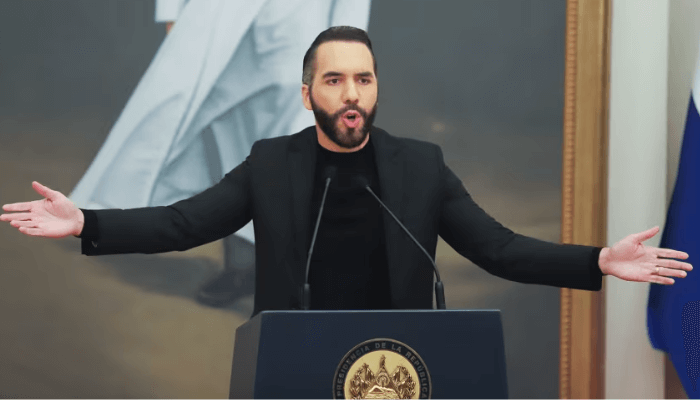
El Salvador has taken a dramatic turn in its political trajectory after lawmakers voted to overhaul the country’s electoral system, removing constitutional term limits and effectively paving the way for president Nayib Bukele to remain in power indefinitely.
On Thursday, 57 out of 60 legislators in the National Assembly — dominated by Bukele’s ruling New Ideas party and its allies — approved sweeping changes to five articles of the constitution. The reform extends presidential terms from five to six years, scraps the requirement for election run-offs, and most significantly, removes any barriers to re-election.
Read also: Burkina Faso junta scraps electoral commission, citing cost, ‘foreign influence’
The bill was introduced by lawmaker Ana Figueroa from the ruling party and passed swiftly with little public debate. Only three lawmakers — all from opposition parties — voted against it.

A constitutional U-turn
Bukele’s re-election last year already broke the constitutional convention. The Central American Pacific coast country’s charter had long prohibited consecutive presidential terms. But that changed in 2021 when a Supreme Court — whose top judges were controversially handpicked by a newly elected pro-Bukele legislature, ruled that the ban violated the president’s “human rights”.
At the time, Bukele insisted a constitutional amendment wasn’t necessary for him to seek re-election. Yet this new reform now erases any doubt: he can run again, and again — for as long as he likes.
Read also: Appeal Court affirms Aiyedatiwa’s election as Ondo Governor
To synchronise the country’s now-extended presidential term with legislative and municipal calendars, Bukele’s current term will be shortened, meaning new elections will take place in 2027.
“We are making history,” declared Ernesto Castro, president of the Assembly and a Bukele ally, after the votes were counted. “This is a step forward for the Salvadoran people.”

Opposition: democracy dismantled
But opposition lawmakers and civil rights groups see things differently.
“Democracy in El Salvador has died,” said Marcela Villatoro, one of the three dissenting voices in parliament and a member of the right-wing Nationalist Republican Alliance (ARENA). “You don’t realise what indefinite re-election brings — it concentrates power, fuels corruption, and kills democratic participation.”
Claudia Ortiz of the Vamos party described the process as “an abuse of power and a caricature of democracy”, noting that the reform was rushed through on the eve of a national holiday, without public consultation or parliamentary debate.
Read also:Election: 2023 ghost haunts Lagos LG poll
Rights organisations echoed the alarm. Miguel Montenegro, director of the Human Rights Commission of El Salvador, called the move a final blow to any balance of power. Noah Bullock of the rights group Cristosal — which recently relocated abroad, citing government harassment — said El Salvador was now “on the well-travelled path of autocrats”.
The rise of ‘the coolest dictator’
Bukele, who once famously described himself as “the world’s coolest dictator”, remains extremely popular at home. His administration’s crackdown on powerful street gangs — which has included a sweeping state of emergency, mass arrests, and curtailed civil liberties — has brought a sharp decline in violent crime and won him broad support.
Even so, international observers have long warned of creeping authoritarianism. Since 2021, the ruling party has consolidated power across all branches of government, removed critical judges, and sidelined opponents.
Read also: UK lowers voting age to 16 in landmark reform of election rules
Critics argue that Thursday’s constitutional changes are just the latest — and perhaps most dangerous — sign that Bukele is dismantling checks on his power. For supporters, however, it is a continuation of what they see as a bold and effective leadership style that has restored order to a once chaotic country.
As El Salvador heads into another political chapter, the question now is not only how long Bukele plans to stay in power — but whether there are any institutions left that can stop him.