The major enabler of movement of passengers, goods and cargoes across countries is a good transportation system. Movement of cargoes is facilitated through air, road, rail and seas.
As countries look to increase internally generated revenues and minimize importation, there is a need to develop transport systems to ensure goods or products generated from a country are moved effectively and efficiently for consumption, further production and revenue generation purposes.
These were some of the discussions that arose at the just concluded two days West Africa Ports and Rail evolution forum held at the Land Mark event centre, Lagos.
The forum which is the first in West Africa brought together ports and rail operators from around West Africa to collaborate and do business. The forum sought ways of upgrading the rail and port infrastructure to impact on export and import of products, job creations and skill development.

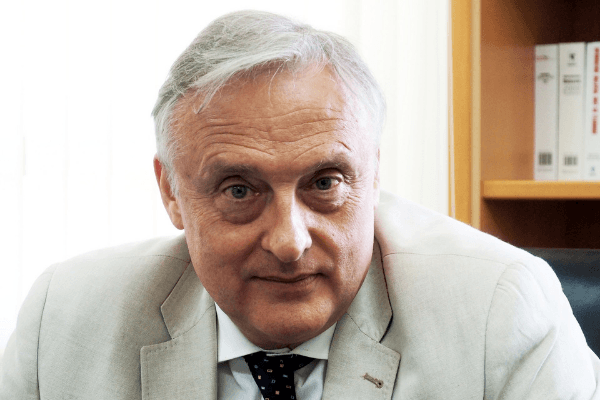
Speaking at the event, Deniel Dargent, Belgium Ambassador said in building sustainable transport systems, connectivity is key.
According to Dargent, “You need to transfer your goods and passengers in good time. If you produce agricultural products in the northern part of Nigeria, and you cannot transport them by road or rail to the port to export them, then you lose a lot. Nigeria is a large country with over 200 million inhabitants or even more, so we need to organise the exchange of goods and if you don’t have the connectivity, everything will be damaged.”
He said West Africa can learn from how Antwerp, which is the second largest port in Europe, and about 11th worldwide, manages its port, adding that the Port of Antwerp has become a good source of revenue for Belgium and Nigerian ports needs to emulate its model.
“Belgium can bring the expertise in terms of ports and railways. They are ready to assist Nigeria and West Africa in general, in case Africa needs expertise to develop their connectivity in the railways and ports. There is a very good expertise to assist Africa in the development of railways and ports and we are looking forward to see Africa put in place the right framework to develop the connectivity,” the Belgium ambassador said.
He explained that there should be development of free trade zones and the roads need to be constructed to enable the movement of people.

“The financial side is also very important. To move goods and services, we need ports, rail and airport infrastructure. In Europe after the Second World War, countries exchanged goods and services and it was a success. Nigeria needs to develop its free trade zone because that is the major challenge to movement of goods and services.”
Speaking during her key note address at the event, Hadiza Bala Usman, managing director, Nigerian Ports Authority (NPA) acknowledged that there are some challenges hindering efficient cross border trade, one of which is the multiple check points which slow cargo inflow and outflow.
“There should be efficient trade facilitation within our countries. Trade corridors should be expanded and bureaucracy and bottle necks should be removed. There is a need for more collaboration. Regulatory compliance should be reduced to ensure we expand upon regional trade. We hope Nigeria takes a larger portion of this expansion. We need to provide rail connection between ports,” Usman suggested.
Bill Twehway, managing director, National Ports Authority of Liberia who also spoke at the forum said there was a need to create partnerships to ensure the ease of movement of goods with development of efficient ports and rail systems.
“Public Private Partnerships (PPP) is key. Countries need to address bottlenecks such as visa issues. Those who have the expertise and technical know-hows should ensure investments are not only domiciled in Europe and America. We have had more advantages investing in Liberian ports. African should begin to invest in African countries so we could develop the West African region. There should be infrastructure, investment and trade partnerships,” Twehway said.
Graham Lawal, managing director, Grolla Port Services, sole partner of the Ports and Rail evolution forum said there are lot of bureaucratic red tapes in Africa delaying the processes of transportation development, adding that there are internal processes, procurement processes and approval processes for some of these reforms which hamper the rate of development of the transport sector.
“If some of the solutions we have proffered are implemented, there will be a rapid acceleration in the way processes are being developed and implemented and that will also speed-up the development of these reforms that need to be in place for a lot of these projects to come in and don’t forget that these are big businesses.
“To develop a new railway network system, we talk about billions of dollars. We need private sector partnership. The problem with Africa is that big businesses are only being carried out by government. We still rely on government and they don’t have the money. The government-run down to China or EU to borrow money which comes with some detrimental scenarios, some may have to mortgage the future of generations or mineral resources just to be able to access long-term loans,” Lawal added.
He said although the government is showing a lot of knowledge in this regard but the way they are going about some of these things are questionable.
“For example, the port expansion business that is going on right now; some of the key questions are: Are there more profitable lines to be developed than the ones currently being developed? Why is Lagos South-East line which is more profitable for freight and passengers not the first, instead of the Lagos-Kaduna and Lagos-Kano line? At times, you can have a win-win situation where we balance the equation in the development of these infrastructures whether it is ports or rails.”
Also speaking at the event, Fidet Okhiria, managing director, Nigeria Railway Corporation said the corporation is making tremendous progress.
“As we speak, we can comfortably be on a train from Iju to Ibadan terminal. Right now, they are working seriously and the Lagos state government is supporting the progress of the construction. They are making the right of way available. If you go to rail way compound, you will see that they have started the drainages and trying to create that link to Apapa.
“Rail is linked to massive cargo movement. Lagos is on the red line now and they also intend t0 do the blue line, while we are trying to develop the National Rail Network. In the recent contract, the federal government decided to take it to the ports and they will also be linked to the sea side so that you can offload directly from the ship to the wagon. By December, 2019, we should get to the ports, if not completely but the signs will be there,” Okhiria added.
Daniel Block, Portfolio director of transport for DMG events, the organisers of the event said DMG is a global company and has been organising transport infrastructure events around Africa.
Block disclosed that the company has been doing events in South Africa and Ghana on Africa Ports and Rails and launched one in Mozambique in May 2019, adding that the one held in Lagos is the West African version.
“This two-day event is to see how the West Africa region can better work together to grow the region and stimulate the economy. For the conference, we have had about 120 delegates registered and 1,000 people pre-registered to attend the exhibition. We have 20 exhibitors from Nigeria, South Africa, Liberia, Equatorial Guinea, Benin, Belgium, France, United Kingdom, United States, Gabon, UAE. This is a representation around the world.
“The traffic in Lagos is much and the roads are not in great conditions. The bridges are unstable. If the rail system is created or upgraded to take cargo from the ports into the rest of the city and into neighbouring states, it will free up the roads.
“All those trucks sitting on the roads don’t need to be sitting there. If there can be a parking lot for the trucks and if there is a rail system to take all the containers from the port into the rest of the country, it means the roads will be freed up. If you upgrade your systems, it will impact the rest of the city and force the rest of the city to upgrade its roads, there will be more hotels and businesses,” he explained.