Economies around the world are failing, and women are at the receiving end of it. A 2023 data report by the EFInA Women’s Economic Empowerment revealed that out of Nigeria’s estimated female adult population of 56.3 million people, only 22 percent, or 12.5 women, can be classified as being economically empowered.
This phenomenon is not happening in Nigeria alone, but across the continent. This unfavourable situation deepens the gender equality gap rather than bridging it.
The UN Secretary General, António Guterres, on the occasion of the 2024 International Women’s day mentioned that investing in women requires money on the table. But the question remains; how can women access these funds in the midst of gender pay gap, patriarchal norms and reduced access to resources.
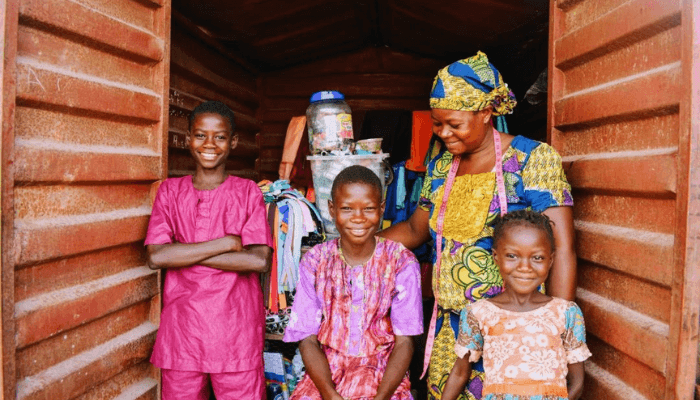
While this problem is common amongst most women, there are those who bear the weight more than the others. Rural women in underdeveloped countries with limited access to decent earnings struggle to cater for their homes. As the cost of living skyrockets, and as basic needs become increasingly expensive, many women are forced to work extra jobs, or seek financial help from several platforms, in order to meet their family needs.

In an interview with Ahanat Bello, one of the women in the 2025 Cohort of the Sharing Life Africa Women Empowerment Programme, one of the initiatives by the non-profit organization through which they uplift women and support local development, she narrated how she sought help previously from loan companies, but their demands were more than she could meet.
Bello’s experience is the experience of many women in rural places around the world. The rigid demands from many financial institutions often exclude the very women who need help the most, as many of the demands are burdensome.
Clemencia Carabalí, the president of the Association of Afro-descendant Women of Northern Cauca in Colombia, testified to this fact in a report earlier this year when she said:
“The requirements for accessing these funds are quite limited, and women and our organizational dynamics typically don’t meet the requirements.”
According to Mongabay 2025, Women in Global South Alliance report, women’s organizations often lack personnel and must rely heavily on volunteer labor due to limited financial resources. More than 50 percent have no core funding, and at least 90 cannot operate beyond one year due to a lack of savings or reserves.
This difficult access to funding only puts the world economy in jeopardy, and further widens the inequality gap that should be closed, hence calling for a different funding alternative – one based on trust, community, and low-interest/interest-free micro-financing, coupled with skill-building.

Sharing Life Africa: How a non-profit Organisation in South-West Nigeria is bridging the gap
Sharing Life Africa was founded in 2019, following the deep realization by the founder, Henry Anumudu, that solving educational problems in rural communities transcends beyond meeting educational needs alone. He affirmed that at the core of educational problems in rural areas such as Abeokuta where the idea of starting his organization began, are social and economical needs as well. When asked in an interview why the organization’s focus is on women and their children, Henry said;
“As a teacher in the classroom, I quickly realised the central role mothers play in the lives of children. Every time a child came to school without food, without books or a pen, with a torn uniform or worn sandals, the reason was always, “My mother did not have the money.”
“If the mother had the means, she would have provided, but most of the time, the mothers, despite all their hard work, simply did not have enough.
“Our work and impact measurement at Sharing Life Africa further confirmed that the most impactful projects revolved around enabling mothers’ access to economic opportunities. Because if mothers had money, more than half of the programs we were implementing would be unnecessary.
“So, that’s what we did; we invested more in providing economic opportunities for mothers because that had an even greater impact on children and transformed entire communities.”
Since 2019 when Henry realized this gap, Sharing Life Africa has served as an important tool in solving the problem. The organization which operates in Abeokuta, Ogun State of Nigeria invites women into its several cohorts all year round, consisting of at least 10-15 women.
When more women are empowered, economies grow.
This is what happens when women are invested in – Half for her children’s future, half for her business growth – this powerful balance shows why women are catalysts for change. A report from UNAC, 2012 shows that women spend 90% of their earned income on their families , while men spend only 30-40.
This is the narrative observed among the women in the empowerment program. The testimony is that they can now “pay their children fees,” “buy food in their household, and have enough left to “run their businesses.”
Investing in women remains the single most efficient way to spur societal development.When women enjoy full economic equality, it not only elevates individual well-being but also drives family welfare and economic growth.
Olayinka Ogunsola, one of the women at the 2025 Sharing Life Africa woman empowerment programme said;
“The funding I received from Sharing Life Africa came at the right time. Before, I sold only detergents, bar soaps and tissues.
“This was because I didn’t have enough money. But with the investment, I began selling other items like cardboards, pencils, and books to the school children in my community.
Now, I make more profit compared to before and I am able to cater for my family’s needs and cater for my children’s needs.”
The transformation observed since the start of the women empowerment programme gives hope for the future. The cycle of inequality and poverty will be broken not by global mandates alone, but by targeted, local action.
To empower one woman is to invest in a generation. To strengthen one family is to stabilize an entire community. To build thriving communities is to secure the foundation of a prosperous country.