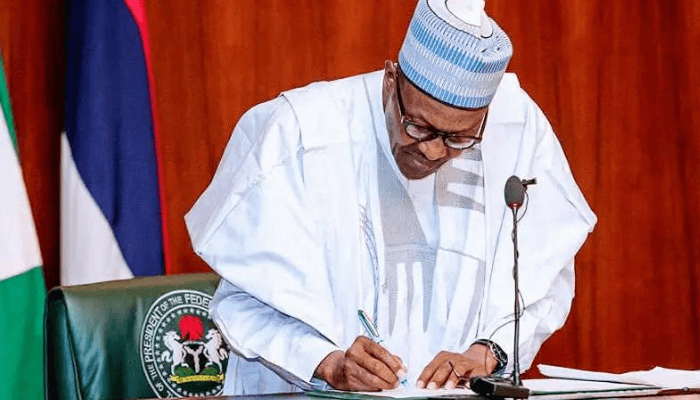
Muhammadu Buhari, former president of Nigeria, was laid to rest on Tuesday, but Nigerians are reflecting on the country’s education sector during his eight-year tenure (2015–2023).
From policy shifts and funding challenges to prolonged industrial actions and infrastructural decline, the period reflected both the promises and pitfalls of governance in Africa’s most populous nation.
BusinessDay findings show that late President Muhammadu Buhari’s administration witnessed numerous missed opportunities, developments, and enduring legacies that defined his eight years in office.
Read also: Buhari’s legacy: A presidency of unkept promises

Out-of-school children
Under Muhammadu Buhari, the country had an unenviable record in relation to out-of-school children.
According to the World Bank report, Nigeria, in 2020, had more than 11 million out-of-school children between the ages of six and 15, representing one in 12 of all out-of-school children globally and 22 percent of all children in the age group in Nigeria.
Before Buhari left office in 2023, the number of out-of-school children in Nigeria was estimated to be around 20 million, according to data from UNESCO’s Global Education Monitoring report.
School insecurity
Under the leadership of Muhammadu Buhari, the Nigerian education sector was hard hit by persistent attacks, especially in the northern part of the country.
There were abductions of students and teachers, which left more than millions of children devastated and afraid of going to school, particularly the girl-child in 2021 alone.

ASUU, NASU & SSANU recorded over 1,086 days’ strike under Buhari
Late President Muhammadu Buhari had the worst record of strike by the Academic Staff Union of Universities (ASUU). The union went on strike yearly except in 2015 when he took over office.
In 2016, ASUU went on strike for seven days. In 2017, it increased to 35 days. In 2018-2019, the lecturers went on strike for 58 days.
In 2020, ASUU went on strike for over 270 days, and in 2022, the strike lasted 234 days (33 weeks), from February 14 to October 5.
The non-teaching staff record shows that NASU were on strike in 2017 for 11 days; and in March 2018, members of Non-Academic Staff Union of Educational and Associated Institutions (NASU), Senior Staff Association of Nigerian Universities (SSANU), and National Association of Academic Technologists (NAAT) had a 100-day strike. In 2019, they had a five-day strike.
Read also: Hits, misses in Buhari’s oil, gas footprints
In 2022, SSANU and NASU also went on strike in March, after ASUU had gone on strike.
The Academic Staff Union of Polytechnics (ASUP) also embarked on a series of strikes. In January 2017, ASUP went on seven-day warning strike. By August 2022, they had no fewer than 147 days’ strike in four years.
Achievements
Muhammadu Buhari left some positive imprints on Nigeria’s education space.
Buhari approved a new retirement age of 65 and length of service of 40 years for teachers in public basic and secondary schools. He also approved six new colleges of education in the six geo-political zones of Nigeria, and eight new federal polytechnics.
Buhari also provided funding intervention through the Tertiary Education Trust Fund (TETFUND) for the completion of the national library to enable all public higher institutions to develop ICT infrastructure.
Besides, he launched the school feeding programme to address the out-of-school children menace, tackle malnutrition due to poverty and the concomitant consequences on education in terms of poor school enrolment and retention of pupils at primary school.
The National Home-Grown School Feeding Programme, which anchored the feeding programme, induced school enrolments, participation and completion, improving the nutritional status of beneficiaries and boosting the local economy through the value chain, with over 127,000 cooks engaged, along with 100 aggregators mopping up protein items.
Read also: Echoes of a converted democrat: A poetic column in memory of Muhammadu Buhari (1942–2025)
What Nigerians are saying
Stanley Alaubi, senior lecturer at the University of Port Harcourt, described Buhari’s tenure as years of futile efforts in the education sector.
“In his eight years, we experienced so many strikes that we became enemies of ourselves in the education sector,” he said.
Alaubi further explained that Buhari used the principle of divide and rule during his time. “Long story short, they were wasted years. I hope we recover because this current administration needs to do better,” he noted.
Friday Erhabor, a parent, described Buhari’s eight years as a mixed grill of the good, the bad and the ugly.
“As he couldn’t hold the minister of education accountable, the sector was in a mess all through his eight year-tenure, with a lot of parents preferring to either send their children to outside the country or to private schools,” he said.