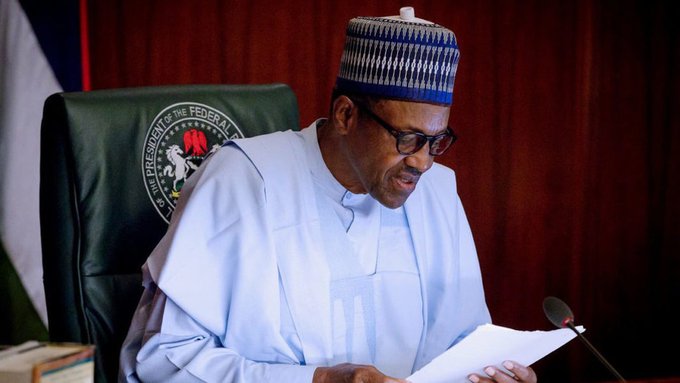
President Muhammadu Buhari’s decision to wait for inputs from the newly sworn-in governors is one of the major reasons why he has continued to delay action on appointing his ‘Next Level’ cabinet.
A top Presidency source disclosed to BusinessDay at the weekend that the President’s decision to wait for inputs from the governors may be a way of avoiding such mistakes as threw the All Progressives Congress (APC) into its current quagmire.
“This is not necessarily a constitutional requirement though, but Mr. President may just feel like doing this in order to strengthen working relationships with state governors, who as you know are also members of his own political party and who are also members of the National Economic Council headed by the Vice President,” our source said.
Section 142, subsections (1) and (2) of the 1999 Constitution of Nigeria (as amended) give the President powers to create ministries and to nominate (respectively) persons for the post of a minister of the government of the federation, who in turn have to be confirmed by the Senate. Subsection (3) of the constitution makes it mandatory, however, that every state should have a minister.

Twenty-nine governors were sworn in on May 29. Out of the 29, 12 are new – seven belong to the APC while five belong to the People’s Democratic Party (PDP).
Information trickling in from the states indicates preferences for nomination of younger generation of Nigerians for the ministerial positions.
There are also indications that the President will this time around expand his cabinet to accommodate more hands.
The President had, in response to complaints of abandoning those that worked for his election in 2015, promised members of the APC working committee that he would expand his cabinet.
Our source at the Presidency said this is likely to happen this time around.
“Actions are on to split some ministries to make them more responsive to meeting the people’s needs,” the source said.

He cited the Ministry of Power, Works and Housing which, he said, “will definitely split into three ministries”.
“But as for those who will likely return, it is a very sensitive matter and as you know, the President has kept this to himself,” the source added.
The President had said in a recent interview that he was yet to discuss his ministerial list with anyone.
BusinessDay gathered that a few of the ministers who had performed “creditably well” in the last dispensation will be retained as President Buhari indicated his preference to keep some of them as part of his efforts to ensure continuity.
It was also gathered that Zainab Ahmed (Finance), Hadi Sirika (Aviation), Rotimi Amaechi (Transportation), Geoffrey Onyeama (Foreign Affairs), Udo Udoma (Budget and National Planning) and Okechukwu Enelamah (Industry, Trade and Investment) are some of the ministers who may make the list.
“I have addressed members of the cabinet and said goodbye to them at least for the four years. I still haven’t discussed it with anybody, and you will not be the first person l will discuss it with,” Buhari said recently.
“When l addressed the cabinet, I said I am very pleased we did not have any major scandal. This is a major achievement. And anybody who hasn’t got any evidence against any of my ministers should have to trust me and my sense of judgment about which of the ministers I will retain and which ones I will say goodbye to. And very sincerely, too. I won’t go beyond that because, like I said, I have not discussed it with anybody yet,” he said.
But some interests have also begun to mount pressure. For instance, BusinessDay gathered that APC leaders in Kwara State are kicking against the return of the Minister of Information Lai Mohammed, who they claim has been in the system for too long. They have, therefore, been mounting subtle pressures on the President to consider a fresh hand from the state for the ministerial position.
Suleiman Lamorde, a legal practitioner, while speaking with BusinessDay, charged President Buhari on the need to weigh the credibility and previous performances of nominees before engaging them for ministerial positions.
“We are not lacking credible people, so inasmuch as I advise him to have a mixture of politicians and technocrats, Mr. President must take the credibility and previous performances of nominees very importantly,” Lamorde said.
“The President should, within the first week of the inauguration of the National Assembly, send the names of nominees to the Senate for screening and confirmation. He also needs to concentrate more on the young and dynamic people, even though age is not necessarily the issue. If he can make it 50/50, it will be good,” he said.
Speaking further on the President’s decision to possibly retain some of his last cabinet members, Lamorde made a case for the retention of Ahmed, Amaechi, Babatunde Fashola (Power, Works and Housing), and Mohammed Bello (FCT).
“In my own opinion, he can retain the ministers of power, transport, finance and FCT, amongst others I may not be able to remember now. Many may not understand, but these ministers did their best given the circumstances under which the government came to power. It was a very difficult background, with insecurity, poor finances to work with, amongst others,” he said.
He noted that these challenges may have slowed them down, but applauded their tenacity, doggedness and commitment to make a difference under the last dispensation.
Tony Ailemen, Abuja