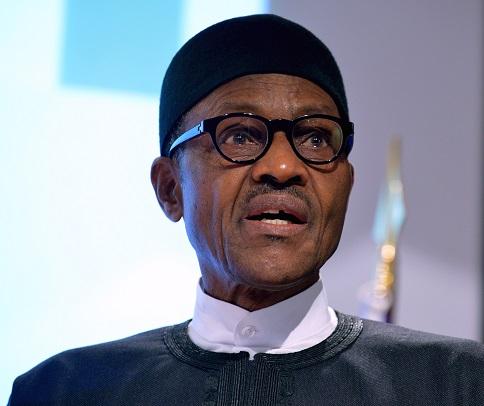
Nigeria’s President Muhammadu Buhari is increasingly being seen less in public, precisely as strong executive leadership is needed to halt a slide into paralysis that threatens the rebound of growth in Africa’s largest economy.
Passage of the 2017 budget has stalled in the Senate as the upper legislative chamber yesterday accused the police of stealing 18 appropriation documents.
Danjuma Goje, Chairman, Senate Committee on Appropriations, said the police removed files, documents and laptops relating to this year’s budget, when it raided his house in Abuja on Thursday last week.
Raising a Point of Order at Wednesday’s plenary, Goje said the budget would have been presented on Tuesday, passed Wednesday and presented to President Muhammadu Buhari on Thursday for assent.
This budget fiasco comes on top of recent dysfunction that saw two major Federal agencies, the Economic and Financial Crimes Commission (EFCC) and National Intelligence Agency (NIA) go after each other on the pages of newspapers.
Nigeria’s economy shrank by 1.5 percent in 2016 and inflation has nearly doubled to 17.2 percent in the past 12 months.
Meanwhile, President Muhammadu Buhari, who returned to the country on March 10th, after receiving treatment for an undisclosed illness in the United Kingdom, has been seen less and less in public.
Elsewhere, clashes between Muslim Fulani herdsmen and largely Christian farmers in southern Kaduna, and other states in the Middle Belt, have killed at least 200 people since December, according to BusinessDay research data.
“The economic impact of the Pastoral Conflict has been devastating. The average household in Benue, Kaduna, Nasarawa, and Plateau states that have been affected by this conflict, could see their incomes rise by at least 64 percent if the conflict is resolved,” research firm SBM Intelligence showed, in a recent report.
“The conflict has had an outsized toll on agricultural activities, and SBM has already observed a causal effect on the prices of foodstuff in markets in major population centres.”
In the Niger Delta, oil production has not fully recovered after militants attacked pipelines and oil infrastructure last year.
The Petroleum Industry Governance Bill (PIGB) which seeks to establish a framework for the creation of profit-driven petroleum entities, remains stuck in the National Assembly as Senators once again shelved its consideration on account of the death of their colleague, Isiaka Adeleke representing Osun state.
The Nigerian Extractive Industries Transparency Initiative (NEITI) says the lack of passage of the bill has cost Nigeria $15 billion a year in lost investments.
Elected in March 2015, Buhari is confronting a slump in growth in Africa’s largest economy and second largest oil producer.
The Central Bank of Nigeria (CBN) policy of pegging the naira to the dollar at a level stronger than its market rate has led to shortages of foreign exchange, squeezing imports in the country.
This, together with foreign exchange controls, led to many foreign investors pulling funds from the country, worsening the economic crises.
The CBN in a bid to woo those investors back, announced a special FX window for investors and exporters on April 21.
“Offshore investors looking to come in may wait to see how the new framework operates. The CBN may therefore need to support supply side liquidity. We do not rule out a full liberalization of the market, however, we also do not foresee it anytime soon,” Tosin Ojo of research firm Cardinal Stone Partners said.
Last June, President Buhari travelled to London to seek treatment for a “persistent ear infection.”
Since returning from a medical vacation in the United Kingdom, where he spent almost 50 days, Buhari has attended and presided over just three FEC meetings.
Yesterday, President Muhammadu Buhari again failed to show up for the Federal Executive Council (FEC) meeting, stoking fears about the state of his health.
Buhari asked that he be allowed to rest and will be working from home, the Minister of Information and Culture, Lai Mohammed, said at the end of the FEC meeting.
Nigerian Stocks have lost 4.6 percent this year, even as oil prices remain fairly steady and dollar reserves touch the highest levels in six months.
Meanwhile, only 15 ministers turned up at the FEC meeting from a cabinet of 33 serving ministers. It is unclear if the “absentee” ministers were aware that the President would not be at the meeting.
In the absence of he President and most of the ministers, the FEC meeting still went ahead for two hours and approved N9 billion in new contracts.
Adding to the confusion, members of the National Assembly on Wednesday gave the Nigeria Police 24 hours to return Budget 2017 documents that they allege were carted away from the residence of Senator Danjuma Goje, chairman, Senate Committee on Appropriation on the 20th April, 2017.
The lawmakers alleged that the “missing report” was scheduled to be laid before the Senate and House for consideration and passage during the week.
An angry House of Representatives issued a 24-hour ultimatum to Ibrahim Idris, Inspector-General of Police to return all the documents relating to the 2017 Appropriation Bill carted away from the residence not later than tomorrow, Thursday 27 April 2017 in order not to jeopardise the passage of the 2017 budget.
The resolution was passed sequel to the adoption of the motion on the “Need to check the excesses of security agents with regard to invasion of residences of law abiding citizens,” sponsored by Abubakar Ahmad.
The lawmakers who described the action of the police as “unlawful”, maintained that the invasion of the Abuja residence of Senator Goje amounted to a gross violation of his fundamental human rights.
Ahmad noted that the security agents destroyed doors, bags, ceiling and septic tanks and carted away documents, including reports of the 2017 Appropriation Bill scheduled to be laid before both chambers of the National Assembly during the week.
While condemning the level of impunity being exhibited by the security agencies and disregard for law and due process, he noted that such action portrays the Federal Government as lawless to discerning observers and commentators, both at home and abroad.
Analysts say that from the proceedings in the House, it is clear that Budget 2017, already four months late, is now going to be delayed further. It also signals further escalation of the executive \legislature conflict with both parties increasingly looking irreconcilable, putting governance on edge.
PATRICK ATUANYA, Lagos, ELIZABETH ARCHIBONG & AYANFE AKINTOLA, Abuja