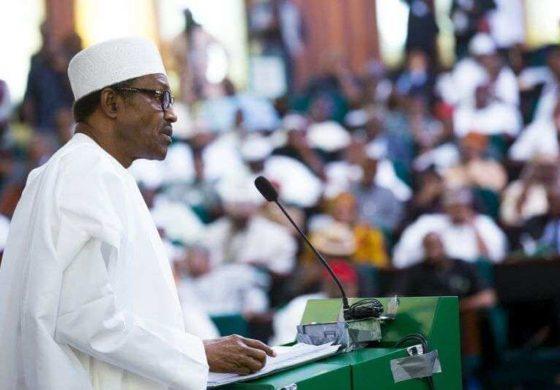
Certain sections of the 2017 budget presented last week by President Muhammadu Buhari show a commitment to kick-starting industrialisation in Nigeria.
Buhari had announced that N50 billion would be set aside as Federal Government’s contribution for the expansion and development of new Export Processing and Special Economic Zones.
He had also said that N20 billion would be voted for the revival of the Export Expansion Grant (EEG) in the form of tax credits to companies.

“We will increasingly grow and process our own food, we will manufacture what we can and refine our own petroleum products. We will buy ‘Made in Nigeria’ goods. We will encourage garment manufacturing and Nigerian designers, tailors and fashion retailers. We will patronise local entrepreneurs. We will promote the manufacturing powerhouses in Aba, Calabar, Kaduna, Kano, Lagos, Nnewi, Onitsha, and Ota. From light manufacturing to cement production and petrochemicals, our objective is to make Nigeria a new manufacturing hub,” Buhari had said.
The president also showed he understood the importance of infrastructure to industrialisation by indicating plans to fast-track the modernisation of the railway system through the allocation of N213.14 billion as counterpart funding for the Lagos-Kano, Calabar-Lagos, Ajaokuta-Itakpe-Warri railway, and Kaduna-Abuja railway projects.
He likewise indicated plans to commit N15 billion to the recapitalisation of the Bank of Industry and the Bank of Agriculture.
The president mentioned government’s commitment to stimulate crop production and develop the agro-allied industries to ensure Nigeria produced what she ate while eating what she produced.
Manufacturers and exporters believe the revival of the Export Expansion Grant (EEG) is a step in the right direction. The EEG, which is the only incentive provided for exporters, has been in suspension since August 2013 and the revival of the export incentive by the present government will support manufacturing exporters and provide a relief for struggling companies.

However, Ede Dafinone, CEO of Sapele Integrated Industries Limited, wondered how the government would apply tax credits on exporters whose proceeds were tax-free.
Manufacturers who spoke with Real Sector Watch were excited at seeing a government make serious statement on industrialisation, but suggested that Buhari must strengthen the implementation of the Local Content Law to persuade government and private institutions to patronise local products.
They added that truly promote industrial powerhouses across the country would require building railways and making roads accessible.
“We still need power sector reforms. No nation can grow without electricity in industrial zones. Make sure your roads are not built on the basis of political considerations,” said a manufacturer, who preferred anonymity.
On textile industry, players said Buhari needed to stem smuggling of Asian fabrics and other textile materials from Cotonou and Togo, adding that they would need a special consideration in foreign exchange allocation.