- CBN signals dual exchange rate coming
- MPR/CRR unchanged
- States to see higher allocations
- Unshackled economy may return to growth
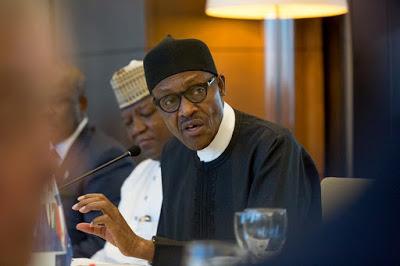
In a second major economic policy shift following the deregulation of fuel prices Nigerian President Muhammadu Buhari softened his rigid posture on the naira dollar rate with the Central Bank of Nigeria (CBN) signalling yesterday, the return of a flexible interbank foreign exchange (FX) market at the end of the third Monetary Policy Committee meeting in Abuja.
The CBN Governor Godwin Emefiele said that the MPC voted unanimously in favour of a more flexible exchange rate and would release details of the new framework “in coming days.”
The CBN will however retain a small window for funding critical transactions.
That may mean the bank is set to introduce a dual-rate system, with the naira trading at a market-related level while the central bank continues to make foreign-currency available to some importers at a discounted rate, according to Renaissance Capital Ltd.

“Investors were steering of clear of Nigeria in recent months. This change of policy is a step in the right direction. If the CBN lets the market find the right level for the naira, it will encourage investors to invest in Nigeria,” said Charles Robertson, Chief economist at Renaissance Capital Limited, in an emailed note to BusinessDay.
The central bank had pegged the naira at N197-N199 per dollar since March 2015 as the country struggled to cope with a plunge in oil prices that contributed to the economy contracting in the first quarter of 2016.
The movement to a flexible exchange rate comes after the removal of the cap in petrol prices that saw prices rise to as much as N145 a litre from N86.5 earlier, a move welcomed by the business community.
“The government cannot solve the fuel problem without addressing the FX issue,” said a bank treasurer, speaking on condition of anonymity.
“I have spoken to a lot of oil traders willing to do business in Nigeria. All they want is a liquid FX market. They can hedge their exposure to the market once FX trading resumes.”

Emefiele announced of decisions to retain its benchmark lending rate, the Monetary Policy Rate (MPR) at 12 percent; Cash Reserve Ratio (CRR) at 22.50 per cent; Liquidity Ratio at 30.00 per cent; and also the asymmetric corridor at +200 and -500 basis points around the MPR.
The governor said that the Bank would release the details of operation of the FX market at an appropriate time.
Analysts tell BusinessDay some structure should be put in place to clear the backlog of FX put at between $3 billion and $5 billion, before the interbank market is reopened.
“We think the implementation of the proposed FX flexibility should kick off quickly to ensure that confidence is restored to the market without delay. We believe there are two options to the flexible FX structure. The first is that the CBN continues to sell the USD to the market. The second option is that the CBN appoints a security exchange such as the FMDQ or the NSE that will run the market while the CBN clarifies its own role in the market. The CBN will probably have to be registered as a dealer to intervene occasionally in the market. We believe existing FX dealers and new dealers that have the capability and capacity to play in the market should be licensed for improved liquidity in the market and expect the CBN to ensure transparency in the market and dispel the concerns around arbitrage,” said Tajudeen Ibrahim, team head at Chapel Hill Denham Limited, in an emailed note to BusinessDay.
” We also believe that the funds that the states and Local Government receive monthly via the Federal Account Allocation Committee (FAAC) should be sold in the proposed FX market. This should support liquidity flow into the market and ensure that the state and local government receive the appropriate value for money in the market,” Ibrahim said.
Analysts say it is good news when the CBN reacts to the challenges facing the economy.
Nigeria’s Gross Domestic Product (GDP) declined by 0.36 percent from a year earlier, the Abuja-based National Bureau of Statistics (NBS) revealed Friday, compared with growth of 2.11 percent in the previous three months.
Investors had warned that the capital controls imposed by regulators, were hurting the economy and constricting inflows and output.
Wale Abe, the executive secretary, Financial Markets Dealers Association (FMDA), told BusinessDay in a chat that the decision was well expected and long overdue because the CBN’s delays in taking decisions had hurt the market a great deal.
“We didn’t have a choice because the CBN could no longer deliver FX supply,” Abe explained, advising that the CBN should work out the modalities to be applied in the new FX regime.
“We can begin to see the impact of the reform in terms of market reaction which of course is expected to be positive,” Abe said.
MPC members took their decision against the background of steadily creeping inflation, which rose to 13.7 percent in April, the highest levels since 2010.
“We do not expect the MPC decision to result in a substantial increase in inflation as most of the cost-push factors driving inflation have already been priced into the Headline Index. The price modulation of Premium Motor Spirit (PMS) will also have a transient effect on inflation which we expect to be short-term as restrictions on FX are eased,” Usoro Essien, of the research department, Greenwich Trust Limited said.
“The release of the new pricing template for FX should result in an appreciation of the naira in the Bureau De Change (BDC) segment as FX accessibility increases. The sustainability of this rally will be contingent on the credibility and efficiency of the new market template,” Essien said.
The MPC adopted a more dovish outlook to boost capital flows and loosen FX restrictions in order to resuscitate growth in the economy.
Emefiele in his comments forecast the economy sliding into a recession by the end of the second quarter of 2016, fuelled by delayed passage and implementation of the N6. 06 trillion expansionary budget, which was just approved by President Buhari earlier in the month.
Robertson of Renaissance Capital says if the CBN decides to set bands around an interbank rate – they will be taking the risk of choosing a rate that is either too weak, or too strong. This could end up with Nigeria having three different exchange rates, the 199/$ “critical” rate, the interbank rate and the BDC rate unlikely to be as good for Nigeria in the long run.
“When supply and demand find the right price for the naira, investors will renew their interest in Nigeria. I would expect the economy to bounce back in 2017,” Robertson said.