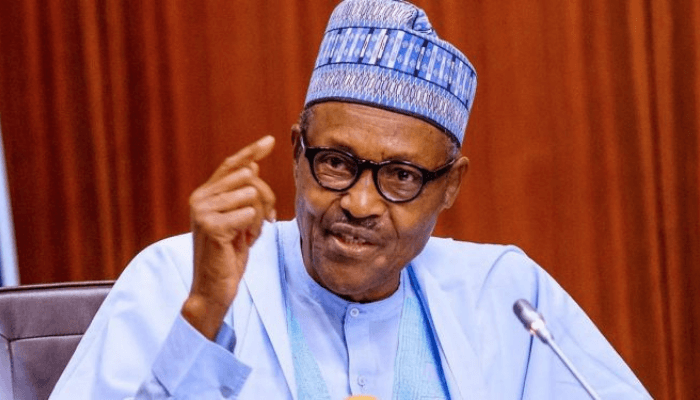
Muhammadu Buhari, the All Progressives Congress (APC) presidential flag bearer in the rescheduled March 28 poll on Thursday in London said he cannot change the past but can change the present and the future.
Buhari who delivered a speech at the Chatham House, a London based Royal Institute of International Affairs, whose mission is to analyse and promote the understanding of major international issues and current affairs, chaired by Richard Gozney, a former British High Commissioner to Nigeria, said he overthrew the government in 1983 because he was unhappy with the state of affairs.
He said: “We wanted to arrest the drift. Driven by patriotism, influenced by the prevalence and popularity of such drastic measures all over Africa and elsewhere, we fought our way to power”, he said, while acknowledging that “the global triumph of democracy has shown that another and a preferable path to change is possible. It is an important lesson I have carried with me since, and a lesson that is not lost on the African continent.
“I have heard and read references to me as a former dictator in many respected British newspapers, including the well regarded Economist. Let me say without sounding defensive that dictatorship goes with military rule, though some might be less dictatorial than others. I take responsibility for whatever happened under my watch”.

According to him, with the fall of the Berlin Wall in 1989, the dissolution of the USSR in 1991, the collapse of communism and the end of the Cold War, democracy became the dominant and most preferred system of government across the globe.
Read also: APC raises alarm over alleged plans to sack Jega next week
He further observed that the phased end of the USSR was a turning point that convinced him that change could be brought about without firing a gun.
Buhari, who said there is no confusion where he stands regarding corruption, promised that the menace would have no place and the corrupt would not be appointed into his administration.
“First and foremost, we will plug the holes in the budgetary process. Revenue producing entities such as NNPC and Customs and Excise will have one set of books only. Their revenues will be publicly disclosed and regularly audited. “The institutions of state dedicated to fighting corruption will be given independence and prosecutorial authority without political interference.

“But I must emphasise that any war waged on corruption should not be misconstrued as settling old scores or a witch-hunt. I am running for President to lead Nigeria to prosperity and not adversity”, he said.
Buhari also promised to run a private sector-led economy but said he would maintain an active role for government through strong regulatory oversight and deliberate interventions and incentives to diversify the base of the economy.
On security challenges currently facing the country, he said the government has failed in any effort towards a multi-dimensional response to the problem, leading to a situation in which the country is now dependent on its neighbours to come to its rescue.
“You all can bear witness to the gallant role of our military in Burma, the Democratic Republic of Congo, Sierra Leone, Liberia, Darfur and in many other peacekeeping operations in several parts of the world.
“But in the matter of this insurgency, our soldiers have neither received the necessary support nor the required incentives to tackle this problem.
“ Let me assure you that if I am elected president, the world will have no cause to worry about Nigeria as it has had to recently; that Nigeria will return to its stabilising role in West Africa; and that no inch of Nigerian territory will ever be lost to the enemy because we will pay special attention to the welfare of our soldiers in and out of service, we will give them adequate and modern arms and ammunitions to work with, we will improve intelligence gathering and border controls to choke Boko Haram’s financial and equipment channels.
He said government under his watch would be tough on terrorism and tough on its root causes by initiating a comprehensive economic development plan promoting infrastructural development, job creation, agriculture and industry in the affected areas.
NATHANIEL AKHIGBE