Forty-five days into their inauguration, uncomfortable silence has been the message from the offices of more than 80 percent of ministers in the second term cabinet of President Muhammadu Buhari. The nation does not have any inkling into the policy direction they intend to pursue, the road map and their challenges. Zilch. We think they can and should do better.
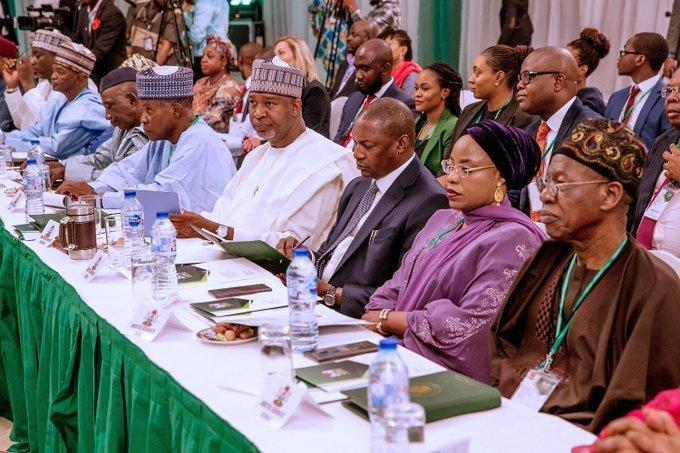
The 43 ministers supervise 26 ministries. At least two ministers serve in each of them. Ministers hold forth as the chief decision-makers and leaders of large and complex organisations that the nation expects both to define direction as well as implement programmes for positive impact in their assigned areas. Much depends on what they do or fail to do. Now that they are in place, all eyes are on the ministers to deliver on the next level promise of the administration in which they serve.
Ministers have incredible opportunities to influence and change things in Nigeria. Each ministry has a wide span of influence, all of 36 states no less, and latitude subject only to the approval of the President. They epitomise the saying that to whom much is given, the nation expects much.
As advisers to the president, the nation expects that they would bring to bear independence, impartiality, objectivity and loyalty. They would be central and contributory to the government delivering on its remit in Chapter Two of the constitution on the fundamental objectives and directive principles of state policy and Chapter Six, Section 147.

In the first chapter of the two-chapter Buhari administration 2015-2023, the nation was in the dark about the activities of most of the ministers. For most citizens, the ministers were absent from duty. It should not happen this time around.
The lack of accountability owes to failures in the system as well as the inadequacies in public communication of specific ministers. Nigeria deserves more and better. We propose that the ministers should report to citizens either through monthly briefings to the senate, whose endorsement ensured they hold office or by ministerial briefings through the aegis of the office to the secretary of the government.
Thirty of the ministers are new. In some ministries such as health, industry, trade and investment, or power, both minister and minister of state are new. What are their plans? Will they continue with existing policies or tweak them? In what direction? Communication from the ministers is vital both for accountability, to keep citizens in the loop and for local and international stakeholders looking up to them for policy direction.
The executive in charge of the wholly new Ministry of Humanitarian Affairs, Disaster Management and Social Development should share with Nigerians the remit of her ministry and the full scope of what seems to be an extensive portfolio. Nigeria deserves to hear from Sadiya Umar Faruk, the minister for this new bureaucracy, as it should listen to Timipre Sylva, in petroleum resources, Maigari Dingyadi in police affairs and Rauf Aregbesola in interior.
Clear definitions and delineations are essential in the case of some ministries whose names suggest an overlap into the functions of others. Senator George Akume manages the portfolio of Special Duties and International Affairs.

However, Geoffrey Onyeama, minister for foreign affairs and Zubair Dada, minister of state, run the Ministry of Foreign Affairs. That ministry traditionally manages the international relations of Nigeria. What aspect of our international relations will the Minister of Special Duties and International Affairs manage?
Note also the existence of a high-powered and visible Nigerian Diaspora Commission tackling international relations issues as well.
In about a hundred days, 2019 will fade into history. It is critical that our ministers are up and about, and that they do not work in isolation from the public. Effective communication will ensure citizen buy-in, participation and support for the problematic duties the ministers have to perform.