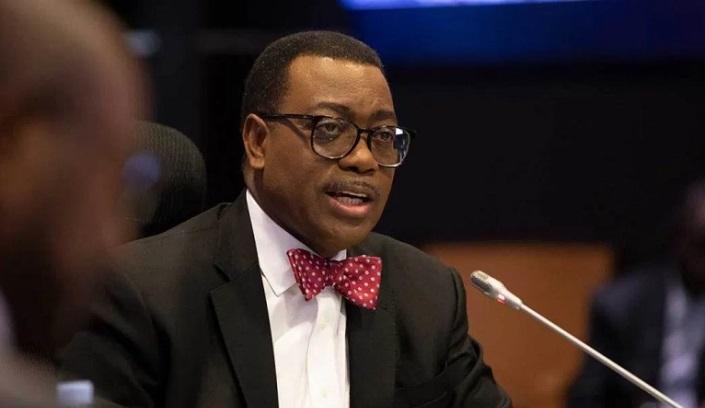
Worries may linger for a long time, but joy comes in the morning. The time has come for us to rejoice and celebrate an illustrious and indefatigable Nigerian for keeping the flag of our nation flying, and for making Africans proud. He is none other than Akinwumi “Akin” Adesina, the President of the African Development Bank (AfDB).
He was the first Nigerian to helm the AfDB. Most Nigerians are enormously pleased, and excited that Akinwumi “Akin” Adesina has been exonerated and cleared of corruption allegations by the AfDB independent review committee of three members headed by former Irish president, Mary Robinson.
Akin, the charismatic speaker, well-dressed diplomat, technocrat, and outstanding agricultural economist was cleared of all 16 charges alleged by whistle-blowers against him. Can the employment of a friend and a parley with China generate whistle blowing? Yes, a parley with China could be regarded as an immoral activity by some powerful elements in the bank. Some of us know that a lie cannot go far because it has no leg. Akinwumi Adesina’s exoneration confirms the Yoruba proverb that the truth shreds a lie of twenty years in one day.
The AfDB which has its written own rules, is a regional multilateral institution owned by African countries but has the US as the second major investor with 6.6 percent shares, after Nigeria with 9.3 percent of the total shares. The President of the AfDB, Akinwumi Adesina, was accused of impropriety by a group of employees referred to as “whistle-blowers.”

Most organisations have one set of explicit or understood regulations or principles mostly written, governing their conduct or procedure within an area of activity. Written rules are known by all and sundry and anyone who wants to succeed must not only understand the mechanism of the organisation but also, play by the written rules. Unfortunately, there are also unwritten rules.
I am of the view that no nation, no matter how powerful or influential should have veto power over the destiny of African countries. But Africans have allowed foreign countries to have domineering shares in the Board of Governors of the AfDB
Unwritten rules are what I refer to as “rules” outside the rules. Unwritten rules are known only to a few in most organisations, and are applied on discretion by power brokers when someone is to be elevated or when the person’s reputation is to be damaged. When someone’s reputation is to be destroyed, unwritten rules may be applied. Often these “rules” are borne out of envy, wickedness, machinations, and triviality by some individuals or groups that can be referred to as cabals or power brokers in any organisation.
In any organisation, you either belong or recognize power brokers and know how they operate. When anyone runs afoul of unwritten rules in any organisation, he or she would have to seek divine intervention, acquire political clout, and/or apply backdoor diplomacy amongst others as a survival strategy.
Some allegations of corruption leveled against the President AfDB led to an inquiry on him by the Bank’s Ethics Committee. He responded both to accusations of violations of the AfDB statutory rules and to the most numerous objections concerning its governance, its choice of collaborators and its management style.
In response, Adesina accused his critics of “questioning the integrity, leadership and honesty of 16 African presidents and ECOWAS”, who gave him their support. Adesina was also reported to have gotten the unanimous support of the Executive Council of the African Union consisting of 55 Ministers of Foreign Affairs. He was cleared by the Ethics Committee. But some members from powerful nations on the board of the AfDB, particularly the US, were not satisfied with the Ethics committee report. It was then I knew that Akinwunmi Adesina would be subjected to “rules” outside the rules.

Akinwunmi “Akin” Adesina, the 8th President of the AfDB, previously served as Nigeria’s Minister of Agriculture and Rural Development. A job which he performed to the best of his ability and to the admiration of many Nigerians. At the time Akinwumi Adesina went through emotional torment, Nigeria was, and is still solidly behind him.
President Muhammadu Buhari says Nigeria will stand by the AfDB President. “I didn’t say because you were a People’s Democratic Party (PDP) minister, and I belonged to the All Progressives Congress (APC), so I would withhold my support. I will remain consistent with you, because no one has faulted the step I took on behalf of Nigeria,” President Buhari said. That remarks from the highest level of government in Nigeria is very encouraging and pleasing.
Nigerians and other African leaders rallied support for Adesina who is completing his 5-year tenure but is entitled to another term. In fact, Nigeria’s former President Olusegun Obasanjo in a letter to former presidents of African countries had extolled Adesina’s work at the AfDB saying he has “performed very well in his current position over the past 5 years and taken the bank to greater heights.”
Even the bank’s Board of Governors said that it did not request for a fresh investigation and that it has not ordered Adesina’s resignation. The bank’s Ethics Committee decisions were challenged and rejected by the US Treasury Secretary, Steven Mnuchin. So, the AfDB had to order a new independent probe of Adesina. This is now history.
We are in an age where anything can happen. I agree with those analysts who say that the open rejection of the AfDB’s Ethics Committee and the call for a fresh “independent” probe erodes the independence of the bank’s corporate governance structure and raises doubt about the bank’s internal mechanisms.
I admire the President of AfDB, Akinwunmi Adesina, for his outstanding contributions to the development of Africa, and Nigeria in particular. He is an achiever who creates support for African governments and the private sector at a time when most countries in the continent face fiscal challenges. Looking at the Mary Robinson panel’s report, the AfDB President’s panache, splendid performance, actions and character, I am convinced beyond measure that Akinwumi “Akin” Adesina deserves a Bravo Zulu.
I am of the view that no nation, no matter how powerful or influential should have veto power over the destiny of African countries. But Africans have allowed foreign countries to have domineering shares in the Board of Governors of the AfDB. “It is sad and disappointing to note that in almost all the regional and sub-regional organisations in Africa, a great number of member states do not pay their dues,” according to the former President of Nigeria, Shehu Shagari in his book Beckoned To Serve.
What Akinwunmi Adesina went through is international politics designed and orchestrated by a powerful block in the board of the AfDB. That was responsible for the concern raised by well-meaning Nigerians and a few analysts. But the game of brinksmanship exhibited by President Buhari, ex-president Obasanjo and other African former leaders as well as subtle diplomacy behind the scenes by the AU have yielded positive results.
Most importantly, Akinwunmi Adesina did his best and as the coast is clear for a second term in office, he must bear in mind: “rules” outside the rules of the AfDB. He must cleverly play the game with all stakeholders particularly the powerful nations on the board of the regional bank.
So, what is the lesson learnt? For Nigerians aspiring to take plum jobs at the national and international levels, they must be above board. And realize that there are “rules” outside the rules, which could be applied or misapplied anytime. I join numerous well-wishers to wish Akinwumi Adesina the best and God’s speed in his re-election bid for a second term in office and future endeavors. Thank you!