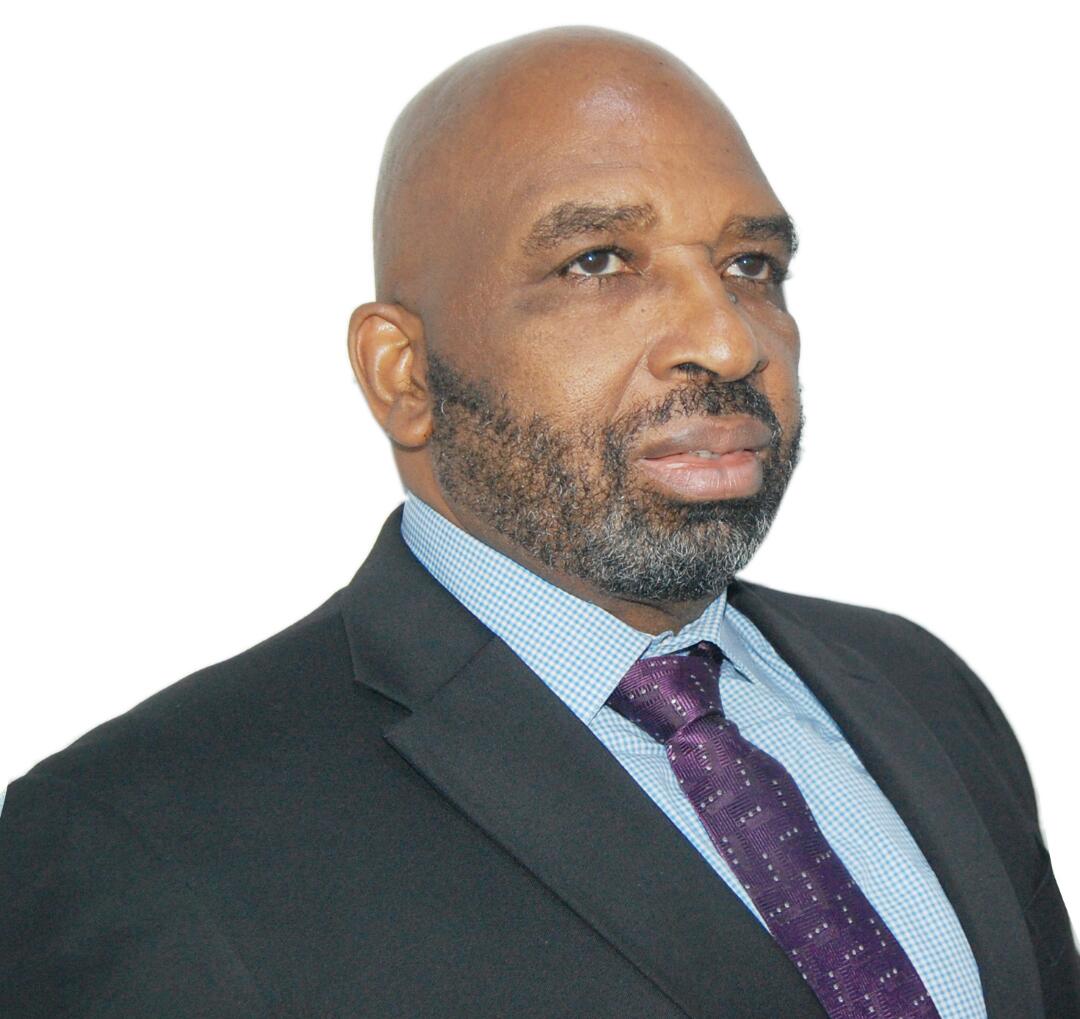
The nation’s banking sector is evolving with a lot of competitiveness to drive retail banking and grow customer base. In this interview Obinnia Abajue, executive director, Personal and Business Banking, Stanbic IBTC Bank explains the Banks strategies and plans to reach the unbanked population while sustaining its position in corporate banking.
In the last two years Stanbic IBTC Bank has spread its network of branches across Nigeria but recently the speed of rollout seems to have slowed. Do you think you have a network of branches that covers the country?
Our current network of branches is spread across the country. We are present in every state and the FCT. Our roll out plan is progressive and aligns with the expectations of our customers and the strategic intent of the bank. We now have 179 branches and 351 ATMs across the country.
The cost of establishing new branches and the recruitment of good hands are challenges usually associated with network expansion projects. How are you able to deal with these challenges?

We are aware of the cost implications of building our network of branches. However, we believe that the cost is required to be able to provide the level of service that we are committed to give our clients.
As part of Standard Bank Group, we are able to access the best practice for this multifaceted growth project which enables us to both address the physical infrastructure development challenge alongside the human resource issues. Although challenging, the fact that Standard Bank is now over 150 years old makes a difference.
Mergers and acquisitions are partly undertaken to expand operations and increase market share. Will you say your branch network expansion has impacted positively on your market share?
Our branch expansion has indeed impacted positively on our market share and increased the spread of our value proposition across the country. Leveraging also on the strength of our parent company Standard Bank of South Africa, we have been able to deeply access and penetrate international markets.
Some years ago it was thought that the introduction of less expensive channels such as Internet banking, telephone banking, mobile banking and mobile money would reduce the need for branches but that doesn’t seem to be happening. How do we explain this?

Firstly, we must recognise that the age of multi-banking channels driven by cutting–edge technology as a means of achieving deep market penetration is already upon us. As a result, our ability as an industry to leverage on the dynamics of these e-platforms will further align business with the global movement for technology and enhance overall transactional offerings. However, it must be said that these channels are not designed to eliminate or reduce the number of branches, but to provide alternative platforms that are complementary, portable and accessible as a means of providing superior and affordable service.
We must also understand customer generational preferences and social patterns which explain why migration of the network of our existing customers on these platforms might only happen progressively and not immediately. With a right to exercise the option or not, we would expect that in the medium to long term, a significant amount of our customers to migrate on these platforms.
In terms of customer base, we understand Stanbic IBTC Bank has grown significantly across different market segments. What is your target for the next 18 months and what plans have you put in place to achieve those targets?
Over the years, our strategy has been to focus on the customer segments that we believe that we are best able to serve. Our goal is to leverage all of our collective strengths and capabilities as a group and make them available to our customers through a single delivery channel. In Personal and Business Banking, we are focused on serving salaried workers, business owners and high net worth individuals (personal) while we serve the SMEs and small local corporates as businesses. Our branches are located in the key economic hubs to ensure that our service is convenient to the average customer and business venture. Our customer base has doubled over the last 12 months and will continue to grow.
Small and medium enterprises are catalysts of growth in all economies, but in Nigeria access to credit and business development support by small businesses is clearly inadequate. How has Stanbic IBTC Bank been able to deal with this challenge?
While credit is obviously not the only problem militating against the growth of SMEs in Nigeria, it is certainly an important one. We have a team of dedicated SME experts drawn from a diverse background which have instructed our ability to carefully profile the credit patterns and capital requirements of businesses within this segment and aligned them with our risk parameters to determine lending suitability or otherwise. This has also led to the development of a credit evaluation approach that reduces the loan disbursement process time significantly. Additionally, a number of segment specific products like zero COT accounts, SME trader loan, Invoice Discounting, LPO Financing, and so on, exists within our product bouquet, whilst we remain committed and focused on developing more products capable of overcoming traditional risk assessment challenges.
We believe that we need to continue to invest in supporting SME development in terms of business support competencies and management toolkits to help them grow their businesses into properly structured organisations.
The contribution of agriculture to Nigeria’s GDP is quite large, suggesting strong growth in agriculture is necessary for overall economic growth. What kinds of opportunities exist for investments that will help to unlock the potentials of agriculture and to derive optimal benefit from this sector?
The agriculture sector has witnessed neglect by the organised financial services sector due to the real and perceived risk factors depending on the nature and scale of the agric operation. Agriculture is generational on average and it is usually seasonal, requiring significant capital. This effectively exacerbates the risk.
A key financial requirement for the sector is appropriately priced credit such as what interventions are helping to resolve either by providing funds to the banks; for example CACS or by sharing or underwriting some of the risks; for example NIRSAL/AGFS. The impact of these schemes will be seen in time as they are supporting the development of a new breed of modern agric businesses across the full value chain.
Agricultural finance is an area of strength for the Standard Bank Group and we are committed to deploying that expertise in Nigeria to support the sector’s development.
We’ve read quite a few articles on the effectiveness of the agricultural finance fund, better known as Commercial Agricultural Credit Scheme (CACS) launched by the Central Bank. Would you say the credit scheme has helped to unlock potentials in the sector?
Apart from Stanbic IBTC Bank’s expanding retail franchise and subsequent opening of branches across the country, there’s the perception that yours is a bank for the top end of the market. What other steps have been taken to position Stanbic IBTC as a bank for everybody?
Stanbic IBTC is a full service financial services institution that has over the years built a strong brand and reputation for investment management and investment banking. Traditionally, these are seen as top end offerings. However, we have gone on to build a pension brand and reputation as the largest pension fund administrator in Nigeria serving Nigerians from all walks of life and across the segments. We operate the leading mobile money service in Nigeria now providing financial service to over 800,000 individuals in the country without using a bank account.
We are therefore not just a top end only organisation; as part of Standard Bank Group with over 150 years of retail banking on the continent, Stanbic IBTC is open to business from all segments of the Nigerian market.
Your mobile money platform was launched and has been successful. To what extent has it helped Stanbic IBTC Bank to reach the unbanked and underserved segments of the market?
Two of the main challenges in providing financial services to the unbanked and underserved segments in Nigeria have been accessibility to bank branches which are usually located on high streets in major towns and cities; as well as the formal requirements to open bank accounts. With Stanbic IBTC MobileMoney, we have been able to remove these hurdles by providing access to financial services to consumers wherever they may be in Nigeria as long as there is GSM coverage. The only requirement needed to get a Stanbic IBTC MobileMoney account is a mobile phone which may not necessarily be a smart phone. We are witnessing an increase in customer adoption of the mobile money platform and are confident that the availability and convenience of mobile money will catch on in Nigeria.
We have also developed a MobileMoney app to serve the teaming smart phone adoption that we have seen in our market.
Where do you see Stanbic IBTC Bank, say in five years from now?
We want to be a leading end to end financial services provider in Nigeria. We expect to be a top player in each of our chosen market spaces providing excellent service driven offerings in the market.