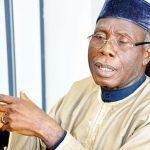
Vincent Akpotaire, acting director-general, Bureau of Public Enterprises (BPE), said weekend that privatisation was not the problem affecting the power sector in the country.
Akpotaire said the long-standing decay in the sector was the main cause of the present challenges facing the sector, saying privatisation became the only option open to the government due to the need to have a process that would be self-sustaining and responsive and make electricity supply transparent and investment sustainable.
“Privatisation is a process, it rides on the back of sector reform and sector reform is a necessity that arises from failure of infrastructure basically. Privatisation is not the problem we are facing today; the problem we are facing today is getting the system that is now in place to run without hitches; to remove the bottlenecks in the system, because you are moving from one completely different system to a new one where the people take their obligations seriously.
“Power is not stable yet; it cannot possibly be stable two years after privatisation. I think Nigerians should understand that. Power cannot be stable in this country after 40 years of decay and two years after privatisation,’’ Akpotaire said.

The present administration had taken full charge of the situation by working out modalities to solve some of the issues in the sector, he said.
According to Akpotaire, government is taking adequate steps to ensure that the new system that is in place begins to work properly in order to improve power supply.
He advised the Federal Government to create incentives for the Transmission Company of Nigeria (TCN) to strengthen its capacity to transmit more than it was doing presently.
“Government can continue to fund the existing infrastructure, but at the same time government can encourage Public-Private Partnership in funding what was in the past called super grid. This super-grid could transmit up to 760 megawatts and that gives a very robust capacity to wield power, so the lost regime in transmission will drop significantly,” he said.
He, however, urged Nigerians to be patient with the present administration, as it was doing everything possible to improve power supply.

He also disclosed that Ntel, a new company carved out of MTEL, a subsidiary of the defunct Nigeria Telecommunications Limited (NITEL), was in the process of rolling out new lines to the public.
“We are aware that the Ntel facility is about rolling out its new lines and substantial part of what they want to do is in the areas of 4G data and voice. It’s not yet Uhuru, because they are starting out on completely new platforms. The old platforms of NITEL are obsolete and useless; that is the truth. So what they really bought was the space and a couple of the equipment that they could still transit,” he said.