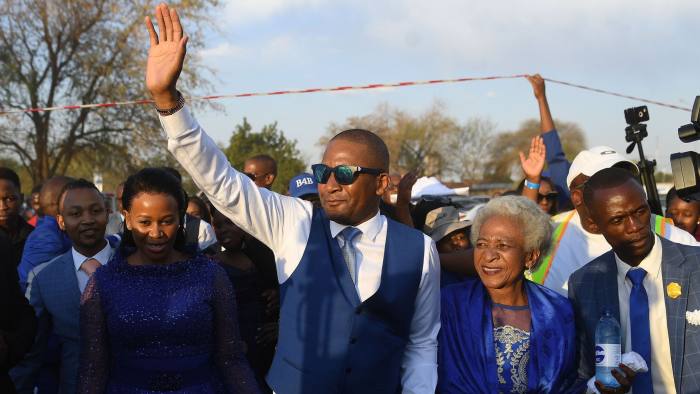
Botswana’s main opposition leader has vowed to take a tough stance with De Beers in negotiations to restructure the way it operates in the world’s second-largest producer of diamonds if he wins Wednesday’s election, the closest fought in the country’s history.
Duma Boko, who heads the coalition Umbrella for Democratic Change, told the Financial Times he intended to seek “much fairer and more equitable” terms from the Anglo American-owned company if his party overturns the ruling Botswana Democratic Party’s unbroken 53 years in power.
The aim was to increase Botswana’s share of the wealth generated by the industry, the 50-year old lawyer said, adding: “We have a future with De Beers, but we will need to redefine the terms of that future and make it more equitable and fair.”
De Beers gets about two-thirds of its diamonds from Botswana., and the country negotiates sales agreements with the company every 10 years. The current deal expires in 2021 and President Mokgweetsi Masisi has launched talks to ensure a smooth transition. He has said that he is looking for a “win-win” from a “wonderful relationship with De Beers”.

Read also; Nigeria in talks with UK government on ‘jollof bonds’ for infrastructure financing
Diamonds account for about a fifth of the GDP of one of Africa’s fastest-expanding economies and about three-quarters of export earnings. Debswana, a joint venture between Gaborone and De Beers, is the country’s biggest employer outside the government and the largest source of state revenue.
But Mr Masisi’s Botswana Democratic Party is facing its toughest ever electoral test since it took power after the country won independence in 1966. Ian Khama, Mr Masisi’s predecessor, has split from the party and accused it of increasing authoritarianism. Analysts have said the race is too close to call, although polls indicate a lead for the BDP.
Meanwhile, high levels of unemployment and inequality have led to rising disquiet over the diamond industry, with growing calls for a greater share of sophisticated parts of the business, such as sales and valuations, to be undertaken in Botswana.
Few countries and businesses have histories as entwined as Botswana and De Beers. The company found what would become the world’s richest diamond mine, Jwaneng, soon after the nation won independence.

As well as the 50-year-old Debswana joint venture, Gaborone also holds a 15 per cent stake in De Beers, with the rest owned by Anglo.
“For our people, every diamond purchase represents food on the table,” Festus Mogae, a former president,once said.
But many voters disagree. “These diamonds are benefiting only the top officials,” said a bus operatorin the capital, Gaborone, who declined to use his real name. “I’m 36 years old but I wouldn’t know a diamond by looking at it.”