In a strategic move to redefine the role of education in national development, the Bank of Industry Limited (BOI) has announced a plan to boost schools across Nigeria with patient, innovative, and accessible financing.
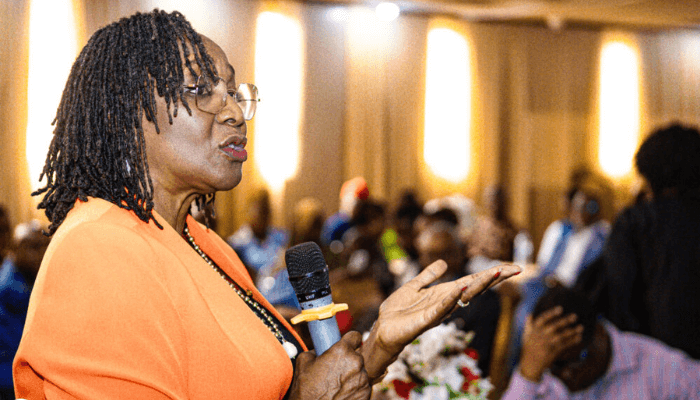
Divisional Head, MSME, Bank of Industry, Engr. Pacqueens Irabo, drop the hint in a speech at the Educator’s Insight event, held Wednesday, July 30, in Port Harcourt, the Capital city of Rivers State.
The event, which was organised by Cloudnotte Limited, with over 720 school owners and administrators in attendance from all six South-South states, aimed at integrating entrepreneurial skills and ventures within school premises, such as digital hubs, agribusiness units, creative workshops and clean energy labs coexisting alongside classrooms.
According to Irabor, BOI’s 2025–2027 Strategic Plan is focused on impact-driven development financing, structured around six priority themes under the acrostic D-MYGIC—Digital Economy, MSMEs, Youth & Skills, Gender, Infrastructure, and Climate & Sustainability.

Read also: BOI approves ₦2.9bn for 662 MSMEs, disburses ₦900m to 262
He said schools, especially private ones, are uniquely positioned to help the bank simultaneously achieve all six focus areas, as many of them, which operate as MSMEs, are women-led and women-staffed, and hold massive potential for infrastructure development, youth empowerment, digital transformation, and climate-conscious innovation.
Unveiling the Project, he disclosed that Project EASE is an acronym for: Education Around Sustainable Enterprises, a groundbreaking initiative designed to transform schools from traditional learning centres into business-integrated environments, where students learn by doing.
He said the Project proposes to integrate entrepreneurial ventures within school premises, such as digital hubs, agribusiness units, creative workshops, and clean energy labs, coexisting alongside classrooms.
”These ventures serve both as practical training platforms for students and as additional revenue streams for school proprietors”

Engr. Irabor said under this initiative, the BOI is ready to finance to schools for the acquisition of productive capital, including:
Digital systems and educational software, Solar energy solutions/inverters, assets for commercial ventures and skills labs
He said these interventions will equip students with market-relevant skills, help schools become financially resilient, and support the emergence of education centres as incubators for sustainable development.
He described the education sector as a strategic catalyst for achieving several United Nations Sustainable Development Goals (SDGs) like: Quality Education; Enabling hands-on skill-based learning and enterprise education; Gender Equality; Empowering women-led schools and increasing employment for female teachers.
Others are ”affordable and Clean Energy; promoting solar adoption in schools; decent Work and Economic Growth; equipping youth with practical skills for job creation; Industry, Innovation/ Infrastructure; supporting school-based enterprises and digital upgrades and Climate action, which encourages climate-conscious infrastructure and sustainability practices.
He described the initiative as “using one stone to hit multiple targets,” pointing out that investing in schools ensures impact across economic, social, and environmental dimensions, helping BOI, the schools, and the broader society at once.
Read also: BOI pushes healthcare reform to curb $11bn medical tourism loss, brain drain
On the benefits, he said it cuts across Stakeholders: for Students, “…it will enhance and promote hands-on exposure to real-world enterprises; acquisition of market-ready, and entrepreneurial skills.”
For School Owners, he said the initiative will provide access to affordable finance and open new income streams from in-school enterprises.
For Parents, he said it will enhance Improved learning outcomes and ensure education that will translate to future employability.
And for the government, he said it will produce an empowered youth population and strengthen alignment with the Renewed Hope Agenda and SDGs.
The event, which attracted key players from the business sector, administration and a cream of the society, signaled the dawn of a new education-financing partnership model.
Participants lauded the BOI for the initiative and expressed optimism that the project will not only boost the education sector but will also build futures through enterprise, innovation, and sustainability.