Rivers have always held a special place in Nigeria’s story. They are symbols of both life and loss, of promise and peril. The Niger and the Benue, whose confluence at Lokoja inspired explorers and cartographers centuries ago, remain among the most remarkable natural landmarks in West Africa. Around their banks and countless tributaries, communities have thrived for generations engaging in trading, fishing, and travelling along the same waterways their ancestors once used.
To live near water in Nigeria is to live close to possibility. Waterways connect where roads do not, open new corridors for commerce, and shorten the distance between remote communities and opportunity. In a nation marked by vast geography and uneven infrastructure, rivers should be natural highways of development which should be cheaper, cleaner, and more efficient than roads.
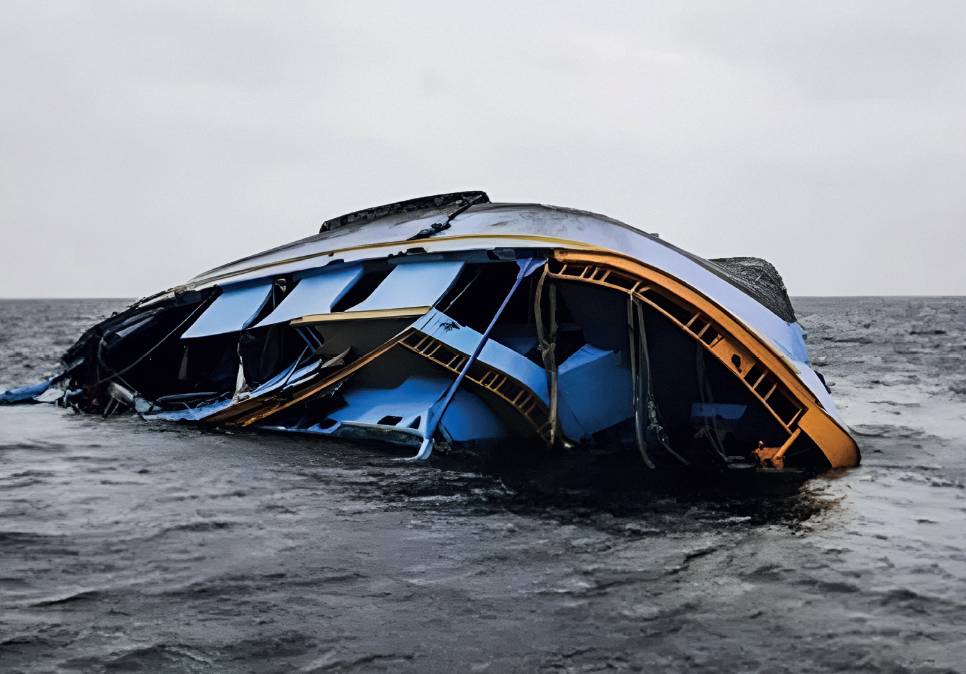
And yet, they have increasingly become sites of grief. Each year, familiar headlines appear: “Dozens feared dead as boat capsizes.” “Bodies recovered from river mishap.” “Overloaded canoe sinks in Kogi.” Although the details differ, the story is the same. The most recent tragedy in Kogi State, where more than twenty bodies were recovered after a boat capsized, is no isolated incident. Between 2018 and 2023, over 1,200 people lost their lives in boat accidents across 25 states and the FCT. Niger, Kebbi, Kwara, Sokoto, Lagos, and Anambra recorded the highest fatalities with Niger alone accounting for over 270 deaths. By 2024, the toll had climbed higher, with more than 300 deaths nationwide, including multiple incidents in Kogi and Niger States. These are not mere statistics, they are families shattered, communities grieving, and futures cut short. What should be a channel of development has become a corridor of sorrow.
In some coastal states, particularly in the riverine communities of Bayelsa and Delta, a culture of discipline and community-driven safety has evolved. Passengers are required to wear life jackets and adhere to basic safety rules. Sadly, such discipline is rare in most parts of the country. Across inland states, water transport remains largely informal, unregulated, and perilously unsafe. Wooden canoes that leak before departure, rickety boats without life jackets or weight limits, and overcrowded vessels are the norm. The outcomes are predictable and devastating.

Ironically, the National Inland Waterways Authority (NIWA), the body mandated to regulate inland navigation and ensure safety, is headquartered in Kogi State, one of the states most affected by these tragedies. Regulation, however, too often ends on paper. Boats that should be inspected go unchecked; licences that should be earned are handed out casually. Enforcement becomes reactive, surfacing only after disaster strikes. This creates a culture where safety is optional, and accountability elusive.
Nigeria must begin to treat waterway safety as a matter of national urgency, not local misfortune. The first step is to establish a national water transport safety code applicable across all states of the federation, setting uniform standards for vessel maintenance, operator certification, passenger limits, and mandatory life jackets. Such reform must move beyond policy documents to real enforcement. States and local governments should introduce boat licensing systems tied to compliance, while communities should be empowered to report unsafe operations. Where private operators cannot meet safety standards, the government must step in, not to control the market, but to guarantee safety and provide reliable alternatives.
Equally vital is public education. Many passengers still consider life jackets unnecessary or even inconvenient. Only consistent awareness campaigns rendered in local languages, through radio, schools, and traditional institutions can change this mindset. The message will be to emphasise that safety is not a foreign imposition but a shared responsibility.
Modernisation is another urgent need. Many boats currently in use were built decades ago and cannot safely serve growing populations. Government investment in safer vessels, modern terminals, and digital tracking systems should be viewed not as expenditure but as economic strategy. Safe waterways can stimulate trade, agriculture, and tourism, connect isolated regions and reduce the burden on road transport, especially with population explosion and traffic doubling across major cities.
Reforms should not be about laws but about lives. Nigeria’s rivers should not be memorials to loss. They should be arteries of hope carrying people, goods, and possibilities across regions. The Nigerian waterways should be a cheap and safe system of mobility for thousands of people living and making ends meet around it. Achieving that vision requires both leadership and collective will. Governments must plan beyond election cycles, and citizens must demand accountability and compliance.

When the river beckons, Nigerians should not have to choose between mobility and mortality. Nigeria must view safety not as charity but as justice and an expression of governance that values every citizen’s right to live. Water can once again become a path of connection rather than a corridor of sorrow but only if we decide that the sanctity of life is not negotiable. In the end, safety is not just a regulation; it is the truest form of development.