Lagos has emerged as the best-performing state in Nigeria’s 2025 Subnational Ease of Doing Business (EoDB) rankings, released by the Presidential Enabling Business Environment Council (PEBEC), while states in the North East region recorded the weakest performance nationwide.
The report, released last week highlights the significant variations in business conditions across the country’s 36 states and the Federal Capital Territory (FCT), reflecting both progress and persistent challenges in enabling a conducive business environment.
According to the council, the diversity across Nigeria’s states and the FCT means that reforms cannot be one-size-fits-all. Tailored, state-level insights are essential to unlocking investment, strengthening value chains, and creating jobs.
Read also: PEBEC commends FRSC on nationwide clearance of driver’s licence backlog

According to the PEBEC report, Lagos leads the national rankings with a score of 62.7 out of 73.0 (85.6%), followed by Kaduna (47.5, 65.1%), Oyo (45.8, 62.7%), the FCT (44.5, 61.0%), and Ogun (43.8, 59.9%). Other strong performers include Enugu, Plateau, Ekiti, Kano, and Nasarawa.
These states have demonstrated consistent, data-driven reforms, especially in areas such as digital service delivery, regulatory compliance, and investor facilitation.
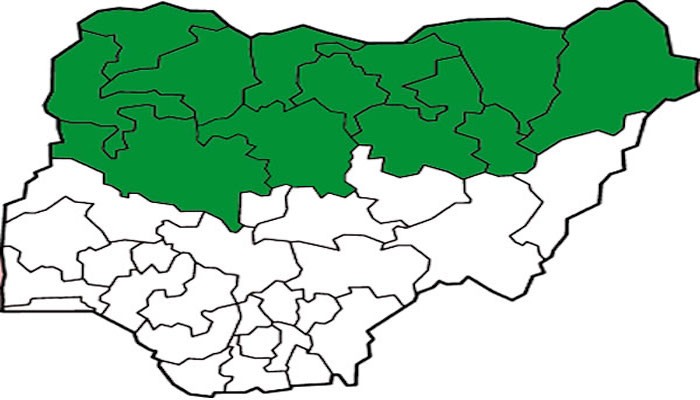
In contrast, the North East region, which includes states such as Adamawa, Bauchi, Borno, Taraba, Yobe, and others, recorded the lowest overall performance, scoring an average of just 28.5%.
The report attributes these results to structural constraints, including security challenges, unreliable electricity, poor infrastructure, weak judicial processes, and limited access to finance.
The assessment also reveals critical reform gaps affecting more than 70% of states nationwide. These include investor aftercare, access to credit, interstate trade, commercial dispute resolution, electricity supply, transport and logistics infrastructure, and market competition.

The report noted that while some reforms, such as digital payments and regulatory automation, have gained traction, deep institutional weaknesses continue to hold back broader progress.
PEBEC’s report identifies five high-impact interventions to accelerate improvements across states, including the establishing dedicated investor aftercare units, implementing state credit guarantee schemes, harmonising interstate trade and market access, strengthening commercial justice and dispute resolution, and improving electricity access for industrial clusters.
Regionally, the South West emerged as the strongest performing region, led by Lagos, Oyo, and Ogun, while the North-Central and Southeast followed closely.
The South-South showed moderate and uneven performance, and the North-West displayed a wide split between strong and weak states. The North East remains the most challenging region, though select states have begun showing signs of improvement.
The 2025 Subnational EoDB rankings underscore the dual reality of Nigeria’s business environment, modernization and efficiency coexist with persistent institutional and structural weaknesses.
The council explained that the 2025 assessment offers more than a scorecard. It provides an evidence-based view of how states are enabling businesses, where progress is emerging, and where challenges continue to hold firms back.
It also evaluates whether emerging digital reforms translate into improved service delivery and user satisfaction.