… as FG secures $600,000 for industrial development clusters
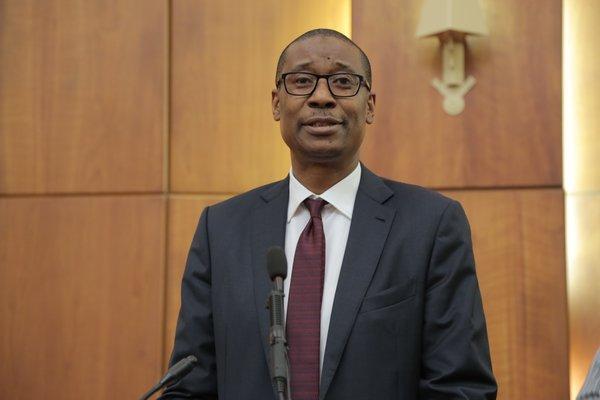
Minister of Industry, Trade and Investment, Okechukwu Enelemah, has explained the benefits of the recently ratified Trade Facilitation Agreement performed in Davos, Switzerland, at the recent World Economic Forum (WEF).
The benefits, Enelemah said, include making it easier for trade deals to occur between nations and eliminating all forms of barriers of trade inflows into the country, in addition to increasing volumes of goods and services for exports.
“The ratified trade facilitation agreement also contains the rules of trade, eliminates barriers, reduces red tape and Customs clearance time. It also sets out measures for effective cooperation between Customs and other appropriate authorities on trade facilitation and Customs compliance issues,” Enelemah said.
Enelemah, who made the disclosure during an interactive session with newsmen in Abuja on Tuesday, said the trade agreement, which has been signed by the government and implementation procedure commenced, would increase the volume and value of trade in goods, stating further that, “The greater the volume, the greater the revenue generated, the more jobs created and the more the economy expands.”
Accordingly, he noted that “last week, senior director for trade and competitiveness at the World Bank, Anabel Gonzalez, visited us with her team to engage in concrete decisions, where discussions were held on the discussed single window and one-stop shop raising the quality of Nigerian products for exports, setting up a trade infrastructure at the Ministry, assistance in training staff, assistance with World Bank diagnostic study and analysis that will help is in negotiations for the Continental Free Trade Agreement.”
It would be noted that the ratification of trade facilitation deals on how procedures and controls governing the movement of goods across nation borders can be improved to reduce associated cost burdens and maximising efficiency while safeguarding legitimate regulatory objectives.
According to 2015 study carried out by World Trade Organisation economists, full implementation of the trade ratification agreement would reduce members trade costs by an average of 14.3 percent with developing countries having the most significant.
Meanwhile, the Minister of State for Trade and Investment, Aisha Abubakar, at the media interaction, disclosed that the ministry had secured a grant of over $600,000 from the African Development Bank (AfDB), for the predevelopment study towards conversion of 6 out of the 23 Industrial Development Centres (IDCs) to industrial clusters.
She said this would resuscitate the IDCs and position them to be a catalyst for economic development, adding further that the findings of the study are expected to provide bankable centres to be converted into full blown economic clusters where private participation and Investment will be sought.
Speaking further on government’s efforts in creating enabling business environment for entrepreneurs, minister of state disclosed that the ministry would be leading a delegation to the Global Entrepreneurship Congress in Johannesburg, South Africa, in March 2017 to integrate with their global peers and exchange ideas.
“The meeting brings together thousands of entrepreneurs, investors, researchers, policy makers and other start-up champions from more than 160 countries to identify new ways of helping founders start and scale new ventures around world,” the minister explained.
Meanwhile, Enelemah earlier informed that the trade ministry and Ministry of Foreign Affairs were working out economic diplomacy model that would see Nigeria diplomatic missions outside the country also serving as a contact centre in marketing Nigerian entrepreneurs and their various products across the globe.
He noted further that the Presidential Council on the Ease of Doing business had been working with key stakeholders to drive government efforts to identify and reduce bureaucratic processes and regulations that impede the private sector.
“The MSME clinic is part of what is currently being done to enable various regulatory agencies have direct interface with the MSME operators, and be on the ground to address the challenges facing such MSMEs,” Enelemah said.