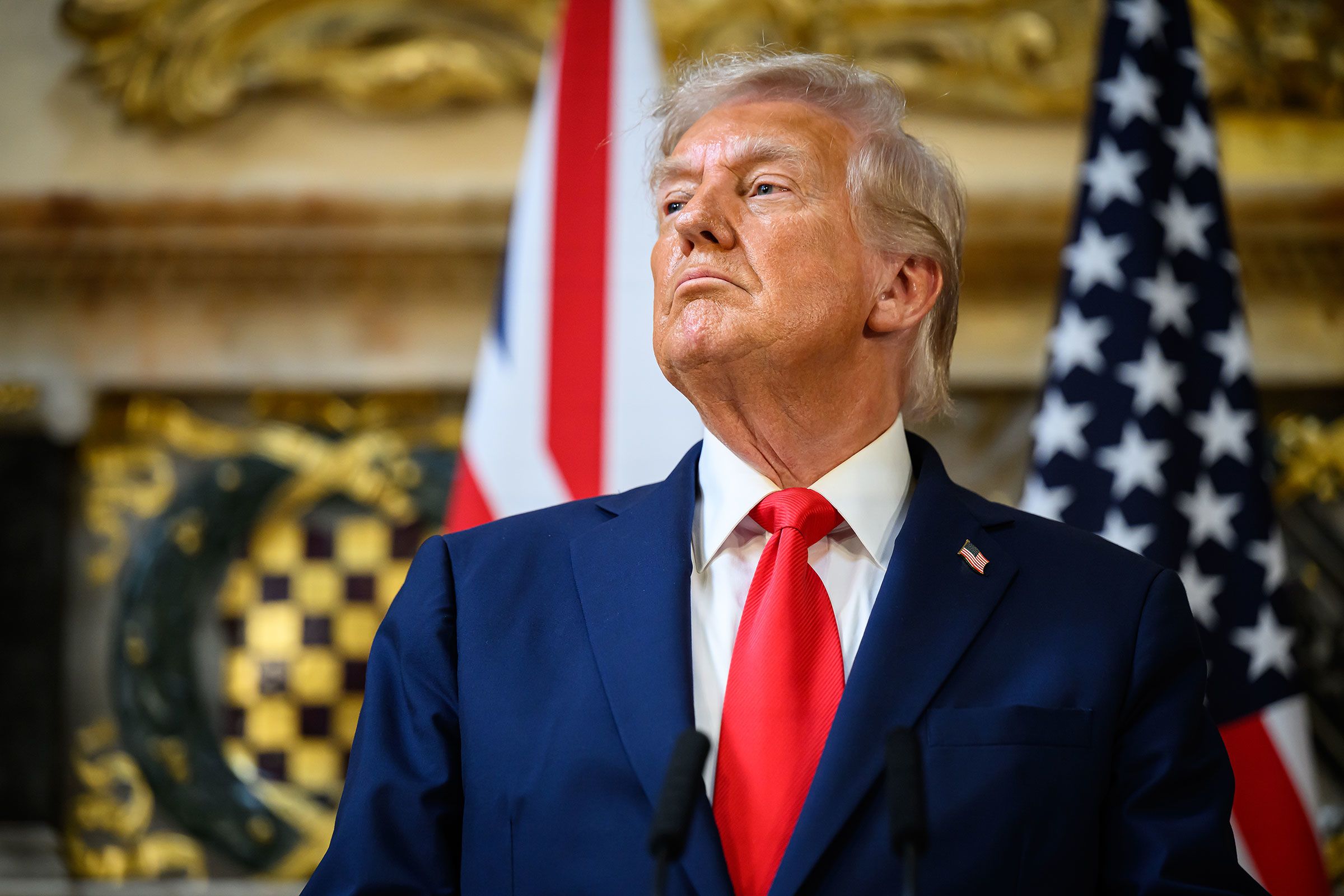
The BBC has apologised to US President Donald Trump for an edited sequence in a Panorama documentary that wrongly suggested he had urged supporters to engage in violence during his speech on 6 January 2021.
However, the corporation has dismissed the president’s demand for financial compensation, insisting there is no basis for a defamation claim.
In a correction published on Thursday evening, the BBC acknowledged that a clip used in Trump: A Second Chance? had not accurately reflected the original wording of Trump’s remarks. The admission followed internal concerns about how the programme was edited.
The documentary featured Trump saying: “We’re going to walk down to the Capitol… and I’ll be there with you. And we fight. We fight like hell.”
But a leaked internal memo revealed that the segment spliced together comments made more than 50 minutes apart. In the same speech, Trump had actually urged his supporters to “cheer on our brave senators and congressmen and women”.

Read Also: Trump signs bill ending US’ longest-ever government shutdown
The memo was referenced in a report by The Telegraph, written by Michael Prescott, a former independent adviser to the BBC’s editorial standards committee. Its publication intensified scrutiny and ultimately led to the resignations of Tim Davie, the BBC’s director general, and Deborah Turness, the chief executive of BBC News.
In a letter sent to the corporation on Sunday, Trump’s lawyers demanded that the BBC retract the documentary by 14 November or face a lawsuit seeking at least $1 billion in damages. They claimed the edit had caused “overwhelming financial and reputational harm”.
A BBC spokesperson said the corporation had expressed its regret directly to the White House.
“BBC chair Samir Shah has separately sent a personal letter to President Trump making clear that he and the corporation are sorry for the edit of the president’s speech on 6 January 2021,” the spokesperson said.
The spokesperson added that the BBC did not intend to rebroadcast the programme.
“While the BBC sincerely regrets the manner in which the clip was edited, we strongly disagree there is a basis for a defamation claim.”

The BBC’s board has faced criticism for what some described as a slow and inadequate response to the editing error. The fallout has intensified broader scrutiny of the organisation, including accusations of “anti-Israel bias” in its Arabic-language coverage of the Gaza war and claims of bias in its reporting on trans issues.
Turness previously conceded that errors had been made but rejected allegations of institutional bias within BBC News.