Group managing director, Nigerian National Petroleum Corporation (NNPC), Maikanti Baru, says despite abundant oil and gas reserves, Nigeria experiences shortages in electric power.
Baru spoke in Abuja at the 2019 Oloibiri Lecture Series and Energy Forum (OLEF) organised by the Society of Petroleum Engineers (SPE) with the theme “Energy Security and Sustainable Development in Nigeria: The Way Forward.”
According to the NNPC GMD, based on available data, Nigeria’s energy consumption was projected to rise from six gigawatts (GW) in to 2015 to 30GW by 2025, noting that to achieve this, the country would need aggressive development of gas and renewable projects.
Baru further disclosed that the Ajaokuta-Kaduna-Kano, AKK, pipeline that was proposed to convey gas from the Niger Delta, through Ajaokuta, to Kaduna and Kano, would be completed by 2022, adding that the 1.1 billion standard cubic feet (SCF) of gas, 342 kilometres by 36 inches Escravos-Lagos Pipeline System, ELPS II, had achieved 97 percent completion, noting that the remaining 70 kilometres of the pipeline would be completed by the middle of 2019.

Read Also: Electricity Value Chain Infrastructure Demands
“The 130 kilometres by 48 inches/36 inches Obiafu/Obrikom-Oben, OB3, pipeline with the capacity to link the eastern and western parts of the with about two billion SCF of gas daily, was at 92 percent completion and would also be concluded by the middle of the year.”
Also speaking at the event, Bayo Ojulari, managing director of Shell Nigeria Exploration and Production Company (SNEPCO), described Nigeria’s energy gap as disgraceful, adding that 70 percent of households and small businesses in Nigeria hardly get more than four hours of electricity daily.
This, he said, was as a result of the fact that 70 percent of electricity generated by power companies was lost before it getting to the consumers.
He explained that this translated to about 120 million people without electricity, noting that only India had such larger off-grid/bad-grid population.

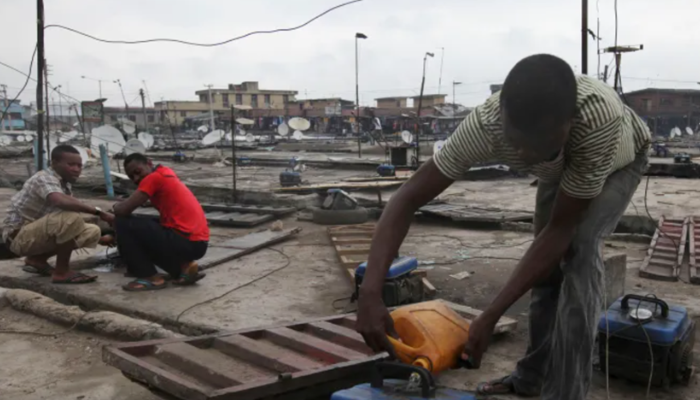
Ojulari disclosed that the gap is currently filled by about 60 million environmentally diesel/petrol generators, adding that the energy gap poses negative consequences for Nigeria’s productivity, competitiveness, employment, security, food security, nutrition, environment, health and education.
“The gap in terms of energy supply is disgraceful. The energy gap in Nigeria is the foundation for so many of the country’s economic and social development problems. In most countries, when you talk about energy security they are talking about the health of their people, education of their people, for their children and for their future.
“They are talking about being a competitive country where people can invest. They are talking about the environment, productivity and food security among others. Energy is not standing alone. Our industry is not about producing and exporting oil, it is about how we impact our societies,” Ojulari said.
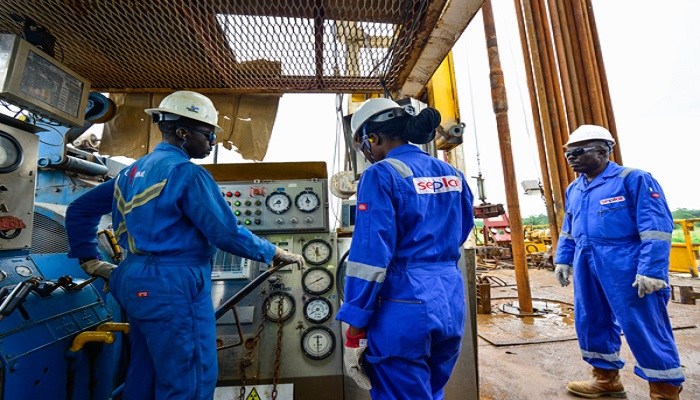
He blamed the loss of electricity generated on aging equipments, funding problems and sometimes vandalism.
He, however, noted that the gap presents massive opportunity for large scale on grid and small-scale off-grid investments.
“Technologies and business models exist for cleaner, affordable and scalable solutions. Alternative energy solutions can have short term financial and social impact for investors on livelihoods and economic activity,” he said.