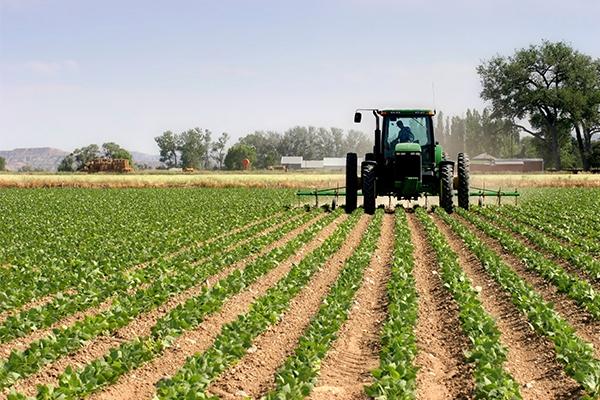
The manufacturing and agricultural sectors saw the highest growth in bank credit in the last quarter of 2016, as recession-hit Nigeria embarks on a painful shift away from crude oil.
Commercial banks lent a total of N2.7 trillion to the manufacturing and agricultural sectors, with both accounting for N2.21 trillion and N525 billion respectively, as at the end of the fourth quarter of 2016, according to data compiled by BusinessDay and sourced from a report by the National Bureau of Statistics (NBS).
Credit to the agricultural sector represents a seven percent increase to N525 billion, from N491 billion, as at the end of the third quarter, while manufacturing notched a four percent increase to N2.21 trillion from N2.13 trillion the preceding quarter.
Tajudeen Ibrahim, head of research at investment bank, Chapel Hill Denham, observes that the development is positive for the real sector and government’s revenue diversification efforts.

“The development is more reflective of the true shape of the economy,” Ibrahim said by phone. “Agriculture, for example, accounts for the largest chunk of GDP by composition, so it should ordinarily get the better chunk of loans.”
Despite the credit growth to both sectors, however, agric credit was only 3 percent of total credit to the private sector, which stood at N15.75 trillion in the period. Manufacturing on the other hand accounted for 14 percent of total credit.
Ibrahim believes a gradual improvement signals some progress is being made.
Agric and Manufacturing account for a third of total GDP by sector.
Bolade Agboola, executive director, Cashcraft Asset Management limited, said in an emailed response that the growth in lending to industry and services is a positive development for the economy.
“It may be the turning point for the much needed growth in real sector lending,” Agboola said.
Ndubuisi Onuoha, group head, specialised SMEs, Fidelity Bank plc, attributed the improved bank credit to the agric and manufacturing sectors to the Central Bank of Nigeria’s intervention funds, including the Anchor Borrowers Scheme for agric and the N220 billion fund for manufacturing.

Onuoha also said the 50 percent loan guarantee by the CBN and the real sector positioning efforts to attract facilities from lenders contributed to the credit growth.
“The manufacturers have learnt to package themselves to attract bank loans. Before now, they had no structure and collateral. Each time they go to the bank for credit, they do not meet the requirements for accessing credit.
“But what the CBN and the BOI have done, has positioned banks to give long term lending which were lacking before”, Onuoha told BusinessDay by phone.
Various schemes facilitate credit access to the agric and manufacturing sectors.
The Commercial Agricultural Credit Scheme (CACS) is an example for the agric sector, aimed at fast tracking the development of the sector by providing credit facilities to large scale enterprises with a minimum asset size of N50 million at a single digit interest rate of 9 percent.
Manufacturers also enjoy intervention funds from the Central Bank, which Frank Jacobs, chairman of the Manufacturing Association of Nigeria (MAN) says has helped the sector.
Meanwhile, the Oil and Gas sector (Downstream, Natural Gas and Crude Oil refining) saw a 1.6 percent decline in bank credit to N3.587 trillion, from N3.64 trillion within the period under review, as appetite for the sector which accounts for the chunk of Non-Performing Loans (NPLs) in the banking sector shrinks.
Upstream Oil and Gas and Services, however saw a growth of 5.6 percent in bank credit, a development which analysts attribute to the naira devaluation on June 20, 2016.
The devaluation saw the naira shed almost a third of its value to N305 per US dollar from N197 per USD.
“Most of the loans to the sector are dollar-denominated, so the credit growth is driven more by naira devaluation than by extension of fresh loans,” said Ayo Akinwunmi, head of research at FSDH Merchant Bank.
Akinwunmi forecasts credit to the oil sector to rise progressively “as Nigeria’s exit from Joint Venture Cash Calls triggers the search for capital by indigenous oil companies.
“I also expect full deregulation of the downstream petroleum sector due to government’s inability to sustain petrol subsidies; this should also create funding gaps to be filled by banks.”
Year-on-year changes in bank credit by sector are also skewed by the naira devaluation.
Nigeria’s Gross Domestic Product probably shrank 1.5 percent in 2016, which would be the first full-year recession since 1991, according to the International Monetary Fund.
The banking sector has been hard hit by the economic downturn as loans went bad in the wake of low oil prices which stifled the ability of oil companies to service their debt.
The oil and gas sector accounts for over 30 percent of Non-Performing Loans in the banks, according to industry data.
HOPE ASHIKE & LOLADE AKINMURELE