Balancing the Burden: Why Nigeria’s Energy Subsidies Need a Shift
By Oluwole Crowther
Nigeria, like many nations, has implemented various policies over the years, but policy failures have become a recurring theme in the country’s governance.
One such policy misstep is the outright removal of subsidies on Premium Motor Spirit (PMS), which has disproportionately affected the poor, despite findings showing that the rich consume more PMS.

The PMS Subsidy Removal: Who Really Suffers?
It’s clear that wealthier households use larger quantities of fuel than the poor, which is why analysts argue that the richer have historically benefited more from fuel subsidies. Yet, the poor are the ones most reliant on fuel for daily transportation, and this policy shift has hit them hardest.
Since May 2023, PMS prices have skyrocketed by 442 percent, becoming one of the main drivers behind Nigeria’s spiralling inflation, which has seen an increase of 43.5 percent. Economist Amakom rightly points out that the failure of our local oil refineries to meet domestic demand has caused a supply deficit, forcing the country to rely on costly fuel imports to avert scarcity. Despite billions being poured into Nigeria’s refineries, they remain largely non-functional.
With the Dangote refinery now operational, the government needs to rethink its approach. Rather than continuing to burden consumers, they should subsidise crude oil supplied to local refineries like Dangote. This would cushion the costs for producers and, ultimately, consumers.
Production Subsidies: A Global Approach

Though the poor may use less PMS individually, fuel is their lifeline—essential for transportation and the goods they rely on. In this case, production subsidies make sense. They are a global concept designed to protect producers from high costs, which would otherwise be passed on to consumers.
Let’s consider a basic example: if a solar panel manufacturer produces panels at N10,000 apiece but consumers are only willing to pay N9,000, the manufacturer would suffer a N1,000 loss per unit. The government, in this instance, could step in with a N2,000 subsidy per unit, ensuring the manufacturer receives N11,000 in total and remains profitable. This incentivises production and helps avoid shortages.
The Nigerian government can adopt a similar model by ensuring local refineries purchase crude oil below international prices and by adjusting payments in naira without tying them to the dollar exchange rate.
Learning from Other Countries
Many nations have successfully implemented production subsidies. For instance, China has provided extensive subsidies to its manufacturing and technology sectors, particularly for solar panels and electric vehicles. This support has made China the largest producer of solar panels globally.
Similarly, in the United States, electric vehicle (EV) manufacturers benefit from substantial government support, including tax credits for buyers, which indirectly boosts demand for the industry. Companies like Tesla have thrived under this model, enabling the U.S. to lead in EV production.
Electricity Subsidies: Time for a Rethink in Nigeria
Another area in need of reform is electricity. In Kenya, electricity subsidies are tailored to meet the needs of various groups. The Lifeline Tariff supports low-income households consuming less than 100 kilowatt-hours (kWh) per month, while businesses and manufacturers benefit from reduced tariffs to encourage industrial growth.
Nigeria’s rural electrification scheme aims to increase access to electricity in underserved and remote areas. However, it’s time to reconsider how electricity subsidies are distributed across other sectors of the economy.
While low-income households benefit from subsidised tariffs, those who consume more energy and can afford to pay market rates—such as the middle class and elites—should bear the full cost of electricity.
This approach ensures that the wealthier population, who use significantly more power, do not continue to benefit from subsidies intended to support the poor.
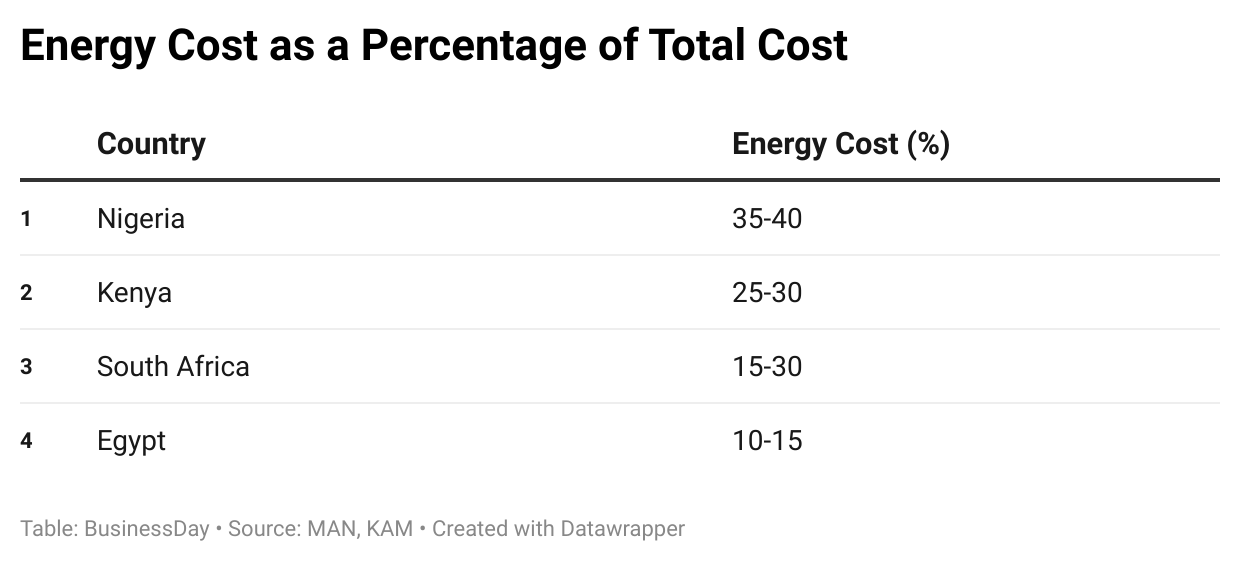
At the same time, subsidies should be redirected towards manufacturers and businesses. According to the Manufacturing Association of Nigeria (MAN), energy costs account for 35–40% of total production costs in many sectors, and as long as these remain high, they will be passed on to consumers.
By reducing the energy burden on producers, the government can help lower the overall cost of goods, which would benefit all Nigerians.
A Balanced Approach to Subsidies
It is essential for the Nigerian government to strike the right balance between consumption and production subsidies. Rather than completely removing PMS subsidies or allowing energy costs to spiral out of control, the government should subsidise the resources needed to produce these essential goods and services, creating a more stable economy that benefits everyone, not just the wealthy few.
In conclusion, Nigeria’s policy landscape needs a significant overhaul. By learning from successful global examples and focusing on production subsidies, the government can foster an environment where both businesses and citizens thrive.