It is no news that Greece with a population of about 11 million is having economic problems that necessitated the closure of all banks in the country for three weeks. On Monday, 20 July, 2015, Greek banks reopened with Greeks facing price upswing as a result of austerity measures. The country’s economic woes started in 1999 with the introduction of the euro common currency. Greece had an average economic growth of about 4 percent per annum between 2003 and 2007, while Nigeria’s was about 7 percent within the same period. But the economy of Greece went into recession in 2009 as a result of the global financial crisis. This resulted in tightening credit conditions and failure to address a growing budget deficit. Besides rising labour cost, reports of fiscal mismanagement, deception and corruption of the Greek government have further compounded its economic problems.
There are reports that Greece abdicated its responsibility to manage its own currency by joining the European Monetary Union which disabled the nation from devaluing its currency. When an exporting nation has financial catastrophe, economists are likely to suggest a devaluation of its currency to allow citizens demand for domestic goods, reduce trade deficits in order to wriggle out of the problems through increased foreign demand of its cheap goods. Nigeria, however, is an import-dependent economy that has devalued its currency more than 10 times since the first devaluation in 1973.
At the time of writing this piece, Greek parliamentarians are debating a set of reforms to be approved in order to secure €86 billion bailout. The €86 billion bailout is to recapitalize banks, repay debts interest, amongst others. Currently, Greece creditors have imposed austerity measures on the country which covers a blend of economic reforms and budget cuts demanded by Eurozone countries before bailout. Thousands of Greeks are protesting against further austerity measures. The protests, according to reports, have turned violent with petrol bombs and stones thrown at police. In the interim, Greeks are hoping on their government’s ability to find a solution to their debt crisis. The Nigerian government of President Buhari is also working very hard to ensure the wellbeing of citizens, but Nigerians would not want the current economic crisis to degenerate to a level where our banks are closed for only three weeks.
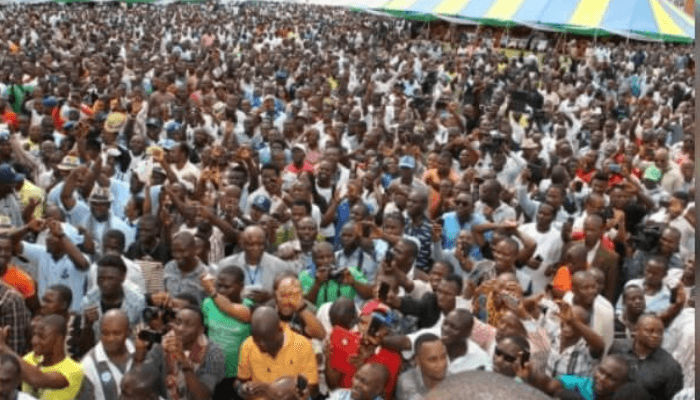
Nigeria is the most populous black nation in the world with a population of about 170 million but depends exclusively on rents from sale of crude oil. The poor management of revenues accruable from the sale of crude oil is of grave concern to all Nigerians except those who are mismanaging our resources. At the time of writing this piece, there is news going round that over $150 billion is stolen by past government officials but kept in foreign banks. Additionally, former petroleum ministers have been accused by the president of pocketing funds accruable from about 250,000 barrels of crude oil per day. States owe workers several months of salaries even after collecting their statutory allocations from the Federation Account. Some states are now seriously considering loans from banks, while Osun State workers are to resume another round of strike because of inability of government to fully pay January and February salary.
As you read this piece, can you imagine an announcement that CBN has ordered banks to close for three weeks because there is scarcity of naira in the country? Why worry as this may not be possible in Nigeria because the CBN will just print more naira and later mop up excess liquidity as usual? Thank goodness that Nigeria does not belong to any monetary commission within the African region or the West African sub-region.
Nigeria is perhaps one of the few countries on the face of the earth where government agencies collect revenues on behalf of government and keep such monies in bank accounts other than the Federation Account as approved by the 1999 Constitution. After spending part of the monies generated through levies and royalties, then an arbitrary amount is remitted to the Federation Account.
Nigeria cannot be fighting war on terror with its soldiers and civilians paying supreme price with their blood, while the nation’s economy is poorly managed. This is double jeopardy. If the Federal Government does not put in place appropriate measures to check excesses of state and local governments as well as ministries, departments and agencies, the nation may be steering the same course as Greece. Consequently, Nigeria needs to take appropriate steps towards improving its fiscal policies by addressing imbalances, and keep healthy foreign reserves that will cope with future global economic headwinds.
Since Nigeria relies mainly on the export of crude oil for about 85 percent of its foreign exchange earnings, it will always be vulnerable to challenges of crude oil price drop in the international market unless other sectors of the economy are developed. The country needs more than one major source of foreign exchange. It has identified that agriculture, power and manufacturing sectors as key to economic recovery. However, it has to focus on other sectors that can generate revenues that will sustain the country during cyclical economic downswings. Mr President is right that ‘fixing Nigeria’s problem is a responsibility of all Nigerians’. While governors under the auspices of Nigeria Governors’ Forum are working out plans to rescue their states, Nigerians must be alive to their responsibilities at all levels. Nigeria cannot afford to have a Greece-like situation at this time of our national life.
MA Johnson