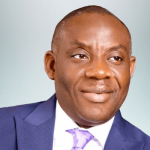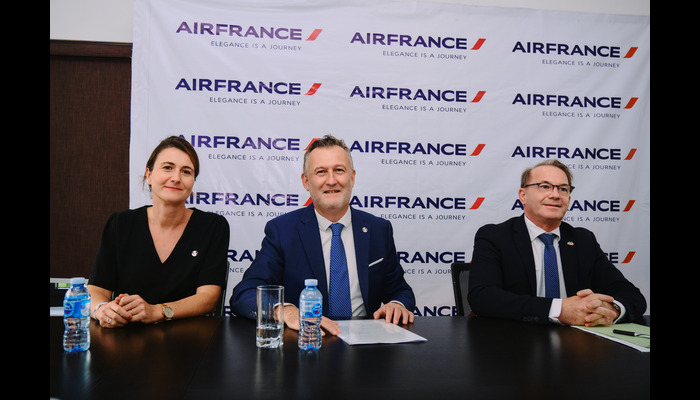
As the aviation industry continues to navigate the complexities of the modern air travel landscape, industry leaders are speaking out about the challenges and opportunities that lie ahead. Obiora Okonkwo, Chairman and CEO of United Nigeria Airlines, is one such leader who has been vocal about the need for supportive policies and infrastructure to enable the growth of Nigeria’s aviation sector. In this interview with Ifeoma Okeke-Korieocha, Okonkwo shares his insights on the current state of the industry, the challenges faced by local airlines, and the potential for growth and development in the region.
Besides the practice direction, what concessions have local airlines been able to get?
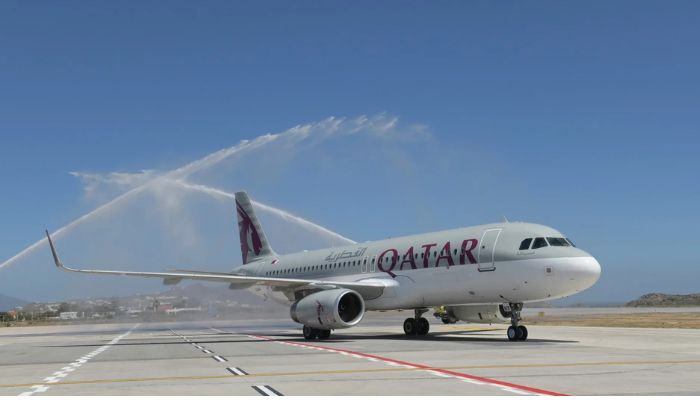
When we talk about single-digit loans, we are bearing in mind that creation is one worldwide, and the competition in creation sometimes can be very, very high. And when we are in Nigeria, and competing in the same market with other large carriers, legacy carriers, you know them, British Airways, American Airlines, Lufthansa, Qatar, just name them. You know that when you go to their country, they have loans of about three percent, not even a special window loan, but a market situation for the loan. Those loans have a very long term period. It could easily take you a long time, 10 years, 20 years.
Compare this with our market; where we have converted the products at the existing commercial rate that’s already over 30 percent, and then face all the other charges. It’s a spill over effect. And so it’s a waste of potential that you had asked. These factors are constant. When all these things are done, it’s just our ticket that is the major product.

So you can imagine that compared with another trader or business person, or manufacturer who has to factor in everything that composes or collectively makes the cost, the components. The components must be able to cover your cost before you add the tiny much amount to it. So automatically, if somebody in another country is buying a ticket at five percent, I’m going to get in at 35 percent, and my cost of ticket should already be 30 percent more than it should be done in the other country.
However, where you don’t do that directly, you will deprive yourself of all the benefits, maybe the percentage gains and all that. But where you fail to do that, you find yourself at a level where you cannot make enough margin to grow, to expand, to strengthen your business, and then to overbear a service. This could also be one of the reasons why the mortality rates of airlines in Nigeria are very high.
So business must be able to be sustainable, it must be viable to attract in assets, because airline is capital intensive, it can only progress, it can only scale up their business and airline with huge finances sometimes are mostly available with the banks or other financial institutions. And for them to come to do business with you, they are attracted by a good business plan. And when you present a business plan, where you are forced to pay for everything, considering it’s 100 percent of your revenue, then they will not find it suitable and may see you as a big credit risk for them to approve. We are asking the government to treat aviation as an essential business. It should not be seen as a business of one individual or the other, because where aviation is strong, where aviation is available, it’s a catalyst, it’s an enabler to other economic growth. If you do not make it available for people to fly from Abuja to Lagos, it will affect their businesses. Aviation is an easy transport, it’s a transport system. So when it affects other businesses that individuals are doing, it affects the state or national economy. Come to think of it, the first thing that comes into place, that is about to be developed, is to create the road, the access.
But every sector and segment of the society must be provided for. There’s no government economy that will grow if your focus is only on the lower income elements. And that is why, for any nation to grow, they have to put in place a policy that is good enough to break middle class and even upper class because these are people who generate the income and higher revenue. The taxes that you can make up, they have to deal with maybe some social welfare for the lower class. So you have to prepare and provide for them sufficiently.
The government said it has given tax free on importation of aircrafts and spare parts. Is it outright tax free?

It’s not tax free, it’s duty free. There are still some timely, timely, disturbing taxes. We are arguing that the one percent Free on Board tax should be totally eliminated because you pay tax, that one percent, on the duty value of the aircraft. And when there is no duty, you cannot put something on nothing. It’s duty free. That one percent should be gone. But they will always say it’s for air covers. I don’t know of any country that tax and still puts duty on aircraft. There’s none. So even if there is nothing so special for us, let them do what other progressive countries are doing. That’s the point. Ghana is taking 40 percent to 60 percent passengers on the original flight. It’s taking $60, $100. You can put it at $60.
What it means that $40 is already to the benefit of the passengers. But their easy explanation is that you are not paying, the passengers are paying. But when you are overpricing, it’s affecting your market value.
We also think that even the five passenger charge is becoming extremely too much for us to bear. And they always say, you don’t pay, passengers pay. Now, the issue, the bottom line remains that all these things are in violation to the world aviation rules. Because by this law, the proceeds or the revenues generated in aviation should only be commensurate to your own expenses. It is to cover your expenses of delivering that service but not to generate revenue for the country. So, you might be interested in knowing that apart from all this money that is being collected, the five percent or so, we pay for every single service, we equally pay money to cover every single service that is offered by the airspace.
If they are going for inspection, we pay. We pay for transfer, we pay for everything. If they issue any renewal, any certification, we pay. We pay for everything. So, this five percent we pay is for what? It goes on into government revenue. The CNN is one of the government agencies that can feed revenue to TSA. And this revenue that is collected from us; that could have been part of our own revenue to strengthen our capacity, that goes into other government funding of non-aviation related funding. It is not done anywhere in the world. It is not allowed. The most you should get is to plunge it back into aviation services.
With the array of airlines that operate from Lagos and Abuja to Ghana, the market already seems saturated. What are you doing to get a fair share of this market and compete favourably?
So, yes, we agree, passengers can only buy tickets from airlines that are available. We have not been available in the market, so we couldn’t have competed. For those who flew with us on that inaugural flight, you could have observed that what we put there specifically is the CRJ-900. It’s a beautiful aircraft, the aircraft is like a genius, the configuration is great, the interior is marvellous, it’s very suitable for this kind of operational flight, and it has a passenger capacity of 90. So, if we will have adequate operational number of passengers to fly there, that aircraft will be known on that route. We have some airlines to compete with.
So, on lower factor passengers, we will deploy our ERJ-145. So, we are offering the passengers not only apple to apple, but also what is bigger and better than apple. That is one way to tell you that we are ready and we are prepared.
The traffic from Nigeria to Accra is more than all the other regional flights, the traffic put together; 50 percent of the traffic is between Nigeria and Accra.
So, it’s still a place to compete. The other way is that we have to be as reasonable and fair as possible with our pricing and costing. So, we’ve looked at that, we’ve come with it. We are not introducing price war; it’s not good for any business. But, we’re just trying to be as reasonable and fair to make sure the passengers have value for money. So, above all that, we do more than the passengers’ expectations, a very great resource. And, every passenger will want to have a convenient schedule, and then with that convenient schedule, will want to get there on time. That is our time departure, which is very critical. If you have looked at the records, with United, Nigeria, our time departure is almost 98 percent, if not more. There’s no record that is better than that. So, we think that those things we have developed out of our experiences of the domestic market, we are trying to take that to the regional.
Those in the National Assembly, even those in the Ministry, they do not share the same philosophy and objective with airline operators and maybe with the aviation industry. My example is that when there was this campaign for Flying Nigeria Act some years ago; it was driven by Arik. Many people in the National Assembly were looking at it from a personal angle. So the disconnection to me is the problem. How can you carry the National Assembly along and even the Ministry to have the same view, the same objective that we are doing this for our country to get better, to create more jobs and improve the GDP?
Yes, some policymakers approach issues of aviation in the same way even outside the Flying Nigeria Act. They see that when they do it, it’s one man, one man that has to stand up in the midst. But on the Flying Nigeria Act, credits must go to the current National Assembly and the Senate Committee on Aviation. We combine our efforts with our minister. I want to believe that in a very short time, this will kickoff. We have done everything that needs to be done from the legal framework and that matter is already for the National Assembly and they have passed different stages already.
So the Senate Committee, the movers and shakers of the Senate are this time around totally behind it and it is their own drive and initiative and we have not done much from our own side even to pressure them or to lobby them. They consider it generally necessary and critical and the minister had made enough presentation to convince them.
The bill applies whenever you are buying a ticket as an official of a Nigerian government with government funds, fly Nigeria. But if you don’t want to fly Nigeria use your money, use your personal resources. Buy any ticket to wherever you want to buy, fly anywhere you want to buy, but buy with your personal resources. That’s what the act is all about. It’s not banning any citizen to fly on a foreign airline and this is not new. It exists in other parts of the world.