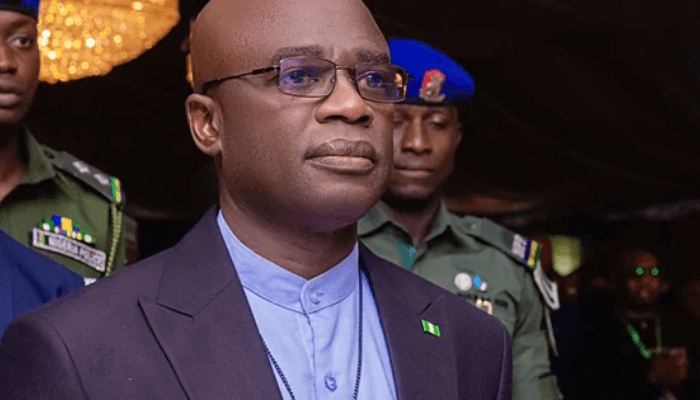
Hyacinth Alia, the governor of Benue State, has attributed the recent wave of violence in the state to foreign elements, suggesting the attackers are not Nigerians based on their language, appearance, and tactics.
Speaking on a Channels Television on Tuesday, the governor described the ongoing assaults in the North-Central state as unprecedented and alarming, noting that the attackers differ significantly from traditional herders previously linked to communal conflicts. He emphasised that these individuals are heavily armed and exhibit behaviour unfamiliar to local communities.
“Let’s have the narrative very correct. We know Nigerians, by our ethnicities, we can identify a Fulani man, a Yoruba man, a Hausa man, we know them. Even the regular traditional herders, we know them. They work with cows, herding with sticks,” Alia said.
Read also: Insecurity wears different faces across Nigeria, solutions must be regionalised – Ikiebe

“But these folks [the attackers] are coming in fully armed with AK-47s and 49s. They do not bear the Nigerian look. They don’t speak like we do. Even the Hausa they speak is one sort of Hausa.”
Alia said intelligence reports and testimonies from affected residents indicate that the perpetrators communicate in unfamiliar dialects and are believed to be from other West African countries, such as Mali. He noted that this marks a shift from past clashes, which primarily involved local herders and were less intense.
“It’s not the normal Hausa we Nigerians speak. So it is with the Fulani they speak. There is a trend in the language they speak, and some of our people who understand what they speak give it names. They say they are Malians and different from our people. But they are not Nigerians, believe it,” he added
According to him, the current crisis represents a more dangerous phase of violence, marked by what he described as coordinated and strategic attacks. He highlighted that some parts of Benue share porous borders with Cameroon, creating vulnerabilities that may be exploited by these armed groups.
The governor also revealed that suspected terrorist hideouts have been identified in neighbouring Taraba and Nasarawa states, as well as in border regions of Cameroon, suggesting a wider network of threats facing the state.