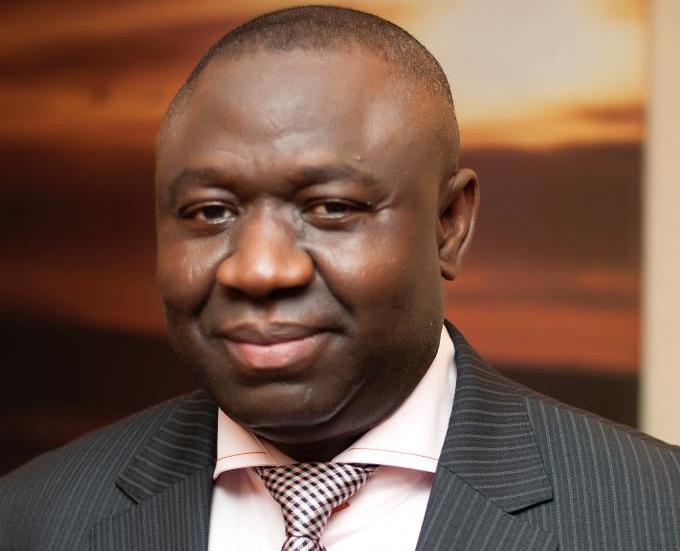
Anthony Kayode Ajayi is the coordinator of the United Kingdom (UK) Group for Atiku for President 2019. He is also the Secretary of Afenifere Europe and the U.K. In this interview with KELECHI EWUZIE, Ajayi who was in Nigeria recently, gives insight into why the group is confident that the People’s Democratic Party (PDP) Presidential candidate, Atiku Abubakar has what it takes to turn around Nigeria’s economy and will win the 2019 election. Excerpts:
Sir, can you tell us what the UK Group is all about?
Yes, the UK Group is all about ensuring good governance in Nigeria. We are made of over 10,000 patriotic Nigerians living in the UK with keen interest to what happens back home across the country.
Members of the Group are professionals in different field based in the UK and strongly believe that Nigeria has what it takes to be a leading country in the comity of nations. We decided to come together as a strong political group to assist in changing the narrative of the political structure in Nigeria.

Why does the Group prefer Atiku to many young candidates if really you want to change the narrative of the political structure in Nigeria?
Some quarters in Nigeria believe Atiku belongs to the old generation of recycled politicians who had failed this country and there is nothing new he has to offer to Nigerians.
Before the Group decided to support Atiku, we examined critically all the other candidates and we found out that he is the most experienced person with the political will to change the narrative because he has the progress of Nigeria and Nigerians at heart.
Yes, there some young candidates but they don’t have the experience to pilot a ship such as Nigeria. The young candidates supposed to start their political ambition at the state levels where they can gather enough experience before thinking about the president seat. They are supposed to probably go to the State Assembly or Nation Assembly before thinking of the president’s sit. Remember that Nigeria is a peculiar country and there is need for them to understand the system before they can make the positive change.
As for the issue to whether Atiku belongs to old generation of politicians; Atiku being old in the system means he has the experience to run the affairs of this country effectively.

Remember that in 1999 when Atiku and Obasanjo took over power from the Military under PDP, they met an economy without the likes of MTN, Airtel, Glo, Etisalat, Dangote Cement, NIPP, Shoprite, privatized NEPA and many more. There were no agencies like ICPC, EFCC, to fight corruption. No regulatory agencies like NERC, NCC, PPPRA etc, No due process or procurement Act, no UBE Act, and many other laws. No Communication satellites and many other creations they brought to the country. So, Atiku has the experience and the political will to change the narrative.
Are you saying that the APC-led Federal Government under President Muhammadu Buhari does not have the experience to change the narrative in this country?
First and foremost, we don’t have a government in Nigeria today. The APC you mentioned is a Group that does not have any good agenda for Nigerians.
Do you know that the APC led federal government is now in a phase where it borrows more money than it generates within a fiscal year? The Federal Government of Nigeria under APC has a deficit of N3.8 trillion greater than its reported revenue of N2.65 trillion. The country’s oil revenue of N1.2 trillion is not enough to meet its personal obligations of N1.8 trillion.
A crisis is brewing with the growth in debt, not matched with corresponding rise in revenue. Between 2011 and 2017 at no time except in 2011 did actual crude oil production per day exceed actual budgeted benchmark of average daily crude oil production. Except between 2016 and 2017 when there was a marginal increase of .12 barrels per day at no time between 2011 and 2016 did we experience a rise in crude oil production per day. This means that over seven years now we have aggregately recorded a fall in crude oil production.
According to Fitch ratings, Nigeria’s gross debts are 320 percent of its annual revenue, one of the highest in the world. On November 7, 2017 MOODY’s Investment Services downgraded Nigeria’s Sovereign Issuer Rating to B2 citing their rationale as largely unsuccessful efforts of the Nigerian authority to increase non-oil revenue and persistent key structural weaknesses.
The APC government under Buhari had on several occasions released bailout funds to enable states to meet their recurrent expenditure requirements. Only about Nine states including Lagos, Kano, Edo, Enugu, Delta, Rivers, Abia, Kwara and Anambra have their internally generated revenue sufficient enough to cover their interest repayments on their debts without depending on allocations from federally collected revenue.
According to BudgIT, its scale of ability to meet recurrent expenditure obligations rankings’, only four state namely Lagos, Katsina, Rivers and Kano have average monthly revenue in excess of average monthly recurrent expenditure.
Currently, reports show that the economy of Nigeria increased 3.23 percent quarter on quarter in the second quarter of 2017, recovering from a 13.3 percent contraction in the first quarter. GDP growth rate in Nigeria averaged 1.17 percent from 2010 until 2017, reaching an all-time high of 10.59 percent in the third quarter of 2010 and a record low of -13.98 percent in the first quarter of 2016.
In the face of this economic reality, the Population Reference Bureau predicts that Nigeria will in 2050 become the world’s fourth -largest population with a population of 397 million coming after China, India and the United States of America.
A non-governmental organisation in Vienna, World Poverty Clock, founded by the German government and led by Homi Kharas, deputy director of the Brookings Institute in the US, and Wolfgang Fengler, a World Bank head economist is predicting that Nigeria will overtake India as the country with one of the world’s poorest people.
They contend that by 2030, there will be 200 million fewer people in the world living in extreme poverty than there are today. However, 438 million or 5 percent of the world’s population will still be below extreme poverty line. This year, for example, the extreme poverty level is rising in 30 countries; in these countries a total of 9 million more people will be living in extreme poverty. Very few countries in Africa are making fast enough progress on ending poverty, and in two large countries, Nigeria and the Democratic Republic of Congo, their populations are growing faster than their economic growth so poverty will likely continue to rise.
Nigeria’s population in extreme poverty is rising by 5.7 people per minute and that of DRC by 3.6 people per minute. The situation in Nigeria is such that in February next year it will overtake India as having the most people living in extreme poverty in the world at 82 million.
What makes you believe that Atiku is the option to resolve these issues you have mentioned?
Atiku stronghold is that our growth model has to change for us to survive as a country. A model based on sharing of government revenue must give way to a new structure that will challenge and drive productivity in different regions across the country. This model must take into account that factors driving productivity in today’s world are no longer driven by fossil oil but rather the proliferation of a knowledge-based economy.
To Atiku and to most of us both at home and abroad, the restructuring of Nigeria into smaller and independence federations units and the devolution of powers to these federating units to control exclusively their human capital development, mineral resources, agriculture, and power (albeit with an obligation to contribute to the federal government) is the only way to salvage our fledging economy. Restructuring will devote attention to the new wealth areas; promote competition and productivity as the new federating units struggle to survive. It will drastically reduce corruption at the large federal parastatals which gulp government revenue for little or no impact dissolve and give way to small and viable organs in the new federating units.
Those campaigning against restructuring in Nigeria have painted an unfortunate and untrue picture that those of us in the support of restructuring are doing so in order to deny the Northern States who are yet to have any proven oil reserves of the ability to survive. This is unfortunate.
The new model Atiku propose for Nigeria recognises that revenue in the world today is promoted by two main sources namely, human capacity development leveraging on technology to drive the critical sectors of the economy and agriculture.
Ten years ago the top ten companies in the world were the likes of Exxon Mobile, Shell and Total. Today, the top eight companies in the world are represented by technology related companies. They include Apple, Microsoft, Google, Facebook and Amazon.
The example of Netherlands in agriculture is also relevant here. The Netherlands is the 18th largest economy in the world. It has a land area of about 33.9,000 square kilometers.
While Niger State, one of Nigeria’s 37 administrative units has about 74,000 square kilometers. Netherlands has over $100 billion from agricultural exports annually, contributed mainly by vegetables and dairy. Nigeria’s oil revenue has never in any one year reached $100 billion. Northern Nigeria is the most endowed agriculturally in Nigeria. Its tomatoes, carrots, cabbages, cucumbers, tubers, grains, livestock and dairy feed the majority of Nigerians in spite of its huge reserve of unexploited export potentials. In a restructured Nigeria, Northern Nigeria, with the right agricultural policies, will be the richest part of Nigeria.
Therefore, the Group is optimistic that Atiku’s blueprint for Nigeria will cushy the defect across the country. Atiku rich manifesto addresses all the challenges currently confronting the country. From defence and security, through job creation, education and infrastructure to poverty alleviation, power and fight against corruption, no document from any presidential candidate in the history of Nigeria come close to Atiku’s manifesto in terms of concept, content and creativity.
The Group agreed with Atiku when he said, “Nigeria as currently constituted as an entity is rooted in corruption, impunity and injustice and thus must be reconstituted”. For instance, there is the need for privatization of the seaport ports, airports and roads given to states and local governments to build and maintain. Also, state police cannot be overemphasized in this country. These would form part of the restructuring we are clamouring for.
Can’t Nigeria achieve all of these without Atiku?
For now, we don’t have any other presidential candidate with the political will to start the process. This is the right time for Nigerians to come together in unity to make the necessary compromises and sacrifices needed to restructure our federation to make the nation a stronger, more united, productive and competitive country. This is the right time to give Atiku the chance to change the narrative in Nigeria.