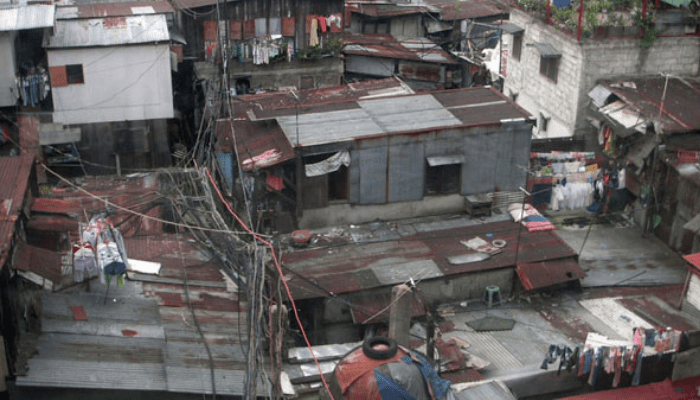
Rental payment for affordable housing in Nigerian towns has become so terrible, snowballing into an uncontrollable situation and pushing many residents to the outskirts of town.
As the struggle with the rent crisis intensifies, for many of the residents, accessibility has been consigned to the trash for affordability. Location no longer matters as it was the case when the market belonged to the buyer or renter. Today, it is now the landlords’ market, and everybody is on the move, searching.
“Though the rent crisis in Nigeria is a huge social and economic challenge to many households, analysts say there is a positive side to it in terms of investment in rental properties in those areas where mid-income residents are moving to.”
The movement is piling pressure on the city suburbs as areas that were known to be affordable to low-income earners have been invaded by the middle class to escape from surging rents in city centres.
According to Emmanuel Okeke, an estate consultant, lately, we have seen unusual movement in the rental market; people are changing addresses, and this is happening in droves.

The curious thing about the present movement is that those areas that were hitherto considered affordable for low-income earners are being invaded by mid-income earners who can no longer afford urban rents, he says.
The current inflation is blamed for the surging rent. Despite the curious economics that dragged down inflation from 34.80 per cent in December 2024 to 24.48 per cent in January and 23.18 per cent in February 2025, the impact of galloping inflation is still being felt everywhere, including in house rent.
Besides inflation, supply shortage is also another strong reason for the crisis in the rental market, as demand far outstrips supply. For its over 200 million population, Nigeria’s total housing stock is less than 50 million units. And for the 700,000 units, which the country needs to build yearly for the next two decades to close its 28 million deficits, total annual output is estimated at 100,000 units.
Read also: How high interest rates, surging construction costs worsen housing crisis
Before now, accessibility was a major determinant for the choice of location, but that idea has given way to affordability. In the present case, the suburbs provide the needed respite and options.

For example, in Lagos, the locations in the suburbs serve as options for several factors, especially nearness to workplaces. Those working on Lagos Island move to locations that are not far away from their workplaces.
Those places include Surulere, Gbagada, Isolo, Yaba, Ikorodu, Ketu, Bariga, and Mowe. Those who work in Lekki and its environs are moving to areas such as Lakowe, Awoyaya, Ikota, Victoria Garden City (VGC), and even to Epe.
Residents who make this shift usually find rent in the new places relatively cheaper. A recent survey reveals that whereas rent for a two-bedroom apartment in the suburbs goes for between N450,000 and N600,000, the same size apartment in the urban centre goes for between N1 million and N2.5 million. This, however, depends on the age of the house.
Also, a three-bedroom flat with a one-room boys’ quarter in a good location in Lekki Phase 1, for instance, goes for as high as N10 million to N15 million per annum.
In Ikoyi, the same size apartment could rent for as high as N25 million to N40 million per annum. On the contrary, rents for similar houses in the suburbs will go for between N2.5 million and N4 million per annum.
In Port Harcourt, tenant movement is also on the rise, as BusinessDay findings show that more city residents are moving to places like Igbo-Etche, Oyigbo, Iriebe, Eneka, Igwuruta, Omagwa, Choba, and Eleme. The rent for a two-bedroom flat in those suburbs is between N400,000 and N500,000, while in the city centre it is between N1 million and N2.5 million, depending on the location and age of the building.
The story is not any better in Abuja, where rising population and urbanisation have conspired with inflation to push many residents to not only the outskirts, but also as far as the city’s border towns in Nasarawa State.
Though the rent crisis in Nigeria is a huge social and economic challenge to many households, analysts say there is a positive side to it in terms of investment in rental properties in those areas where mid-income residents are moving to.
Like Nigeria, the UK and the US are also experiencing a crisis in the rental market. In the US, the tight inventory is leading to bidding wars, typically more of a fixture of the home-buying market. Rising costs and a shortage of available units are giving landlords the leverage to hike rents.
In the UK, rent is becoming increasingly unaffordable and scarce, and where renters find it, they are being forced to go through extreme barriers to access it. But unlike Nigeria, the UK and US governments are looking out for ways to protect tenants.
Renters in the UK are given protection from landlords. One of the measures for doing this is the ban on Section 21 notices that do not allow evictions without good reason.
This is what we canvass for from government at all levels in Nigeria. Though there was a move by the Lagos State government to provide protection for private tenants through the state’s Tenancy Law, the enforcement of that law, unfortunately, was lame-duck because the government could not provide alternatives.
In view of the present state of the economy, we call on the government to do all they can to not only protect tenants from landlords but also provide a favourable situation to enable developers to deliver housing at a cheaper cost. Additionally, the government should do something about the prices of building materials, especially that of cement, which Nigerians believe is overpriced.