Guinea Bissau’s military has tightened its grip on power after naming Horta N’Tam, army chief of staff, as the country’s interim leader for the next twelve months, a day after soldiers arrested Umaro Embaló, Guinea Bissau president, and froze the release of election results.
On Thursday morning, armed troops patrolled the quiet streets around the presidential palace in Bissau, where heavy gunfire had echoed the previous day. Residents walked cautiously along the main road leading to the building as soldiers maintained a heavy presence.
Read also:Guinea Bissau military officers seize power, take over capital
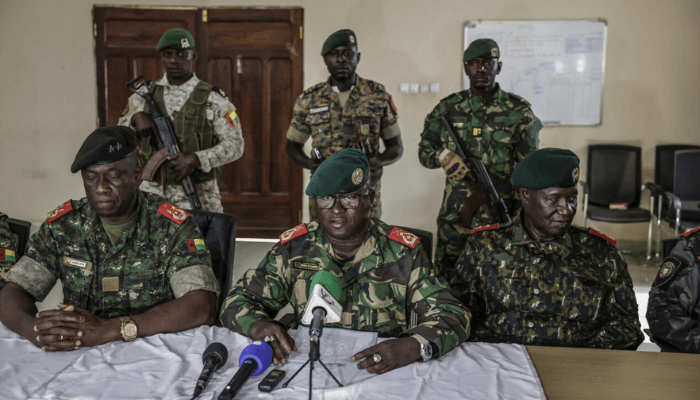
At military headquarters, N’Tam was sworn in as head of what the army calls the High Command. The ceremony, attended by dozens of heavily armed soldiers, marked the formal transfer of authority from civilian rule to a military led structure.

“I have just taken an oath to safeguard our nation,” he said. “The measures we have adopted were necessary to block operations that aimed to threaten our democracy.”
Read also:Guinea Bissau’s president suspends elections indefinitely
N’Tam, long seen as close to Embaló, insisted the military had acted on what he described as credible intelligence. “The evidence was sufficient to justify the operation,” he said. “Urgent steps are needed and everyone must take part.”
Borders reopen amid sweeping restrictions
The generals moved quickly to adjust the emergency measures announced during the takeover. Lansana Mansali, inspector general of the armed forces, said all borders had been reopened, lifting the sudden closure of land, air and sea entry points.
But other restrictions remain. Denis N’Canha, head of the presidential military office, said a joint command involving all branches of the armed forces had taken charge “until further notice.” Speaking at a table surrounded by armed soldiers, he claimed the army had uncovered a plot “involving national drug lords” to bring weapons into the country in order to undermine the constitutional order.

As part of its actions, the military has halted the entire electoral process, suspended all media programming, and imposed a nationwide curfew.
Guinea Bissau, one of the poorest countries in the world, has suffered four successful coups and several attempted ones since its independence from Portugal in 1974. Its instability has helped turn it into a key transit point for cocaine moving from Latin America to Europe.
António Guterres, UN secretary general, said he was following events “with deep concern,” while Portugal urged calm and warned against any form of institutional or public violence.
Media rights organisations have raised alarm over the blackout imposed on journalists. Sadibou Marong, director for Sub Saharan Africa at Reporters Without Borders, called the suspension of media operations a serious violation.
“The population must be able to know what is happening, especially at a moment of political crisis,” he said.