Peace
In late February, I commented very positively on the announcement by the government over the broad deregulation of the oil sector. Alongside this proposed changes to the structure of the downstream sector, the government is also attempting to make changes to the upstream sector through its petroleum reform bill. The announcement by the government in February was essentially motivated by the mounting cost of subsidy paid to refined oil importers. The government finally appeared to be fed up with a structure of provision that takes over a trillion naira a year. The main symptom of the structure that we have now is the fixed price of petrol at the pumps, and it is the eradication of the symptom that is expected as the end result.
I think this is very clear in government’s mind. What I think the government is struggling with, even after the announcement, are the old demons of excuses why the present structure should remain in place. In the first place, the announcement came through the presidential steering committee on the response to the global economic crisis. So, what we have seen is the presidential approval and directive for the process to commence. However, presidential approvals and directives have to be carried out by those in charge.
After the unexpected announcement, confusion has set in. Confusion set in because, perhaps, there was no blueprint in place to work with whenever there is the directive towards deregulation. First, there were unpaid subsidy bills. Second, the announcement of a time table for the process was not forthcoming. Because of the uncertainty generated by the two aspects of the confusion, importers stopped importing until the government recently sent the cheque for outstanding bill.
In any case, I think the government, or at least, some people in government, are not convinced about the merits of deregulation. I also think the best way to proceed with the argument is to separate some of the demons’, put up as excuses, for wanting to keep the present structure. If there is deregulation, it is believed that the general price of petrol will go up, as it will now be dictated by market situations. In addition, it is believed that deregulation will drive up the price of petrol in the North, compared to the South, negating Nigeria’s unity principle.
Apart from the cost elements applicable to the government, the price changes that will result and the believe that price will go up are the motivations for wanting to keep the present folly structure. Though other commentators and myself have written about it before, but let us look at the arguments again. Before this however, let us examine the key elements of what is at stake.

Government has been involved in the refined petroleum industry in the past through investment, production and then management, through the existing four refineries. During this period, the subsidy was administered through the cost and income profile of the refineries. With refinery in Kaduna, the government was also able to by and large achieve the elimination of price differential across the country.
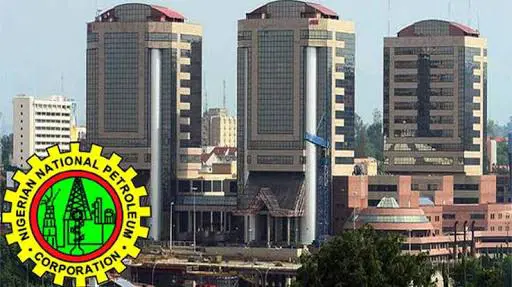
The current model is not different in terms of the end result. The government has arrangements with refined oil importers, including the Nigerian National Petroleum Company (NNPC), and pays the differential in the prices as subsidies. But there is a key difference between the current model and the previous arrangement, and that is in relation to investment and production. From a period of investment, production and consumption, we have reduced ourselves in this industry to only that of consumption. In all these dynamics, we have finally reached a point where we simply do not add value anymore.
Read Also: EndSARS, NNPC; Nigerian leaders: Beware the ides of March!
Are we cursed? Simple economics will tell you that the benefits to the economy in general come from investment and production. And we will continue to deceive ourselves if we think the investment and production will arrive by just issuing licenses. At every forum, the government argues that it has issued over fifteen licenses for the establishment of refineries. But the promoters of these ventures know better. They know they will not commence on investment and production until there is a framework in place that gives them a chance to recover their investment and make some returns. And what is wrong with that?
We turn economics upside down when we neglect investment and production in our analysis and thinking, but only think of implications for the price of consumption. The best way to help the poor in the society is through ensuring there is an environment where investment and production thrives. Also, when we focus almost entirely on the effect of deregulation on price of petrol at the pump, we neglect the counterpart, which is affordability, invariably, demand. If we think of demand for the average Nigerian, we will think of investment, production, and income in that order.
Though the source different, but not unrelated. Last week, long queue returned to the pumps throughout the country. It once again reminded us that, except we change course, and very quickly too, we are on the way to economic destruction. I only ask us to do one thing, just imagine the man hours lost last week. If under three decades, we have managed to reduce the potential competitive advantages that we have in the oil industry to a curse, and seem not quite forced to reconsider our thoughts yet, I will not be surprised if we stick to the path that has never done anyone any good, besides of course, those in charge.