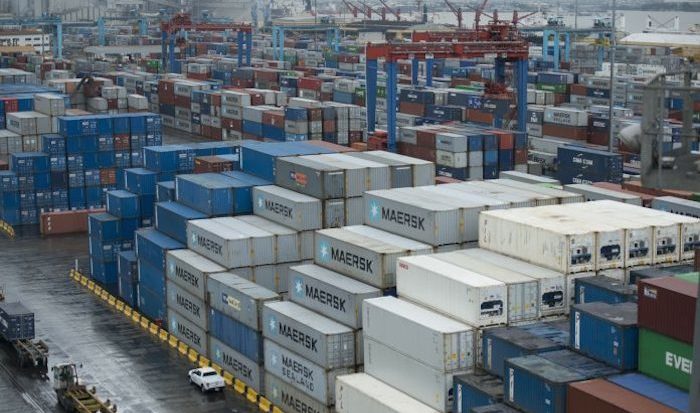
It has been nine years since any Nigerian port appeared among the world’s hundred busiest. The last time, based on earliest available digital records, was 2016, when Apapa Port in Lagos scraped into the ‘Lloyd’s List’ ranking at 93 out of 100.
Each year, Lloyd’s List, a leading maritime intelligence organisation, releases its ‘One Hundred Ports’ ranking, a report that ranks countries based on the volume of containers handled in its terminals.
The 2025 edition, released this week, shows global throughput climbing more than eight percent in 2024 to 743.6 million TEUs, despite geopolitical shocks. But while ports across Asia, Europe and parts of Africa were able to snag a chunk of the increased traffic, Nigeria lost out.
Five African ports made the list this year like other years including Tanger Med in Morocco ranked the 17th busiest in the world, Port Said and Alexandria in Egypt at 53rd and 90th, Durban in South Africa at 79th, and Lome in Togo at 92nd.

Meanwhile, Apapa and Tin Can Island, Nigeria’s two biggest economic gateways, sprawling with cargo, are not as busy as they seem. Both ports are yet to climb back into the spotlight as their container volumes are now dwarfed by more efficient African peers.
“The larger vessels that move now can’t access them, so you can’t expect the same container volumes.” said Temisan Omatseye, a past director-general of the Nigerian Maritime Administration and Safety Agency, who attributed the low traffic to shallow depth and lack of modernisation.
Read also: NPA issues directives to shipping lines, terminals on Apapa port congestion
“Bigger vessels go to the likes of Lome, Cotonou, Tema and the rest of them, while the smaller ones come here. So the cargo throughput that would naturally come to Nigeria is being broken down before it gets here,” he said.
Nigeria’s busiest ports were built for early post-colonial trade processes and since then have experienced few upgrades. The inertia has kept shipping lines in the business for profit away.

“Vessels do not come to ports that are not automated and advanced,” Omatseye said. “They are not happy coming to Nigeria because the turnaround time is too long. A vessel sitting at the quayside is losing money.
They want to keep moving. Think of a port that does 48 hours turnaround time, by the time Nigeria is done with one turnaround after 6 to 7 days, they have done three rounds elsewhere.”
He said that even Nigerians are taking their cargoes to other African ports like Lome because it is easier to clear goods there.
Jonathan Nicol, past president of the Lagos Shippers Association affirms this. “I know someone who had a textile factory at Ilupeju. Instead of coming to Lagos to drop their containers, they would go to Cotonou and offload their cotton yarn and then use open-top vehicles to bring it to Nigeria.
According to the NDC, they save more than 50 percent of the cost in Nigeria. I mean, if a factory makes 50 percent on one particular container, that’s quite a lot.,” he said
The figures also assent. The Nigerian Ports Authority reported total container throughput of 1.7 million TEUs in 2024 from all seaports. Meanwhile, Lome, ranking the lowest among the African ports on the list, recorded 2 million TEUs in the same period.
Read also: Tincan Customs records N86bn in January, eyes bumper 2025
“The West African port keeps its place in the Top 100 for the fifth year in a row, with continued transhipment growth,” LLoyd’s list wrote. Omatseye said that shipping lines in the country have begun to develop the port’s infrastructure to bring in vessels of up to 20,000 TEUs at a time.
Meanwhile, Nigeria’s only deep seaport at Lekki, responsible for much of its tonnage growth in the past year remains largely isolated at the Lagos Free Zone, running dock to factory operations. It had told this reporter in July that it plans to commence transshipment to neighbouring countries, including Togo, Ghana and Côte d’Ivoire. Omatseye says it must act fast.
Nigeria’s delayed but promising response to its current state is the National Single Window set for launch in March 2026. It’s expected to unify and simplify trade procedures, drop costs and reduce clearance time from 21 days to one business day. Plus, the federal government recently approved the sum of $1 billion for upgrades to Lagos ports facilities.
But these plans won’t be a magic wand, industry players say. The cost of doing business in Nigeria must come down.
“Our policy is still not people-friendly. Carrying cost is extremely high,” Nicol told BusinessDay.
“We had a special exchange rate for importers those days that is quite different from the exchange rate they use in the black market. But right now, we’re using the black market rate to import goods. Whether you have an irrevocable letter of credit or not. And then you need to go and source for additional funds to meet up with the cost of custom duty and all of the charges in the ports,” he added in despondence.