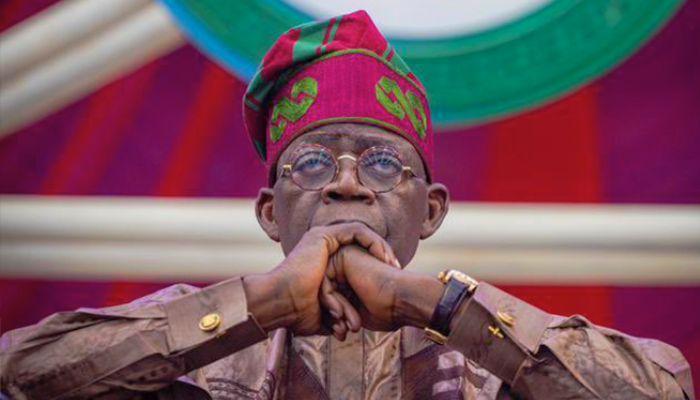
President Muhammadu Buhari may be in for civil disobedience if he fails to assent to, any time soon, the Electoral Bill amended recently and sent to him by the National Assembly.
Buhari has, since 2015, refused to assent to the document for a number of times, fuelling the belief by many observers that his promise to leave behind a legacy of robust electoral process may be a pipe smoke.
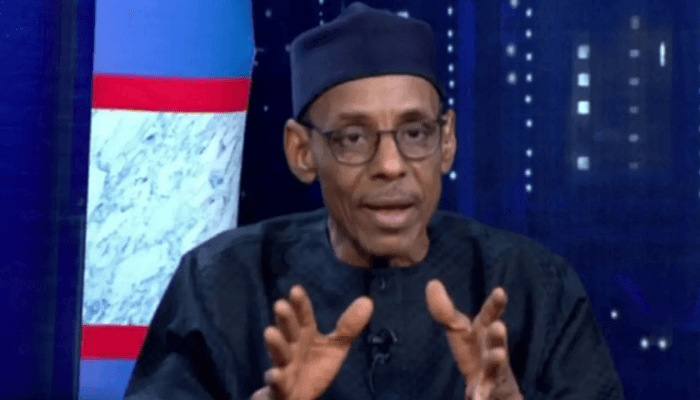
Ene Obi, convener, Nigeria Civil Society Situation Room and Country director, ActionAids Nigeria, while speaking on Channels Television Wednesday, said President Buhari was toying with the lives of Nigerians and future of Nigeria.
Obi wondered if the President was playing pranks or gimmick.

“Are we going to wait for him again? Time is running out. In 2018, he rejected it about three to four times and we had to fall back on the Act that had lasted for years. We urge him to sign the bill. We cannot wait again. The Independent National Electoral Commission is ready to move; timetable for the elections beginning from February next year has already been drawn.
“Before then, we have the off-season gubernatorial elections in Ekiti and Osun. The INEC needs the document to make adequate preparations, but here we are waiting for the President.
“Again, the National Assembly spent a lot of time towards the end of last year working on the document; they were able to send it to the President for assent, yet nothing is happening and time is going,” she said, rather angrily.
She also wondered what is difficult in signing the Electoral Bill, saying that if the President could sign the Appropriation and the Petroleum Industry Bills despite the issues raised in them, the Electoral bill should also not be an issue.
“It is like toying with the lives of Nigerians. We have elections coming and you are tying our hands,” she further said.

By the same token, Sam Onuigbo, member representing Ikwuano/Umuahia North/Umuahia Federal Constituency for Abia State and member of the APC, blamed some bad elements for frustrating the efforts of Nigerians to have credible elections.
“The laws that we have are more than enough to have credible elections, but there are some individuals that have a mindset to spoil things. Let us have a level-playing field in our electoral process,” Onuigbo said.
The federal lawmaker wondered why Nigeria has continued to be described as a nascent and fledgling democracy after 24 unbroken years of civil rule.
“After 24 years, we should be able to lay a solid foundation for democracy. It is not right that we are still being described in flowering words- fledgling and nascent democracy,” he said.
A few days ago, opposition federal lawmakers asked President Buhari to assent to the reworked Electoral Act Amendment Bill 2022 without delay.
The lawmakers, under the platform of the Peoples Democratic Party (PDP) National Assembly caucus, made the demand, at their meeting with the leadership of the Board of Trustees (BoT) of the major opposition party.
At the meeting, Enyinnaya Abaribe, Senate Minority Leader, said: “We are asking President Buhari to sign the Electoral Act, which we have passed. We made sure that everything he complained about has been given to him.
“Now that we have bent backwards, no excuse or reason should be given again. Provisions of the bill are very critical for expected credibility of the 2023 general elections,” he said.
Ndudi Elumelu, Minority Leader, House of Representatives, alleged that some APC governors were again plotting to stop the President from assenting to the reworked bill. He, however, urged President Buhari not to yield to the request of the governors but sign the bill because of its importance in strengthening the country’s electoral process.
“We met them; they said they want direct primary. We said okay, if it will mean giving Nigerians a very sound electoral reform, we will accept it,” he said.
According to him, “They came back again and said, oh, we have rejected it, we now want indirect primary. We said we agree, but give Nigerians electoral reform. They came back again and said; we want consensus. We have added consensus to the amendment.
“Again, I am hearing that, among them, those APC governors, with their ‘wuru-wuru,’ are still plotting for the president not to sign. Nigerians are tired of APC. We promise not to let the people down. That is why we are asking APC and President Buhari to sign the Electoral Act. Sign it, Nigerians want it signed. No more delay.”
A former member of the House of Representatives and chieftain of the ruling All Progressives Congress (APC), Moshood Salvador advised the President to urgently sign the amended Electoral Act into law to help sanitise the electoral process, because time was running out.
Salvador said the Electoral Act was the solution to the problems bedeviling the conduct of credible elections in Nigeria, which had worsened in recent years.
According to him, “If the President doesn’t sign it, it means, he has his agenda and it would affect the APC. That amendment is the way out of the problem bedeviling our electoral system. I mean the way forward for ballot box snatching, double voting, violence and all sorts of manipulations that have characterised elections in Nigeria in recent decades.
“They are playing with us and they claim not to have money, but this thing would save the country a lot of money and human efforts that would give ultimately credibility to our elections.
“This is the only thing you can do to protect our votes, make them count. Is like they are playing with time, so that the INEC people would say time has run out and even if he signs it cannot be used again. It appears some people are deceiving the President to do what would favour them and their constituencies.”
Eddy Olafeso, former national vice chairman South-West of the People’s Democratic Party (PDP), said time was running out for the President Buhari to do the needful, while expressing concerns about the state of the country and the ability of Independent National Electoral Commission (INEC) to conduct a free and fair election next year.
He however, implored public office holders to prepare ground for INEC to conduct a free and fair election next year.
“Time is running out for this signing to be done, there is really nothing I can say again about the country and the Electoral Act, but it is obvious all is not right with Nigeria now. All I want to tell the lawmakers, Governors and other public office holders is for them to prepare ground for INEC to do their duty next year; which is to conduct elections.
“All this game they are playing would not help us. Nigeria is on the precipice now and they are just playing to the gallery,” Olafeso said.
Also speaking in a similar vein, public affair analyst, Tope Musowo, said it was obvious some influential politicians in the country and in the APC are not happy with the Electoral Act and are putting pressure on the President not to sign it into law, urging Nigerians to stand and speak with one voice on the issue.
According to him, “Some governors are trying to lobby him not to sign, they know that if we have free elections some of them may not win. Some people said last time that it was electronic transmission of results that they were against and not direct primaries which was the excuse President Buhari was giving to us.
“He may have something in his slip, the Governors are there, he may not sign. Nigerians should put pressure on the President to sign, we can’t be docile now. Democracy is about the will of the people and not about what few people want.”
If the Electoral Act Amended Bill had been assented to by President Muhammadu Buhari since 2015 when the National Assembly sent the bill to him, many believe that Nigerian elections would have been more credible, particularly the 2019 election, and politicians checked because of the provisions of the bill.
Read also: Buhari’s APC has ruined nation’s economy – NASS member
Sadly, it baffles many that the bill, which many think should be a legacy Mr. President, should leave behind against the criticisms, hardship and maladministration leveled against his administration, is likely not going to sail through, even when the ball is on Mr. President’s court.
It also worries many concerned citizens why President Buhari has refused to give his assent to the amended bill, and also forcing people to ask the National Assembly to look for other means to pass the bill into law.
Chijioke Umelahi, a former Abia lawmaker and an Abuja-based lawyer, assured that President Buhari will not assent to the bill. He decried the development, saying that the President has deliberately refused to give his assent to the electoral bill since 2015 because of the crop of legislators at the National Assembly who are merely rubber stamps.
“If the legislative arm is what it should be, we cannot be borrowing from every country, and it would have forced the president to give assent to the bill. The senate president keeps saying there is cordial relationship between the presidency and legislature, that is compromise and it is not good for democracy. They need to disagree on many issues, lobby and settle in favour of the masses,” Umelahi said.
The angry lawyer noted further that in democracy the executive can always be checked by the legislature and judiciary arms, but that the reverse is the case in Nigeria because the senators and members of House of Representatives are not interested in fighting for the masses, but for their positions and pockets, hence money can always change hands for the executive to have its ways as President Buhari has done since 2015.
Toeing the same line with Umelahi, Terfa Ngusa, a Benue State politician, said the president will likely not give his assent to the bill because the National Assembly is not strong enough to compel him to do so, despite that giving the assent is his constitutional responsibility.
The Political Science lecturer turned politician said that the amended bill is for the good of Nigerians, but the political parties are kicking against it, hence the president is toeing party lines rather than national interest, which makes it more difficult.
Reviewing some of the new contents of the bill, which is part of the reason for the delay, Ngusa disclosed that the amended bill provides for direct primaries, which many party bigwigs kicked against, they prefer indirect and consensus primaries.
Another reason for the delay by the president is the electronic transmission of results, which, according to Ngusa, will curtail rigging by 80 percent.
“Politicians are aware that the masses are suffering and are unhappy with them. They know that the masses can stop them with their votes, especially with electronic transmission of results, which makes it difficult for rigging. So, the delay is supported by those who fear that the new system will turn against them”, he said.
Looking at the Section 57 of the amended bill, which says, “No voter shall record his vote otherwise than by personally attending at the polling unit or voting centres and recording his vote in the manner prescribed by the Commission”, the Political Science lecturer said that some selfish interests are contesting it because it will deny many people, especially in the north opportunity to cast their votes.
But Sam Onikoyi, a Nigerian researcher in Brussels, thinks that the president may not assent the bill for obvious reasons and the only way to get it done is by veto, which is allowed by the constitution.
“The provisions of the amended bill seem good for sustainable democracy, amid expectant dividends for the masses, if not, it will not be contested by the executive the way it has been since 2015. I think the legislators should act in the interest of Nigerians, look for a way to compel the president to assent the bill, hold on requests from him, and sit on loan requests and approvals”, he said.
However, most observers think that there are many other critical issues, which the president has treated with levity and that the assent to the amended electoral bill may be given by the coming president.
Mr. President has refused to give assent to anything that will make Nigerians happy. He has not fought corruption, which he promised to fight, insecurity is at its peak despite his assurances, and Nigerians are poorer today all because of his policies. So, the amended bill is one of the least of his problems, if he has any,” an aggrieved observer decried.
……………………..
Buhari rejects Electoral bill six times in 7 years
Buhari rejected the amendment bill for the first time in February 2018 due to provisions that reordered the sequence of elections.
A second amendment bill passed by both chambers of the National Assembly and sent to Buhari in June 2018 was not given any consideration.
In July 2018, Buhari refused to sign another version of the amendment bill passed and transmitted to him by the National Assembly for the third time, citing concerns about the increased cost of conducting elections, among other issues.
Buhari declined assent to the amendment bill for the fourth time in December 2018, after the National Assembly addressed all of his previous reasons for refusing to sign.
Buhari stated in a letter dated December 6, 2018, addressed to then Senate President Bukola Saraki and Speaker of the House of Representatives Yakubu Dogara, that he would not sign the electoral bill while the country was preparing for the 2019 elections because doing so would cause confusion and uncertainty in the polity.
Buhari promised in the letter that he would sign the bill after the 2019 elections, but when presented with the opportunity in December 2021, he declined once more. Buhari refused to sign the electoral bill into law for the fifth time in December 2021.
The amended electoral bill was passed by the National Assembly on January 25, 2022, and it provided political parties with three models of primary elections: direct, indirect, and consensus.
The most recent transmission of the electoral bill to Buhari marks the sixth time he (Buhari) will be tasked with signing legislation aimed at reforming the country’s electoral system.
The amended electoral bill included strict guidelines for implementing the various primary election models. These guidelines are intended to prevent political parties from being forced to accept candidates.
The presidency issued a statement on January 31 titled ‘Transmission of the Electoral Bill 2022’ to acknowledge the transmission of the electoral bill to Buhari.
Nigerians are hoping that Buhari will sign the electoral bill into law as soon as possible so that INEC can begin planning for the 2023 general election.
INEC had previously stated that the timetable for the 2023 general election would not be released until the electoral bill was signed into law.
INEC Chairman, Mahmood Yakubu stated at a consultative meeting with political parties in Abuja on January 19 that “as soon as it (the electoral bill) is signed into law, the Commission would quickly release the timetable and schedule of activities for the 2023 general election based on the new law.”