… Industries, mining, water, economy present opportunities
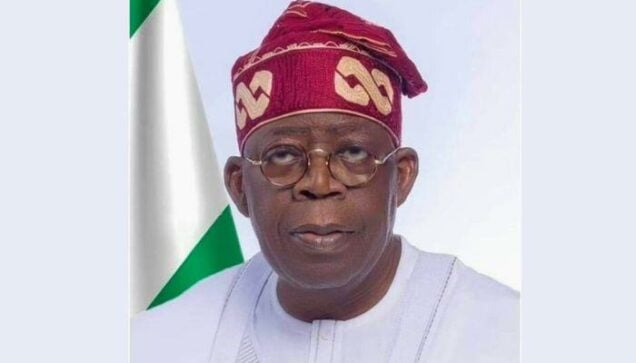
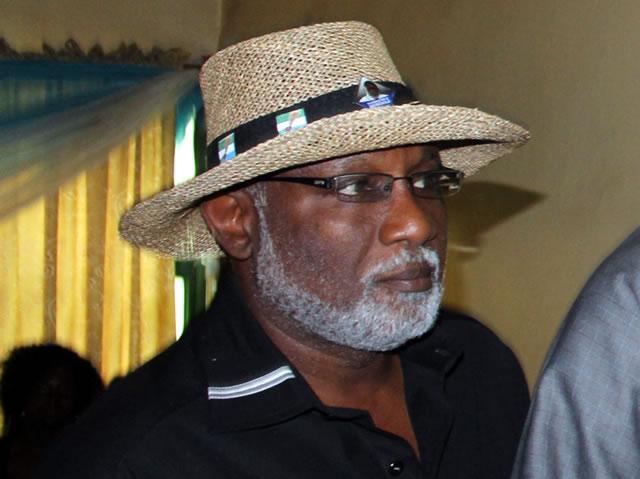
On swearing-in on 27 February 2017, Rotimi Akeredolu, Ondo State governor-elect, will face the tough test of re-positioning a cash-strapped state, where natural and water resources remain largely untapped and workers are owed months in salary arrears.
“We are poised to revive Ondo State and make the state viable again and restore the state’s old glory,” Akeredolu promised at a campaign rally in Okitipupa on November 12.
No economic revival will make meaning to Ondo State workers, other than the payment of the backlog of salaries owed by the outgoing Olusegun Mimiko administration.
However, this will prove a hard nut to crack for Akeredolu. Data shows that Ondo State, located in south-west Nigeria, has received allocations of N26.40 billion from the Federal Government between January and October 2016, but its recurrent expenditure within the period amounts to N68.04 billion, leaving a gap of N41.64 billion.

Ondo’s Internally Generated Revenue (IGR) is not enough to cover the deficit from federal allocations.
Akin Akinsehinwa, chairman, Ondo State Board of Internal Revenue, said in May 2016 that the state generated N2.3 billion as IGR between January and March this year, which is an average of N800 million per month or about N10 billion a year, well below the N42 billion revenue gap that exists in the state.
This shows the huge financial challenge facing the incoming government of Akeredolu, who must think out of the box to meet recurrent and capital expenditures of the state from its current meagre resources.
On October 28, Akeredolu had promised at a campaign rally, to create jobs for the citizens through agriculture and solid minerals.
But for him to achieve this promise, he must first make the state investment-friendly . Matna Starch, a cassava processor based in Akure, was stifled by the multiple tax burden placed on the business in the state.
Dele Ogunlade, former managing director of Matna Starch, told BusinessDay in 2014 how touts collaborated with the police to extort money from the firm. This was frequent and affected many investors who had to flee the state. The situation is said to be the same in Ekiti, Osun and, to some extent, Oyo state.

According to the Manufacturers Association of Nigeria (MAN), real sector investors pumped only N14.07 billion in the four states of Ondo, Ekiti, Osun and Oyo in 2015. This is just a fraction of what Ogun got within the same period. The state received N430.55 billion from investors in 2015, the highest in all the industrial zones in Nigeria.
“We are excited about the incentives given to us in Ogun,” Frank Udemba Jacobs, president of MAN, told BusinessDay.
Manufacturers advise that Akeredolu imitate Ogun, by offering rebates on land, tax holidays and exemptions, as well as having a one-stop shop for investors.
Ondo is blessed with bitumen, coal, talc, silica, bentonite, iron ore, uranium, columbite tantalite, crude oil, bitumen, glass sand, kaolin, granite and limestone. More importantly, the state is blessed with abundant skilled manpower.
Ondo’s literacy rate stands at 66.3 percent. Male literacy rate is 52 percent while the female literacy rate is 48 percent. What this means is that if Ondo indigenes are selected at random, 7 out of 10 could read and write. They have a passion for the acquisition of knowledge and this explains why a higher proportion of them pursue education to doctorate degree level, compared to most other states of the federation. At present, a lot of them have attained the rank of professor in their chosen careers.
The Mimiko-led government recently sealed a joint venture (JV) deal with an American investor Liquefied Resources to begin the exploration and production of 10,000 barrels of bitumen per day.
Although, this is yet to fully take-off, Matthew Ibeabuchi, CEO of MD Services Limited, based in Abuja and Enugu, told BusinessDay that Akeredolu can also tap into Joint Ventures to explore the sector.
Ondo State has a population of 3.4 million people. The National Bureau of Statistics estimates the unemployment rate in the state in 2012 at 1.2 million. There is no official data on the state’s current unemployment rate.
The state is largely agrarian, with large-scale production of cocoa, palm produce and rubber, maize, kolanut, yam and cassava. Sixty-five percent of the state’s labour force is in the agriculture sub-sector. The state has a wide range of fish deposits, including stockfish, but is not a known exporter of agricultural products, except perhaps for cocoa.
Many of Ondo State’s cocoa exporters need funding to meet the demands of the global market, but they do not find it in the state.
Observes say water transportation is still primitive and needs private sector involvement, while farmers still use crude implements.
For Akeredolu, the challenge is to ensure that a conducive environment is created for private sector players to bring in the required investments to exploit the abundant natural resources in the state. Akeredolu’s success in doing this will be determined more by visionary economic judgement, principle and decisiveness, than the politics that brought him to power.
ODINAKA ANUDU