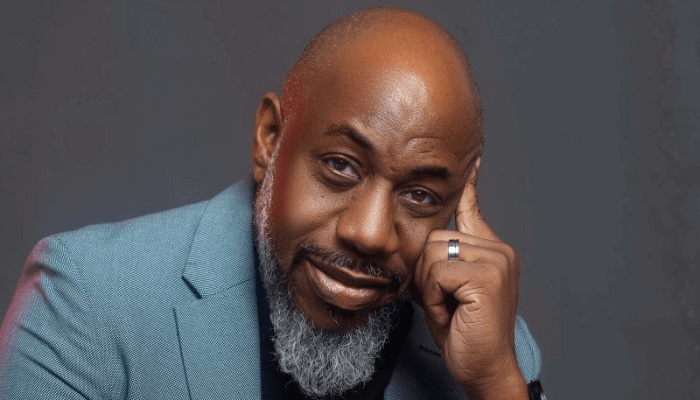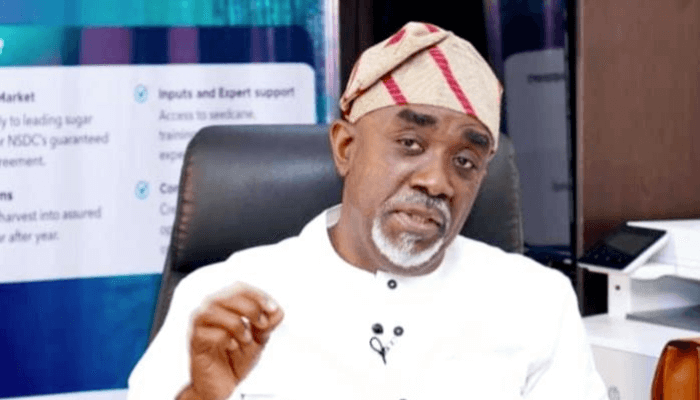
Babagana Aminu is an education specialist with the United Nations Children’s Fund (UNICEF), Lagos State. He spoke in an interview at a two-day media dialogue to support advocacy for Accelerated Digital Learning For Nigerian Youths organised by the Oyo State Ministry of Information in collaboration with UNICEF in Lagos. IDRIS UMAR MOMOH, who was at the event, brings the excerpt:
Can you give us a brief overview of your presentation?
My presentation centered around accelerating digital learning for the Nigerian youth. This presentation, first of all, centered around understanding the challenges, that is the crisis that is there and also the opportunities that are available for us. That is the focus of the presentation. Also, the last part of the presentation was also digging deep into the passport-learning opportunities, especially in terms of building digital skills and AI skills for empowering young Nigerians into the 21st century workplace.
At the presentation you gave details of how Nigeria is performing in the area of digital literacy. Can you explain some of them?

When we look at the data, especially if we look at it from the angle of population, according to an estimate made by the World Bank, Nigeria is going to be the youngest population in Africa which shows that about 60% of Nigerians will be under the age of 35 years by 2030. And it means that this population can either be our stronghold or it can be a weakness of ours. In particular, according to the needs, that is the needs assessment in terms of people in education, employment or in training. It shows that about 15% of Nigerians are underemployed and cumulatively underemployed and the unemployment rate is around 50%. That is a huge population of young Nigerians that lack digital skills as well as financial skills. That means, there is the need for us collectively, private sector, public sector, development partners and the media to come out and advocate for an increase in terms of opportunities that will build digital skills as well as artificial intelligence, especially when we look at the top three areas where jobs have been created today.
In the last two years, cybersecurity, artificial intelligence, the native AI, and data analytics are some of the areas where employment is being created.
Some express a wrong perception that AI is going to take jobs from them. What advice do you have for them?
I would say fear not, because you cannot predict what you don’t know. But particularly, AI is not going to replace people’s jobs.
Even though there was an analysis made by the World Economic Forum that about 46% of jobs require AI or some digital skills, it is not AI that is going to replace people, but it’s other people who know how to use AI that are going to replace people. It means that if we don’t have skills on how to effectively and ethically use AI, that means we will be left behind.

It means that before we are replaced, we need to learn the skills on how to use AI so that we can compete locally and as well globally. AI is not a risk. There is the need to regulate and have ethical use of AI but it’s something that we should not be afraid of because we need to learn how to use emerging technologies such as artificial intelligence.
Can you elaborate on the schools’ shutdown across the country recently and the implications on the future of students?
Yes, we have seen the recent rise in insecurity across the nation and states are responding, closing schools to ensure that children remain safe. I think this is an opportunity for states and also stakeholders together to deploy digital learning solutions so that education cannot wait, learning should not wait because of circumstances that we find ourselves in and I’m sure the government of Nigeria is putting all mechanisms in place to ensure that schools remain safer but most importantly, while some schools are still closed, there is the need to deploy this but not even when schools are closed.
There was a loss of learning that was observed especially due to COVID-19 school closure so it means that we need to recover from the loss of learning. We’re still in that shock even five years after but there is the need to use both analogue and digital tools to deploy learning such as the Learning Passport, Yoma and also deploy learning over the radio and television. I think that would be a good opportunity and the federal government of Nigeria is really pushing this, and so far, about 150,000 teachers have been trained on how to use digital tools including blended learning which also includes the Learning Passport, Google Classroom and so on.
A significant number of students are now using AI even in competitions. What do you have to say about that?
I think what we need to do is to change our assessment procedure because emerging technologies are not going to replace critical thinking. Emerging technologies are not going to replace what we’ve learned. But what is important is to understand how learners are able to use this. Ethical use, because we cannot stop the use of AI if the learners, the teachers, assessors do not understand what AI is all about. It means that there is the need to raise awareness among the learners, among the teachers and assessors. We need to adjust our assessment procedure instead of assessing the content because usually what we do is an assessment of content, not an assessment of whether learning has taken place or whether somebody has learnt something. I think that is what we need to re-imagine. We need to re-imagine assessment rather than just the traditional way of assessing whether learning has taken place. We need to really also move away from the traditional means.