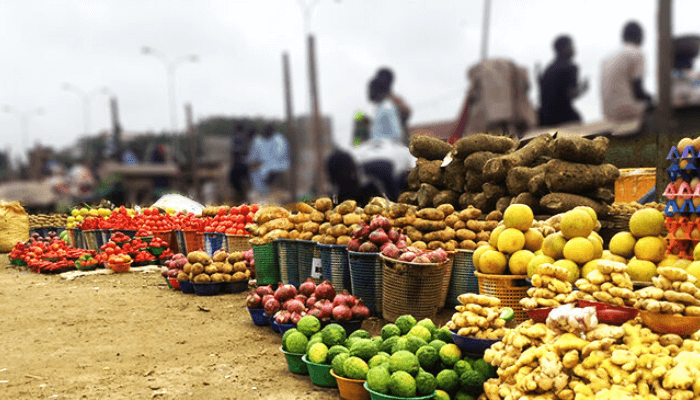
With a lot of focus on agriculture in recent years, funding has remained elusive for millions of smallholders and other players in the sector, as commercial banks find it difficult to commit substantial funds. However, if feelers from a hall packed with bankers from pretty much all the financial institutions in Nigeria is anything to go by; then things may change for the better in a very near future.
“I am now a serious convert of the agric sector,” said a rather excited Georger Uwakwe, chief risk officer, Guaranty Trust Bank, Nigeria’s biggest bank by market capitalisation. His excitement after a two-day retreat of Chief Risk Officers (CRO) of all banks in Nigeria, was borne out of a new orientation of sort, on how commercial banks can better finance agriculture through a model which was proposed by the Nigeria Incentive-Based Risk Sharing System for Agricultural Lending (NIRSAL) at the retreat.
Uwakwe’s declaration is especially significant, as the bank has been perceived as not so inclined to lending to the agric sector. During a conversation last week on agric finance, Segun Osofisan, a director with Abso Agro-allied Limited, had even expressed the view, “Guaranty Trust bank is averse to agric lending”.
READ ALSO: NIRSAL to unveil insurance product for agriculture

But as Uwakwe told BusinessDay “it is time to begin lending to agriculture big time”. His view on the risky nature of the sector, like that of other bank CRO’s have been redefined with the proposal of financing mechanism that will ensure agricultural production is done seamlessly, and with guaranteed markets for everything that is produced; both domestic and international.
Uzoma Dozie, CEO, Diamond Bank, told BusinessDay at the retreat, that while his bank has been lending to agriculture for a long time, it has been more from a large scale perspective, not the primary end. He however expressed optimism in going all the way down to the smallholder farmers if the value chain fixes being promoted by NIRSAL can take effect.
“In recent time, with support from the central bank, and emphasis on achieving food security, we are now looking at the primary end (of agriculture),” Dozie said.
He explained that Diamond Bank is currently providing finance for over a thousand farmers across different belts, and this number will increase exponentially as more players come into that market. But for his bank to do more, he says there have to be more investments in storage, processing, and even availability of farm equipment to improve the odds that farmers will be able to produce optimally, sell profitably, and be able to pay back promptly.
With the value chain fixed, especially as being promoted by NIRSAL, “There is a bright future in agriculture,” Dozie said. He further explained that, Diamond Bank’s total lending to agriculture is “currently around five percent, and we expect that to grow,” to match the assurances of de-risking.

Aliyu Abdulhameed, NIRSAL’s MD/CEO, had told the CRO’s and bank CEOs in attendance, of his agency’s finance intervention model, which would optimise the farm to market process; offering assurances of minimal losses in the value chain. He explained exhaustively, how millions of farmers and other players in the agric value chain can be supported without the need for direct transfer of cash.
With the sector segregated into four areas; pre-upstream, upstream, midstream, and downstream, banks can target companies in different aspects of the value chain, and helping them to really make impact on food security, and invariably, wealth creation.
“Despite the contribution of the agricultural sector to the economy, contributing 24 percent to GDP as at 2017, there has been no corresponding flow of finance and investment into Agribusiness,” said Abdulhameed, charging banks to take advantage of de-risking opportunities to make more impact in the sector.
With paucity of funds by the Federal Government to drive economic recovery programmes, Abdulhameed reiterated NIRSAL’s concept of “leveraging on de-risking mechanisms.”
“Although commercial banks may want to focus on investing in money market instruments as against investing or financing the real sector (non-oil), in reality, agribusiness and other non-oil sectors, offer a much higher Return on Investment in comparison to the money market,” he said.
Added to this, the hundreds of thousands of additional jobs that would be created, when work force requirements that would come with increased investments are considered.
However, there are reasons why the banks have been reluctant to lend as much as would have been preferred.
Muhammad Kagu, group head, Corporate Banking, First bank of Nigeria, told BusinessDay, that the fear of losses is not all that scares banks away from agriculture.
“Just like any other business, it is natural that there has to be losses. There is no way a business can be 100 percent successful,” said Kagu. He however explained that in agriculture, there are knowledge gaps that make many people who venture into it perform far below expectations.
“Some people venture into agric just to make the name that they are into agric business. They do not have prior knowledge of what they want to do, but they will continue going into that business. Definitely, if you enter agric blindly, you will run into losses. But if you plan it well and follow the real managerial practices, you will definitely succeed,” said Kagu.
Uwakwe, Guaranty Trust Bank’s CRO, also explained that before coming to the retreat, the belief was that “the agricultural value chain is not fixed. It is one thing to provide funds to the farmers, but when they produce, most of the time substantial portions of the produce get spoilt before getting to the market. If the producers cannot sell, the truth is that banks will also not be paid back.
“We have always advocated that they should fix the value chains. What stops us from having tomato farmers and tomato processors so tomato as a raw material is moved into processing as paste. The same applies across different crops; maize, wheat etc those are the major issues,” explained Uwakwe
According to him, discourse at the retreat has allayed these fears, including the issue of cash flows, not trusting the farmers in fund disbursement (not knowing if they would come back with the money or not). “There is now an approach which solves this as NIRSAL has proposed,” he said.
CALEB OJEWALE